4 min read
📣 For more lifestyle news, click here to join our WhatsApp Channel and also follow us on Instagram
© IE Online Media Services Pvt Ltd



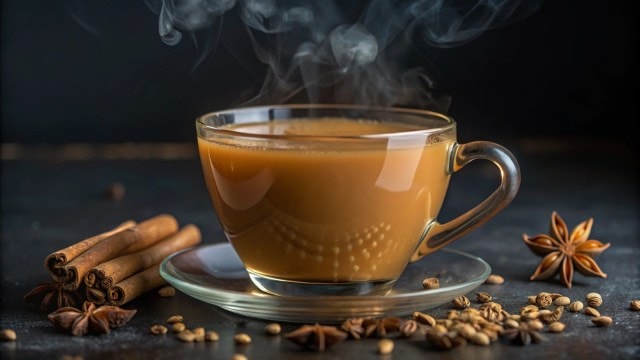 When milk is added before the teabag is removed, the temperature of the brewing liquid drops instantly. (Source: Freepik)
Few topics divide people as fiercely as the “correct” way to make a cup of tea. A viral episode of Michael McIntyre’s The Wheel featuring British actors Steve Pemberton and Reece Shearsmith captured just how emotional and opinion-driven this everyday ritual can be.
Michael opened the segment with the now-viral question: “UK Tea and Infusions Association recommends what process for making tea with a teabag in a mug? Water, milk, bag in, bag out. Milk, bag in, water, bag out. Bag in, water, milk, bag out. Bag in, water, bag out, milk. This is an excellent question.”
From there, chaos brewed. When Reece asked the contestant, “What was your process? What was your thoughts?” she immediately stepped in with conviction: “There’s a particular way you do it, and they say that the milk would scald if you put it in. I’ve heard that.”
When Steve clarified, “If you put it in first?”, she insisted, “I think, yes, because the tea’s got to infuse through the teabag, hasn’t it?”
They quickly eliminated one sequence, saying, “They’re not water, milk, bag in, bag out, I wouldn’t think. You’re just getting watery milk.”
Steve and the contestant then analysed a deeper question: “So the question is, do you keep your bag in when you put the milk in?”
The contestant admitted, “I do bag in, water, milk, bag out. But I also squeeze the teabag, which you shouldn’t do either.” Reece fired back: “You should be arrested for that.” Steve further quipped, “What would be the benefit of keeping the bag in when the milk goes in? What would be the benefit?” To which the contestant responded, “I suppose you could see the strength.”
Eventually, they leaned toward: “Bag in, water, bag out, milk.”
Michael then asked, “That’s what you’re going to lock in?” and the contestant confirmed: “Yes. Bag in, water, bag out, milk.”
Michael revealed his own method: “I mean, I do it like you (Reece) do it, whereby I’ll put the milk in, and then I work with the bag… to get the hue.”
Finally, as the show awaited confirmation, Michael said, “All right. Let’s wait to see what our expert put. I’m really hoping this is the right answer. So is it what the UK Tea and Infusions Association… Fun group of people, by the way. Is this the right answer?”
When the correct answer appeared, he concluded with: “Yes, it is. Well done.”
Beyond the humour, this conversation reflects very real questions about infusion, flavour chemistry, temperature, and tradition, topics that everyday tea drinkers often debate without clear answers. To help you understand what actually matters when making tea, we spoke to an expert.
View this post on Instagram
Alok Singh, expert on food history and science at Diga Organics, tells indianexpress.com, “The sequence of bag in, water, bag out, then milk aligns with how tea compounds extract at specific temperatures. Black tea needs water close to a rolling boil because catechins, tannins, and aromatic oils dissolve between 92 and 100 degrees Celsius optimally. If milk is added too early, the temperature of the water drops immediately, slowing the release of these flavour compounds.”
When milk is added before the teabag is removed, the temperature of the brewing liquid drops instantly. Even a small drop reduces extraction efficiency, Singh says, especially for black tea. The infusion proceeds more slowly and often produces a milder cup. To compensate, people feel compelled to squeeze or stir the bag vigorously, which extracts more tannins and can lead to a slightly harsher finish.
“The overall taste profile becomes softer in aroma but sometimes more astringent in the aftertaste due to overworking the teabag. Historically, this method became common in households that preferred very milky tea. It is a matter of preference, but from a scientific standpoint, it does not produce the most balanced or aromatic brew,” concludes Singh.