4 min read
📣 For more lifestyle news, click here to join our WhatsApp Channel and also follow us on Instagram
© IE Online Media Services Pvt Ltd



 Chronic stress is associated with increased levels of cortisol, a stress hormone, which can impair memory (Source: Freepik)
In an era dominated by desk jobs and digital screens, the average person spends a significant portion of their day seated in front of a computer. The sedentary lifestyle that accompanies this routine has far-reaching consequences on our physical and mental well-being.
Let us unravel the intricacies of what happens to your body when you sit continuously for 8 hours every day, shedding light on the various health implications that may go unnoticed in our screen-centric lives.
Dr Sapna Kotwaliwale, Ophthalmologist, Ruby Hall Clinic, explained many reactions that might happen in your body if you sit and stare at a screen for so long. She also suggests ways you can prevent these problems.
When we stare at the screen continuously, we usually blink a lot less than normal. Normal blink rate is 10-20 times a minute, which could become 3 to 8 times a minute while staring at the screen, according to Dr Kotwaliwale.
“A normal blinking reflex releases tears from our lacrimal glands. Tears which are released during blinking provide nutrition to the transparent part of the eye called the cornea. Reduced blinking in turn reduces the amount of tears secreted causing dry eyes.”
She added that dry eyes can cause discomfort in the eyes, watering and redness. Chronic dry eyes can cause scratches on the cornea and may also reduce vision. It also makes the eye more susceptible to infections.
Long hours of not being able to relax your eyes, overuse of accommodation can cause symptoms like headache and eye pain.
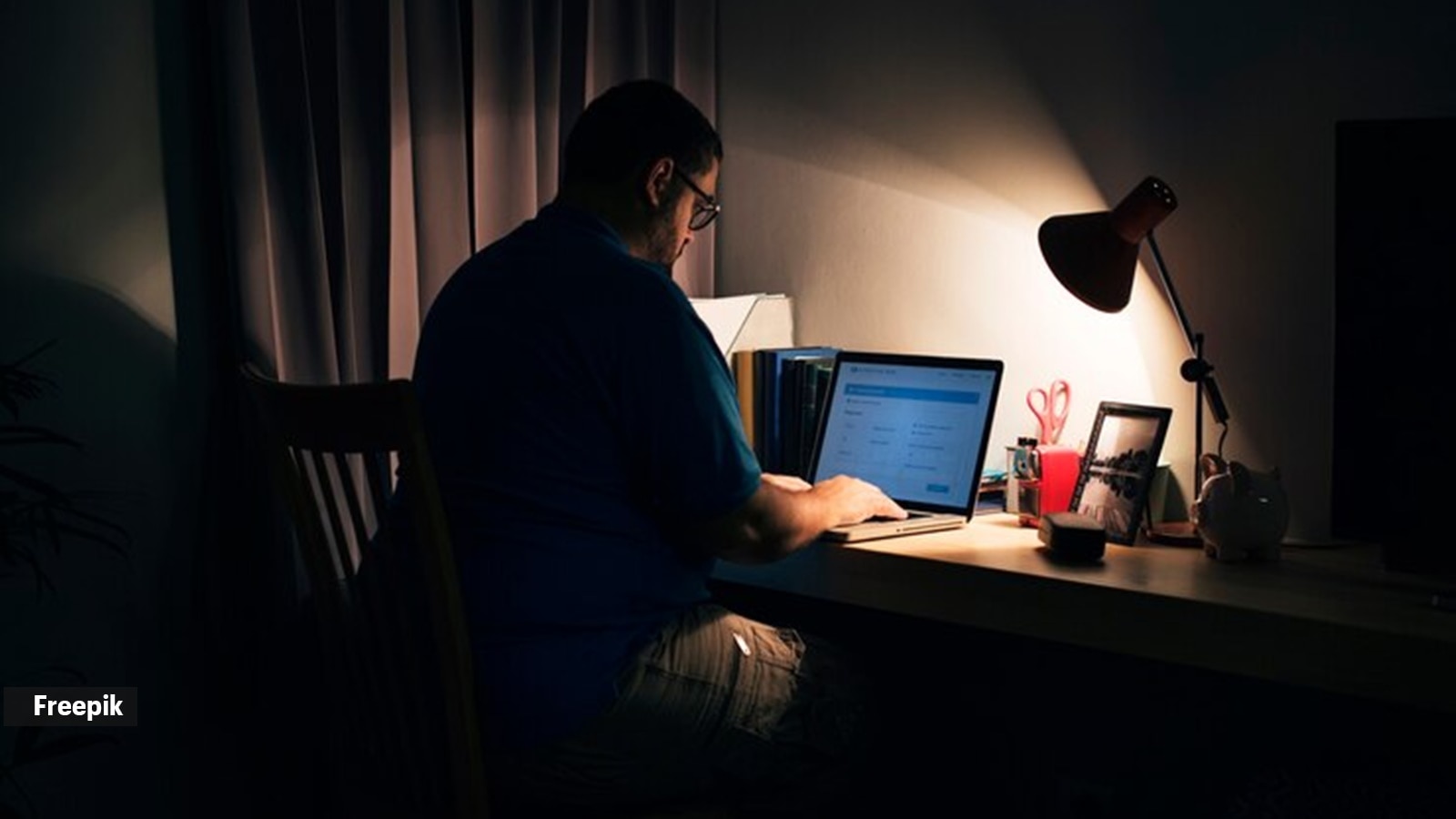
 Put your laptop or computer monitor on a raised stand to keep the posture straight or make a standing desk. (Image Credits: Freepik)
You can also develop muscle pain in the neck and back due to improper body posture and inadequate rest breaks. This can cause chronic back pains and spine problems.
Due to the blue light emission from the screen of devices, many sleep issues can arise. This can also in turn mess up the metabolism of the body which can lead to weight gain and illnesses.
Long usage of the screen can cause problems in the retina of the eye.