7 min read
📣 For more lifestyle news, click here to join our WhatsApp Channel and also follow us on Instagram
© IE Online Media Services Pvt Ltd



 Why you must delete your ex's photo (Source: Screengrab from Youtube/Shemaroo)
Photographs are the only authorised form of time travel we’ve been allowed.
One frame, and you are inside a body you no longer inhabit, holding a hand you no longer reach for, living in a version of yourself that ends in silence and, often, without witnesses.
They collapse time without warning. A face from 10 years ago arrives with the confidence of the present tense. In that sense, every old photograph is a demand: “Feel this again,” it says. Or, at the very least, “acknowledge that you once did.”
When I opened old folders on my phone – faces paused mid-sentence, smiles that once organised entire days – I felt almost nothing. No ache. No tug. No warmth or regret. Just recognition, the way you recognise an old address you once lived at but would never return to.
That absence of feeling startled me more than grief would have. We are trained to believe that not feeling means something is wrong –coldness, denial, avoidance. But psychology makes an important distinction here: not all emotional quiet is repression.
When an attachment has genuinely completed, the nervous system deregisters it. The person no longer structures your inner world; they no longer occupy psychological real estate. What remains is memory without emotional urgency – data without charge.
And that is why I deleted those photographs. Not because they hurt too much. But because they no longer did anything at all. There was nothing left to preserve, revisit, or renegotiate.
Around this decision, I began noticing patterns in how others hold on to their pasts – patterns we rarely name clearly, but commonly live inside.
A 27-year-old woman, who does not want to be named, told me she often scrolls through an old iCloud album late at night. Many of the photographs are with her ex, a relationship she describes, without hesitation, as “toxic”. And yet, she cannot stop looking.
Each time she opens the album, something stirs. Not love, exactly. Not longing either. Sometimes anger. Sometimes sadness. Sometimes a strange surge of energy she cannot quite place. She tells herself she is processing.
Emotional reactivation occurs when a stimulus – like a photograph –reawakens the same neural and physiological responses that existed during the relationship itself. The mind believes it is remembering; the nervous system experiences it as happening again.
In Indian philosophy, there is an older and more precise word for this: samskara – the groove carved into the mind by repeated experience. Every emotionally loaded relationship leaves one. A photograph is not a passive reminder; it is a finger tracing that groove again and again.
The woman’s repeated return to those images does not weaken the imprint. It reinforces it. Even though she consciously rejects the relationship, her nervous system remains trained to respond to it. To the body, familiarity often feels safer than peace.
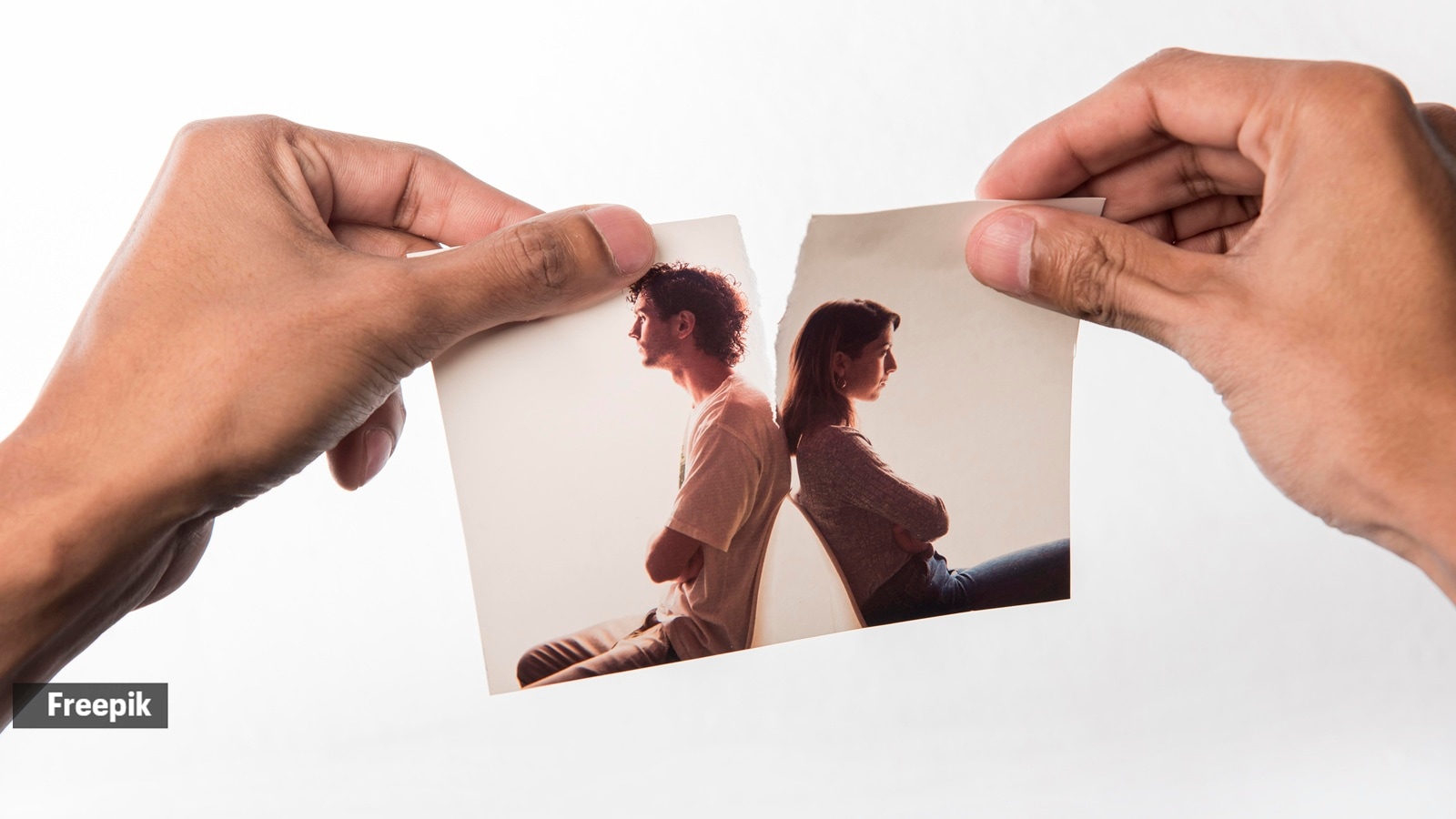 Break ups are hard (Source: Freepik)
At the other end of the spectrum is a 37-year-old man. He has hidden folders on his phone, neatly organised, carrying photographs from every relationship he’s been in. He tells me he doesn’t really feel much when he looks at them. Yet when I ask him if he would delete them, he hesitates. He says he can’t.
Emotional blunting happens when repeated emotional strain leads the psyche to dampen response as a form of protection. Feelings are not resolved; they are quietened. The system learns that intensity costs too much, so it flattens everything evenly.
The absence of feeling here is often mistaken for maturity. It is not. It is a distance.
He is not attached to the people in those photographs. He is attached to continuity – to prove that something happened, that he once mattered deeply to someone, even if he can no longer access the feeling itself. The folders preserve evidence, not intimacy.
The samskara remains, but padded.
My own experience sat somewhere else entirely.
When I deleted my photographs, nothing rose, and nothing collapsed. There was no spike of emotion, no hollowing out either. The nervous system stayed calm. The images felt unneeded – like old software that no longer runs on the current version of the self.
That matters.
Psychologically, it tells you something precise: the bond has been metabolised. The relationship has completed its work. The identity shaped inside it has been updated, reorganised, and replaced.
Often misunderstood as detachment or indifference, vairagya is actually clarity. It is not coldness. It is the natural disinterest that arises when something has completed its role in your life. There is no forcing involved, no moral struggle. The mind simply stops reaching.
Deleting those photographs was not an act of denial or erasure. It was my expression of vairagya.
This is where the question becomes uncomfortable: why do we keep things that no longer move us?
Often, we confuse preservation with respect. We believe deleting is a kind of betrayal, or that holding on proves depth. But psychologically, keeping artefacts long after emotional completion often has less to do with love and more to do with habit.
Photographs are not neutral objects. They cue the nervous system every time they are encountered. If old images still activate you, something remains unresolved. If they leave you numb but you resist deleting them, something remains unintegrated.
Only when letting go costs nothing has letting go actually happened. Deletion, then, becomes diagnostic rather than dramatic. It tells you where you stand.
Ask yourself, without judgment: Do these images charge me? Do they dull me? Or do they simply exist without relevance?
Activation suggests unfinished attachment. Blunting suggests unprocessed fatigue. Neutrality suggests completion.
Most of us are somewhere along this continuum. There is no virtue in rushing it. But there is value in honesty about where you are.
Deleting photographs is not about forgetting. Memory does not live on phones. It lives in the nervous system. What deletion does is stop unnecessary stimulation of a past that has already concluded.
The heart is not sentimental by nature. It is economical. When something is no longer required for learning or survival, it lets go. When the past stops rehearsing itself, the present finally has room to breathe.
Mind the Heart attempts to uncover the unspoken in our relationships—or the over-discussed, without nuance—spanning solo paths, family bonds, and romantic hopes. Join us to discover the whys of our ties.