London, November 17, 1966. As Reita Faria, the Indian representative, was about to take the stage for the Miss World pageant at the Lyceum Ballroom on Wellington Street, bookies were feverishly betting who would win the crown — there were 66 contestants that year and Miss UK, 20-year-old Jennifer Lowe, a dairymaid, was tipped to win. Faria’s odds? 1:66.
“I heard there was one Indian who bet on me — out of pure patriotism, I am sure — and I hope he made a small fortune,” says Faria, 73, as she looks back on the night that changed her life forever. The night she created history by becoming the first Asian contestant to win the Miss World title.

The odds had been far greater than the scepticism of the bookies. They came stacked in a suitcase of borrowed clothes, in a purse that contained all of three pounds — the only bit of money she had been allowed to carry to London — and a make-up kit that held nothing fancier than a few lipsticks. “I had borrowed a sari from one of Mumbai’s well-heeled ladies and a bathing suit from Persis Khambatta. But Persis was a bit shorter than me, and when I wore it, the organisers said that it just wouldn’t do — it was too ill-fitting. The same for my flat footwear. With those precious three pounds, I bought another costume and some ungainly heels, which I never wore again, although I have kept them,” reveals Faria, flashing that shy but sure smile that was splashed across newspapers 50 years ago, when the dark horse galloped all the way to the finishing line.
Born to Goan parents in Matunga, Faria had a middle-class upbringing — her father worked at a mineral water factory, and her mother owned a salon in Marine Lines. At 5’8”, Faria was statuesque by Indian standards, and her height often attracted offers from modelling and casting agents. Cecilia Menezes, 74, one of Faria’s childhood friends, remembers her as one with poise. “Reita always carried herself beautifully. We would forever be late when we were going out because she took the longest to get ready. But she was always sure that she wanted to be a doctor,” she says.
So, when the 23-year-old student of medicine at Grant Medical College, Mumbai, entered the Miss Bombay contest organised by the erstwhile Eve’s Weekly magazine, it was “purely on a lark”. “It was supposed to be just a joke, an experience. All I had to do was to send a photograph to the organisers, and my elder sister, Philomena, took me to a studio to get one,” she says.
The Indian beauty pageant industry, Faria recalls, was rather amateurish and not well organised at all. “During the Miss Bombay contest, the organisers realised that since the Miss World had a swimsuit round, it was important to show our legs to the judges. So, they asked the girls to lift their saris to their knees,” she says. By the time the Miss India contest was held, a swimsuit round was introduced in the pageant.\
Reita Faria at her home in Dublin in the winter of 1980.
Faria was chosen to represent India at the Miss World, the second Indian woman after Fleur Ezekiel in 1959. But there was no training, no wardrobe to speak of. She would have to do it on her own; her mother got her some items of clothing, and the rest she borrowed. “After I won Miss India, the organisers realised I didn’t even have a passport — so there was a scramble to get my passport made and get a visa,” she says. “I didn’t even have the trophies for Miss Bombay and Miss India — they didn’t have them ready by the time the contest happened. I was given a wooden replica, and a cheque in an envelope,” she says. Her wins tallied to a princely sum in those days — Rs 5,000 for Miss Bombay and Rs 10,000 for Miss India. “I gave the Miss India prize money to my mother, who looked after a child in an orphanage in Mumbai,” says Faria.
Story continues below this ad
When she reached a chilly London a few months after entering the Miss Bombay contest, Faria encountered a world where she felt like “a complete outsider”. She found herself at a disadvantage — the European girls along with the contestants from USA and Canada were glamorous and boasted of great wardrobes. “Many of them had been invited by their embassies to visit; I received no such invitation. But we had the usual sight-seeing through London, getting our pictures taken in front of the House of Commons, Buckingham Palace, Piccadilly Circus,” says Faria.
By the time the initial elimination rounds began, the focus of the pageant had broadened to include the women’s personalities and accomplishments. “I guess that’s when I started to move ahead into the top 25 . My height and the heels made me stand out,” says Faria, with a laugh. It was also her background as a medical student that set her apart. As the women were introduced to viewers across the UK and Ireland who had tuned in to watch the pageant, Miss France was described as one who wanted “to invest in a beauty institute”, Miss Germany was a beautician, Miss Canada was a model, and Miss Japan “just wants to become a housewife”.
“The question put to me in the personality round was why I wanted to be a doctor. When I replied that India needed more obstetricians and gynaecologists, they said India has lots of babies. I said that that was something we needed to discourage, which got a lot of applause,” says Faria, who then found herself in the final three, along with Miss Greece and Miss Yugoslavia, who was her favourite for the title.
“But when she was called up as second runner-up, I looked at Miss Greece thinking, ‘Oh it’s her then’,” she says. Seven out of the nine judges, which included Hollywood actor Ty Hardin, picked Faria to be crowned Miss World 1966, a remarkable achievement for the only non-white contestant to advance after the top 15 was announced.
Story continues below this ad
Far, but not terribly far from London, David Powell, a junior doctor sat watching the pageant during the night shift at a hospital in Dublin. He was riveted by Faria’s beauty, her glossy black hair held high above her head in a bun, highlighting her cheekbones and wing-tipped eyes. “I was bowled over,” says Powell, 73, his eyes twinkling at the recollection even now. “I guess someone up there made a little note of it,” adds Faria, smiling at Powell, her husband of 45 years.
David Powell and Reita Faria at their wedding 45 years ago.
Stopping by in Mumbai, on her way back home to Dublin after visiting her extended family and friends in Goa, Faria says that the most important thing about becoming Miss World was that it set her on the course to meet Powell. “That’s what changed my life — not so much the pageant,” she says.
After her win, things went into a blur. Faria, who was already unimpressed with the showbiz aspect of the pageant, found the press following her every move, even taking pictures of her eating breakfast in bed. This was not the life she had imagined for herself. “One day I was a student and nobody took any notice of me. The next day I was Miss World and everyone wanted to know me. It just showed how artificial and temporary all this recognition was,” she says.
But there was no way out — Faria would have to serve as the ambassador for the Miss World Foundation for a whole year — a detail she had missed. “There was no way I could go back to India and my studies. No one had told me this fine print,” says Faria, who then started on a whirlwind of tours across the globe, including one with actor and comedian Bob Hope to Vietnam during Christmas to cheer the American troops stationed there during the Vietnam War. “Many of them had lost their limbs and their injuries made my heart bleed,” says Faria.
Story continues below this ad
The visit would result in a political controversy; the Indian government was supporting the Communist government in north Vietnam and photos of Faria’s skit with Hope and signing caps of American soldiers was met with disapproval. “I had gone there just to meet the injured troops as had previous Miss Worlds, and had no idea there would be so much opposition to it back home. The issue was discussed in Parliament and there were even threats that my passport would be impounded,” she says. Her plan to return to India for a short visit in December was also scotched. “The organisers refused to let me go back; they were afraid I wouldn’t be allowed to return to London,” she says.
So, Faria set her sights on King’s College to complete her degree. She had won 2,500 pounds as Miss World and also earned a portion of the money generated from her appearances — a sum that helped her pay for her tuition, stay and food at King’s. As fate would have it, Powell was working there and it was only a matter of time before they met and started to see each other. “Those were crazy days. She would be a regular student in the day and at night, a Rolls Royce would drive up to the college. Reita would wear those gowns and transform into this Cinderella for the Miss World-related events. Later, I began to accompany her, and would exchange my white coat for a tuxedo,” says Powell. Faria finally returned to India in 1969, only to leave again; this time, to Boston, where Powell and she would work as doctors after their marriage in 1971.
David Powell and Faria in Mumbai. (Express photo by Ganesh Shirsekar)
The couple moved to Dublin for good after their two daughters, Deirdre and Ann Marie, were born. When the girls were four and five years of age, Faria decided to give up her practice. “Since the girls were just a year apart, those were mad days. David’s work was all too consuming for him, so I thought I would be home till the children needed me — and that’s still going on,” she says. Powell continues to practice as an endocrinologist and Faria has her hands full with her five grandchildren, golf, occasional skiing and cooking. “I make everything at home, even bread,” she says, which is a far cry from the time in Boston when she asked Powell the recipe for boiling an egg.
“The glamour world could have never given me this grounded security. I wish the girls today would realise the fleeting nature of fame and looks. Running after these flashes of publicity, trying to hold onto what changes so rapidly and always looking out for variety, be it in ambitions or relations, is bound to cause distress. It’s unusual for a celebrity to make for a happy family these days, but this is where real happiness lies — in secure relationships,” she says.
Story continues below this ad
Which is what brings her back to India every few years: to meet family and friends in Mumbai. Last year, she attended the 50th anniversary meet of her batch at Grant Medical College. This year, to commemorate the 50th year of her title, her daughters, both doctors, put together a small celebration with the family in Dublin on November 17. “When David and I look back at our life — 49 years together, including four before marriage — we realise we have each other, good health, children and grandchildren, and still so many shared interests from golf to skiing. What more does one want? I have my whole world,” says Faria.


 12 min read


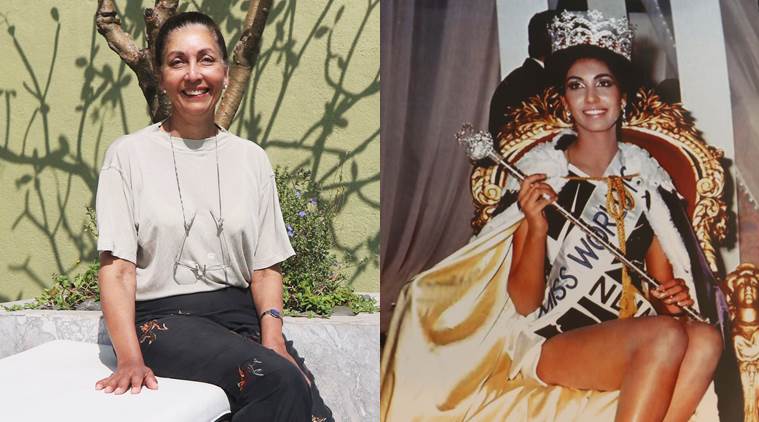 Top of the world: (Left) Reita Faria on a recent visit to Mumbai; and the night she was crowned Miss World.
 Reita Faria at her home in Dublin in the winter of 1980.
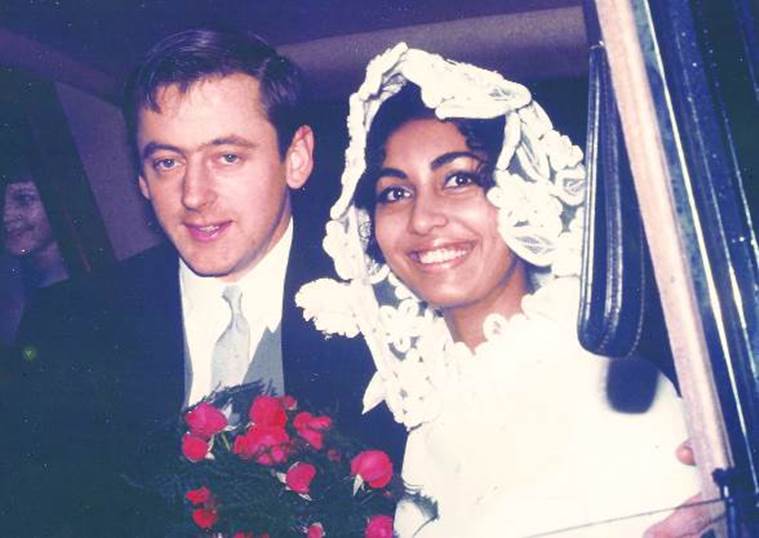 David Powell and Reita Faria at their wedding 45 years ago.
 David Powell and Faria in Mumbai. (Express photo by Ganesh Shirsekar)