Journalism of Courage
 4 min read


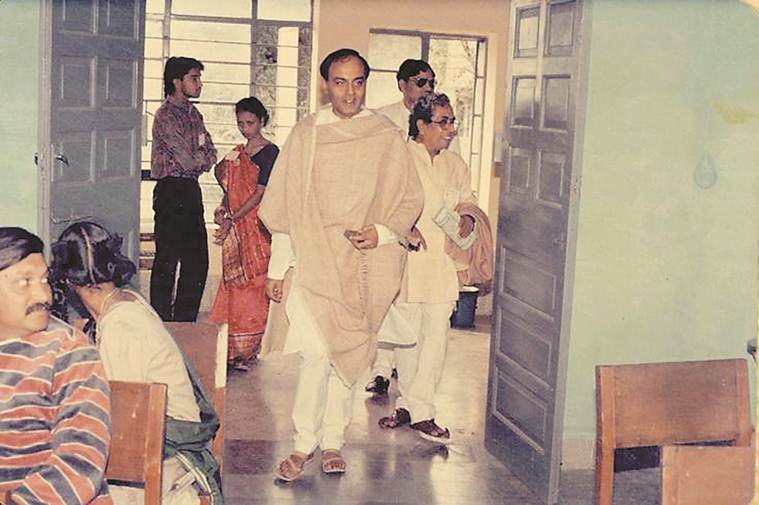 Martand Singh Courtesy: INTACH
His heart was in textile,” says veteran designer Ritu Kumar about Martand Singh — the man who sowed the seeds of textile revival in India. Fondly known as Mapu, he brought to life a part of Indian heritage that had lost all hope, and inspired an entire generation of fashion designers and textile artists. “In the colonial period, a lot of Indian textiles were not being woven, they were vanishing. Post-independence, in the late ’60s, Mapu began the process of reviving these textiles from every part of the country. He began working on the Vishwakarma exhibition in the ’80s,
which put the spotlight on Indian textiles. He took a part of it to London and Paris as well,” remembers Kumar, a close associate of Singh.
On Tuesday morning, Singh passed away, aged 70, at a hospital in Delhi, after battling pancreatic cancer. A protege of cultural activist Pupul Jayakar, Singh designed the landmark exhibition Vishwakarma – Master Weavers in 1982, was appointed chairman of INTACH (UK) Trust in 1993, and was art consultant to the United Nations Development Programme in 1995. Apart from this, he was also appointed trustee of the Mehrangarh Fort Museum Trust, Jodhpur, in 1993, and was Director of the Calico Museum of Textiles for more than ten years. He also served on several boards and committees, such as the All India Handicraft and Handlooms Board, the Handicrafts and Handloom Export Corporation, and the Crafts Museum.
Asian Heritage Foundation founder Rajeev Sethi, who was Singh’s junior at Delhi’s St Stephen’s College, remembers him for his “pehchan, the elegance of positioning. He could see who has potential, polish it and put it on a pedestal. He provided the vital fuel for Indian textiles.”
Thirty years ago, designer Anju Modi held an exhibition, one of her firsts, which was attended by Singh, and that’s how Modi met her mentor. “I had worked with weavers from Kutch for this particular show, and when I met him, I asked what I should do next, where I should go and study. He simply said, ‘you already have the best teachers, these weavers’. I was a nobody back then and I was lost, and Mapu mentored me with such honesty,” says Modi, “I was enamoured by his knowledge, intellect and passion. He gave me real insight into the world of textiles.”
Born into the Kapurthala royal family, Singh moved to Mussoorie a decade ago, and would visit the Capital in the winter. “In his last days, he was studying the history of jewels. He had fine taste and constantly wanted to do more,” says textile designer Tushar Kumar.
Singh also wrote and edited books, one of them being Saris of India, along with fellow textile revivalist Rta Kapur Chishti. Textile artist Priya Ravish Mehra, who researched on the book with the two, says, “Under his mentorship, we researched on the textiles of Gujarat and Bihar for Saris of India. He knew the pulse of the country and was truly a visionary. Working with him was an eye-opener and a life-changing experience for me as he was so well-versed with all the aspects of textiles,” says Mehra.
Varanasi-based designer Hemang Agarwal refers to him as his “grand guru, as he was Rahul Jain, my guru’s guru. In an industry which doesn’t present itself as it really is, with Mapu, you could just be yourself. Every person who is now working in textiles was under his tutelage once. For someone who was not a textile designer or technician, it was magic that he brought to the table. For anybody who knew him, there is a part of Mapu in that person.”