6 min read

© IE Online Media Services Pvt Ltd



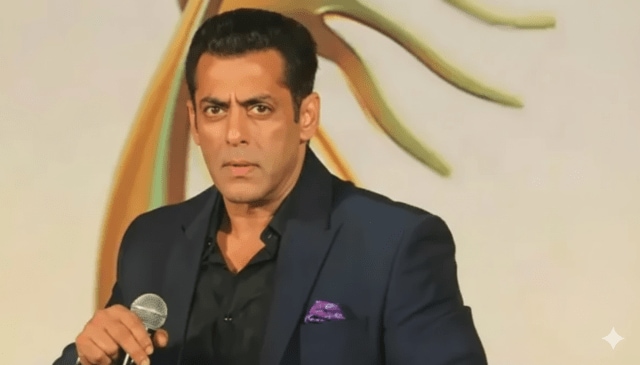 Salman Khan moved Delhi High Court for protection of personality rights. This image is enhanced using AI.
Bollywood actor Salman Khan recently moved the Delhi High Court, alleging misuse of his “personality rights” by the use of artificial intelligence among other ways and sought directions to restrain the defendants from carrying out any unauthorised activity.
The 59-year-old actor adds to the tally of high-profile celebrities who have sought similar reliefs.
According to Khan’s legal team, comprising senior advocate Sandeep Sethi besides advocates Nizam Pasha, Shreya Sethi, Parag Khandhar, Chandrima Mitra, Tapan Radkar, Zara Dhanbhoora, Krishan kumar and Siddharth Kaushik from DSK Legal, Justice Manmeet Pritam Arora on Thursday directed the defendants including X, Meta, Google and Telegram to treat the present proceedings as a formal complaint under the Information Technology Act and the Information Technology (Intermediary Guidelines and Digital Media Ethics Code) Rules, 2021.
“The court directed them to take steps in accordance with the 2021 Rules within a period of three days. With respect to X, the court specifically directed that the platform take into consideration the intellectual property rights asserted in the Plaint when making its determination as to its course of further action and indicated that stay orders would be issued concerning the remaining infringing links,” they said.
The plea further underlines his “on-screen persona” being synonymous with the term “Bhaijaan” or “Bhai” or “Sallu Bhai” in popular culture, a nick-name reflective of his mass appeal, particularly with the common man. His dedication to fitness and distinct dialogue delivery has created a unique brand of “heroism” in contemporary Indian cinema.
The actor, therefore, sought a permanent injunction to protect his personality and public rights against alleged misappropriation and exploitation of Khan’s personality and unique attributes such as name, photograph, stills, movies by morphing and using Artificial Intelligence to create videos, images, audio clips for commercial or personal gain without authorisation or consent of the actor.
The actor claimed these unlawful activities violated his personality rights, copyrights, trademarks and may tarnish and dupe his fans and parties with which the celebrity has entered into contracts.
To buttress his claim, the suit has attached screenshots of memes, GIFs and videos, “infringing” on the actor’s personality rights.
The actor approached the court against one Ashok Kumar/John Doe, platform ‘X’ (formerly known as Twitter), GoogleLLC, Meta, Telegram, Amazon, and various other online marketing places and firms. John Doe referred to the unknown persons whose names, addresses and/or constitutions were unknown to the actor.
It was contended that these respondents were uploading and publishing infringing material on various social media platforms, such as Facebook, Instagram, YouTube and X (previously known as Twitter), etc and on websites and e-commerce platforms to sell goods and services, infringing his personality and publicity rights.
The actor said he enjoys “sole and exclusive” control of his “personality right” and said his personality includes connection and relationship with his fans, reputation, goodwill, name, initials and signature, physical appearance/image/likeness, voice, screen/stage presence, mannerisms, styles, signature dance moves, his performances and other attributes that are uniquely identifiable and associated with him.
The actor took the attention of the court to point out various false and fake news in the form of false, fabricated, derogatory and defamatory content consisting of Salman’s images, photograph and name/abbreviations were circulated with a mala fide intention of defaming his goodwill and reputation by showing some nexus with him and said that it could deceive the public and make them believe the fake and fabricated news.
The actor called his extensive fan following and their unconditional love as the “most valuable asset” and argued that his attributes, including name, signature, name, voice, etc., had been used to deceive his fans and world at large unlawful for commercial gains and other motives, which had infringed his personality rights, right to publicity and right of privacy.
The celebrity also mentioned that his personal name, i.e., Salman Khan is a registered trademark and he is also proprietor of the trademarks “Being Human”, “Being Strong”, “SK 27” and others.
Apart from the personality and voice, the actor also mentioned that his signature dance steps in renowned movies like “Mujhse Shaadi Karoge” and “Dabangg”, etc., have cultivated a unique style and identity and are considered to be associated with the actor only by the common public and hence there should not be any unauthorised commercial use or interpretation of this style popularised by the celebrity.
The actor claimed his personality rights against the creation of Graphical Interchange Format (“GIFs”), memes and stickers by extracting short clips and images from films, interviews aired on television, advertisements, etc., intended to ridicule or make fun of an individual or a situation and exploit various aspects of his personality
The actor claimed “moral rights” in his works and “right to control” his work in order to protect the personal and reputational value of his creative works and argued that his personality attributes had been often used in a manner which made him the subject of unsavoury humour, contempt, ridicule or was done with the intent of deriving commercial benefit from usage, adaptation modification of his personality and performances which violated “moral rights in his performance.”
The counsels of actor highlighted that these unlawful acts were not only illegal and dishonest causing immense commercial harm to actor’s goodwill and reputation, but also exposes the him to legal actions under the Advertising Standards Council of India (ASCI) Guidelines, which mandates upon a famous person to have significant command amongst the masses (also known as an influencer) to conduct due diligence before endorsing any product or services.
The matter would come up on May 18, 2026, in the high court.