Journalism of Courage
Advertisement

‘NGT can’t test legality of policy’: HC hears challenge to Punjab’s ‘Green Habitat’ plan

Petitioners in the Punjab and Haryana HC cite Punjab’s low forest cover and warn of irreversible damage from the policy that they allege is aimed at regularising illegal constructions and permitting farmhouses on land denotified for agriculture and livelihood purposes.

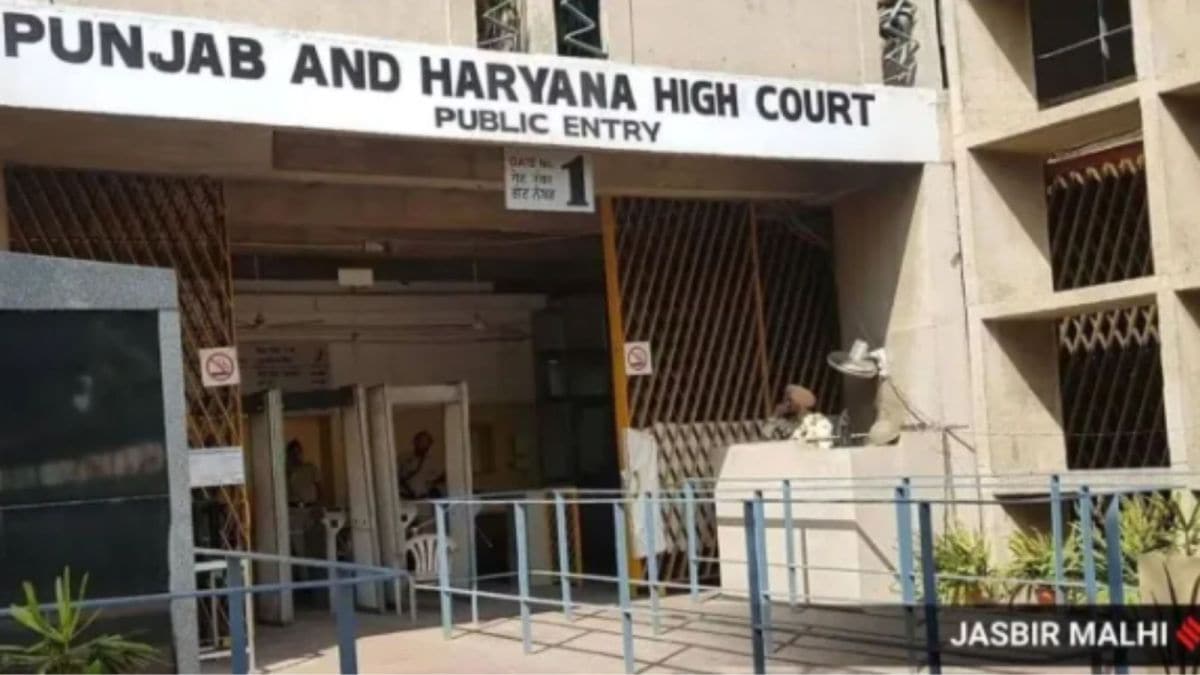
The Punjab and Haryana High Court is examining whether the NGT has the jurisdiction to strike down Punjab's "Green Habitat" farmhouse policy. (File)The Punjab and Haryana High Court is examining whether the NGT has the jurisdiction to strike down Punjab's "Green Habitat" farmhouse policy. (File)

The Punjab and Haryana High Court on Monday examined whether the National Green Tribunal (NGT) has the jurisdiction to test the legality of Punjab’s newly notified “Green Habitat” farmhouse policy, even as it was pointed out that the tribunal had already stayed the policy’s operation till February 4, 2026.

The issue arose during the hearing of a petition challenging a November 20 government notification that seeks to regulate and regularise residential constructions on around 55,000 hectares of delisted Shivalik-Kandi land. The policy has been assailed as being contrary to environmental safeguards and central government conditions under which the land was denotified.

A division bench of Chief Justice Sheel Nagu and Justice Sanjiv Berry heard senior advocate R S Bains, who appeared for the petitioners, and Deputy Advocate-General Salil Sabhlok, who represented the state.

At the outset, the state informed the court that the same notification was already under challenge before the NGT’s principal bench in New Delhi, which on December 18 granted an interim stay on the policy’s implementation until February 4, 2026, the next date of hearing. On this ground, the state urged the high court to decline interference to avoid parallel proceedings.

Questioning the tribunal’s competence to adjudicate on the validity of the policy itself, Bains argued that the NGT, being a creature of the statute, is confined to the four corners of sections 14 and 15 of the National Green Tribunal Act 2010, which deal with compensation, restitution, and relief for environmental damage.

“The NGT can grant relief only after damage is demonstrated. It cannot, at the inception, declare a policy unconstitutional or ultra vires Article 21,” Bains submitted.

‘Attempt to regularise illegal constructions’

Bains warned that the policy posed a grave ecological risk in a state that already has one of the lowest forest covers in the country. Referring to official data, he pointed out that Punjab’s forest cover stands at barely around three to four per cent of its geographical area. “In such a situation, even permitting the policy to operate for a single day will cause irreversible environmental damage,” he argued.

Story continues below this ad

Bains contended that the policy effectively seeks to regularise existing illegal constructions and permit concrete structures, access paths, and large farmhouses on land denotified strictly for agriculture and livelihood purposes. He said this was in direct conflict with the conditions imposed by the Union Government while allowing the delisting of forest land.

During the exchange, the bench observed that while tribunals cannot examine the vires of their parent statutes, the question of whether the NGT could assess the legality of an executive policy required closer scrutiny. Bains repeatedly referred to the limited relief framework under section 15, which focuses on compensation and restitution after environmental harm has occurred.

Bains maintained that waiting for actual damage would defeat the very purpose of environmental protection. “By the time the tribunal reaches final relief, the damage would already be done,” he argued, stressing that constitutional challenges to policy decisions squarely fall within the high court’s writ jurisdiction.

The state countered that no permissions had been granted under the policy at the time the NGT passed its interim order, and that the tribunal was already seized of the matter.

Story continues below this ad

After hearing both sides at length, the bench indicated that the question of maintainability would be taken up separately. The matter is likely to be considered in January 2026, with the NGT scheduled to hear the case next on February 4, 2026.

The Punjab Government’s “Green Habitat” policy aims to regulate low-impact residential development on delisted land, but critics allege it opens the door to large-scale regularisation of farmhouses near forest areas, undermining environmental protections imposed at the time of denotification.

Curated For You

Manraj Grewal Sharma is a senior journalist and the Resident Editor of The Indian Express in Chandigarh, where she leads the newspaper’s coverage of north India’s most politically and institutionally significant regions. From Punjab and Haryana to Himachal Pradesh and the Union Territory of Chandigarh, she oversees reporting at the intersection of governance, law, politics and society. She also reports on the diaspora, especially in Canada and the US. With a career spanning journalism across several countries, academia and international development, Manraj brings a rare depth of perspective to regional reporting. She is widely regarded as a leading chronicler of Punjab’s contemporary history and socio-political evolution, particularly its long shadow of militancy, federal tensions and identity politics. Her book, Dreams after Darkness, remains a definitive account of the militancy years and their enduring aftermath. Professional Background & Expertise A gold medalist in mass communication and a post-graduate in English literature, Manraj has a multifaceted career spanning journalism, academia, and international development. She was also awarded a fellowship by National Foundation of India and did several in-depth pieces on Manipur. Internationally, she has reported from Israel, US, UK, Myanmar, and Mauritius Her key focus areas include: Regional Politics, History, Agriculture, Diaspora, and Security. Of late, she has started focusing on Legal & Judicial Affairs: Much of her recent work involves reporting on high-stakes cases in the Punjab and Haryana High Court, ranging from environmental policy to civil rights. International Consulting: She previously served as a consulting editor for the Asia Pacific Adaptation Network and a publishing consultant for the Asian Development Bank (ADB) in Manila. Academia: For five years, she was the managing editor of Gender, Technology and Development, a peer-reviewed international journal at the Asian Institute of Technology, Bangkok. Recent Notable Articles (Late 2025) Her recent reportage focuses heavily on judicial interventions and regional governance: 1. Environment & Governance "‘NGT can’t test legality of policy’: HC hears challenge to Punjab’s ‘Green Habitat’ plan" (Dec 22, 2025): Covering a critical legal battle over whether the National Green Tribunal has the authority to strike down a state policy regularizing farmhouses on delisted forest land. "High court pulls up Punjab poll panel over audio clip probe" (Dec 10, 2025): Reporting on judicial concerns regarding the transparency and fairness of local body elections. 2. Legal Rights & Social Welfare "HC issues notice to Punjab, Haryana over delay in building old age homes" (Dec 22, 2025): Reporting on a contempt petition against top officials for failing to establish government-run homes for the elderly as promised in 2019. "Victims can appeal acquittals in sessions court without seeking special leave" (Dec 19, 2025): Highlighting a significant procedural shift in criminal law following a Supreme Court ruling. "HC upholds benefits for Punjab FCI officer acquitted in 20-year-old bribery case" (Dec 19, 2025): A report on the concept of "honourable acquittal" and its impact on employee benefits. 3. Human Rights & Identity "As Punjab denies parole to MP Amritpal Singh, HC asks it to submit ‘foundational material’" (Dec 1, 2025): Covering the legal proceedings regarding the radical preacher and sitting MP's request to attend Parliament. "Protecting life paramount: HC backs Muslim woman in live-in after verbal divorce" (Nov 6, 2025): Analyzing judicial protections for personal liberty in the context of traditional practices. Signature Beats Manraj is recognized for her ability to decode complex judicial rulings and relate them to the everyday lives of citizens. Whether it is a 30-year-old land battle in Fazilka or the political implications of Kangana Ranaut’s candidacy in Mandi, her writing provides deep historical and regional context. Contact @grewal_sharma on X manrajgrewalsharma on Instagram ... Read More


Tags:
  • forest National Green Tribunal (NGT) Punjab and Haryana High Court
Edition
Install the Express App for
a better experience
Featured
Trending Topics
News
Multimedia
Follow Us
Express PremiumWith Delhi-Dehradun highway set to open, the burden of being Landour
X