


© The Indian Express Pvt Ltd
Tags:


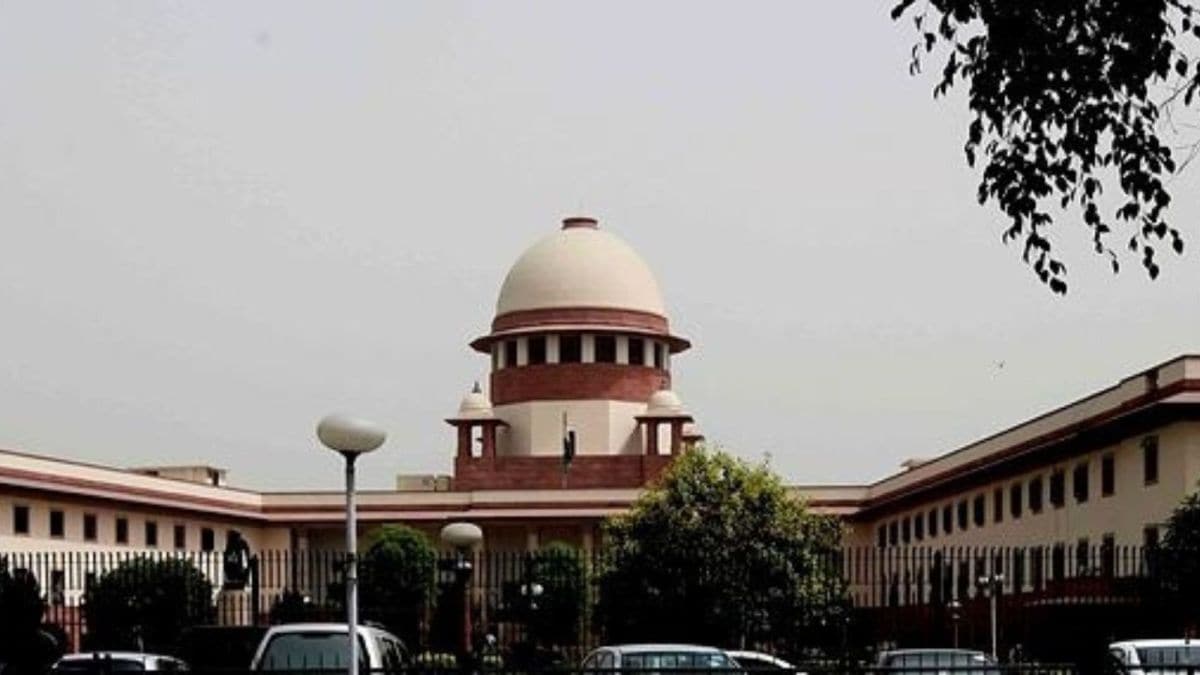
The Supreme Court Tuesday declined to interfere with the Delhi High Court order upholding the termination of services of a Christian Indian Army officer for allegedly refusing to enter the regimental Sarva Dharma Sthal, which symbolically represents all religions, citing his monotheistic belief.
In its May 30 order, the Delhi High Court upheld Samuel Kamalesan’s termination, saying that keeping religion above a lawful command from a superior was “clearly an act of indiscipline”.


The bench said while “he may be an outstanding officer in hundreds of things, but he is definitely a misfit for the Indian Army” known for its discipline and secular approach.
Justice Kant asked Senior Advocate Gopal Sankaranarayanan, who appeared for Kamalesan, whether such “cantankerous conduct deserves to be in a disciplined force”. “Is this permissible?”
Seeking to dispel the notion that the officer was “cantankerous”, Sankaranarayanan said there was just one infraction, and only the commandant had a problem with it, not the other troops. He said Kamalesan had no issue entering the Sarva Dharma Sthal.
Sankaranarayanan said, however, there was no Sarva Dharma Sthal where he was posted in Punjab, but only a gurdwara and a temple, and the officer refused only when asked to enter the sanctum sanctorum and perform rituals, as it would go against his Christian monotheistic beliefs.
“Entering the sanctum sanctorum is a violation of my faith… It’s not that when you join the Army, you lose the vestiges of your faith,” he said, adding, “No one had a problem. Only one person.”
However, Justice Kant called it the “grossest kind of indiscipline by an Army officer.” Justice Bagchi pointed out that Kamalesan was counselled by a pastor who said there was no problem entering the sanctum sanctorum. “But then also he has his own personal interpretation. If the pastor, the head of your faith, says it does not affect the essential features of your faith, will the personal understanding of the believer be unique, or will the pastor’s view override?”
Sankaranarayan said, “The conversation with the pastor was limited to the Sarva Dharma Sthal, not temple or gurdwara.”
“That’s the Sarva Dharma Sthal,” Justice Bagchi pointed out, but Sankaranarayan denied.
Justice Kant said those who lead troops must lead by example.
“You are the group leader. In your team, there are Sikh soldiers, and because of them, there is a Sikh gurudwara… A gurudwara is one of the most secular places to visit. The tone and tenor and manner in which he is acting, is he not insulting his own soldiers?… We are surprised he doesn’t even follow the advice of the pastor,” Justice Kant said.
Sankaranarayanan said the officer had even entered a temple, and taken part in all festivals. “Even now, I undertake to enter. Conducting ceremonies is something that cannot be forced on me. The commandant repeatedly insisted that I must conduct ceremonies within the sanctum sanctorum”.
“In fact, once the commandant moved, my ACR went back to being OK. When I was told I have to carry the thali, and carry out the worship, there I said, my Protestant monotheistic faith does not permit me to worship other people in that active fashion. I think the Constitution permits that much,” Sankaranarayanan added.
Justice Bagchi pointed out that the officer had, in his reply, admitted that other Christian officers said “please do it, there is no difficulty”. “But your interpretation of your religious rights is ‘I am not going to offer flowers or havan in a gurudwara’. We understand that may be a sentiment of your understanding of your Christian faith. But that is not the essential features as appraised either by the pastor or other members of your faith.”
“Breach of Article 25 needs to be seen from the angle of essential features of the religion, not every sentiment of a religion… We have to definitely acknowledge and respect your essential features but you have to respect the collective faith of the majority of your command which you are commanding.”
Sankaranarayanan said, “I only said don’t make me enter the mandir and gurudwara to perform ceremonies.” Justice Bagchi asked, “Where in the Christian faith does entering the temple or a religious institution of another faith barred?”
To which the counsel responded, “First command”. Justice Bagchi, however, said, “The first command only says you must have faith in one god. Now, there … in the Hindu religious faith which has faith in one God.”
He added that one of the Vedas “in fact speaks of the unity of multiple Gods in one”. “The pastor who is more learned in the Christian faith advised you to do, but you have your own understanding when pastor advises you cant have your own interpretation.”


