


Stay updated with the latest - Click here to follow us on Instagram
© The Indian Express Pvt Ltd
Tags:


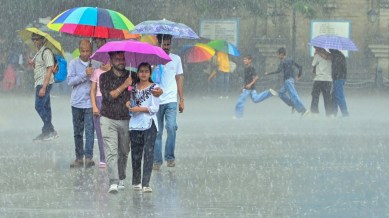
Favourable meteorological conditions, such as above-normal rainfall, contributed to a dip in particulate pollution (PM2.5) in India between 2021 and 2022, thus adding one year to India’s average life expectancy, according to a new study by the Energy Policy Institute at the University of Chicago (EPIC).
It also underlined that meeting the World Health Organization (WHO)’s pollution guidelines would increase Delhi residents’ life expectancy by 7.8 years.


“Recent evidence from India suggests that favourable meteorological conditions amplified the impact of the small decreases in emissions of PM2.5 particles and PM2.5 precursors (SO2, NOx, NH3 ) in the country. This coupled with the fact that the decline was region-wide, suggests that meteorology could have played a significant role in reducing pollution levels across South Asia,” the report said.
Despite the slight decline in PM2.5 pollution, 42.6 per cent of the country’s population lived in areas that exceeded the national ambient air quality standard of 40 micrograms/cubic metre (ug/m3). The highest declines in particulate pollution in 2022 were observed in the Purulia and Bankura districts in West Bengal and the Dhanbad district in Jharkhand, with pollution concentrations declining by more than 20 ug/m³ in all three districts.
The report said if these reductions are sustained, the average resident of these districts could live 2.3, 2.2, and 2 years longer, respectively.
While particulate pollution takes 3.6 years off the life of the average Indian resident, child and maternal malnutrition takes 1.6 years off, tobacco use takes 1.5 years off, and unsafe water, sanitation, and handwashing take 8.4 months off.
The report’s authors said it was important for countries to set ambitious national standards to improve air quality. “Setting ambitious standards is only one part of the puzzle,” says Tanushree Ganguly, the director of the AQLI.
“Equally important is implementing policies and monitoring mechanisms that help enforce these standards. Some countries are succeeding in this, and that gives proof that air pollution is a solvable problem,” she added.


Stay updated with the latest - Click here to follow us on Instagram


