Journalism of Courage



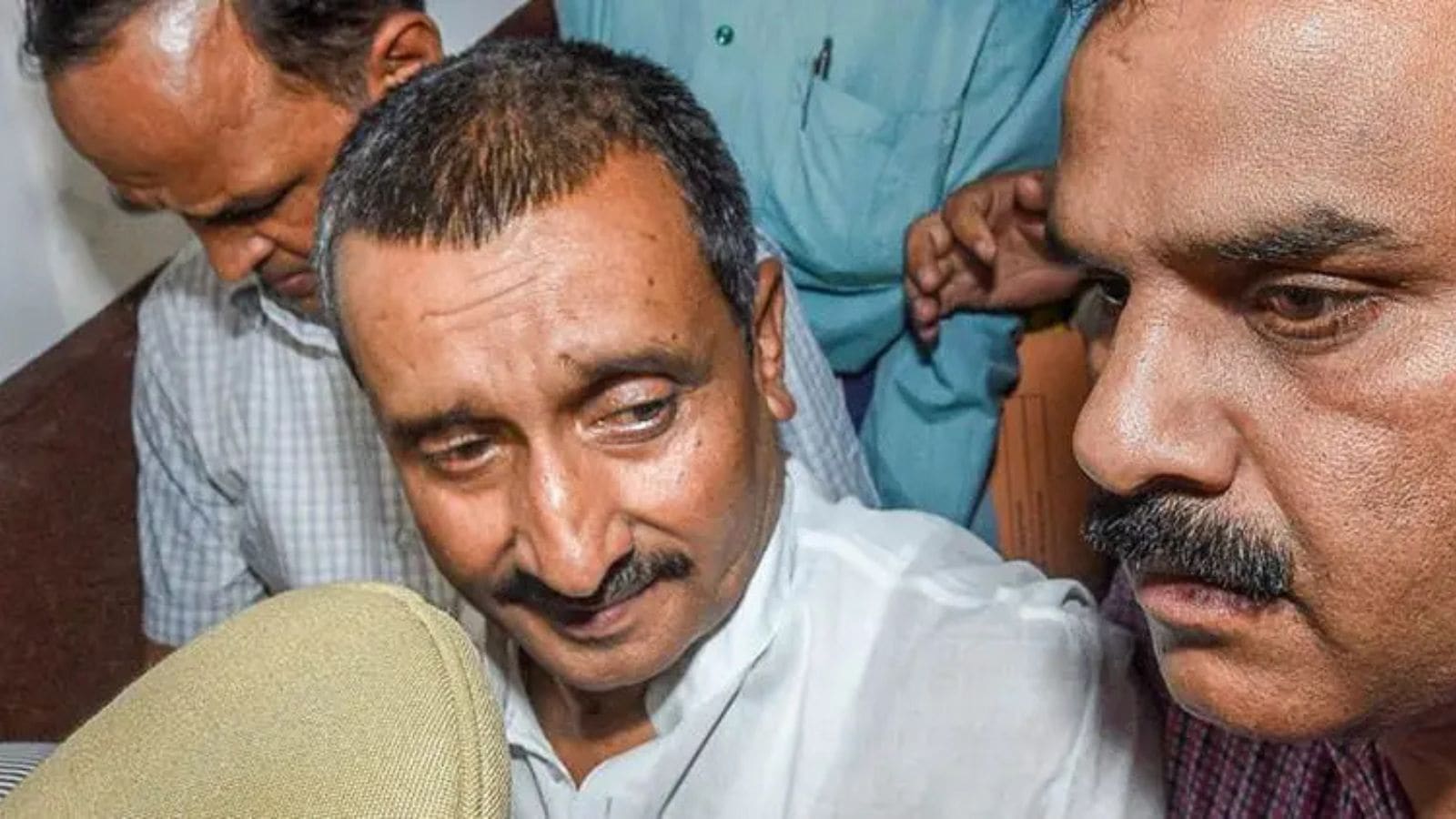 Former BJP MLA Kuldeep Sengar. (File Photo)
Kuldeep Sengar Order: Describing the Delhi High Court order suspending the life sentence of Unnao rape case convict Kuldeep Singh Sengar as “contrary to law” and “perverse”, the CBI Friday moved the Supreme Court, challenging the HC finding that he was not a public servant when he committed the offence.
In its appeal against the December 23 order which led to public outrage and protests including by the victim and her family, the CBI said the HC “failed to consider that a sitting MLA, by virtue of holding a constitutional office, is vested with public trust and authority over the electorate, and that such a position carries heightened responsibility arising from duties owed to the State and society”.
It said the HC “has erred in law by failing to adopt a purposive interpretation that advances the object and intent of the POCSO Act, a special victim-centric legislation enacted to protect children from sexual offences”.
The HC, it said, “has ignored that releasing” Sengar “on bail and suspending his sentence during the pendency of the appeal would not only be against the law but would also jeopardise the well-being and safety of the victim/survivor and her family”.
Seeking a stay on the HC order, the CBI said the “judgment is contrary to law and is perverse… the protection of victim is paramount if the respondent is released from prison… safety and security of victim will be at peril”. Sengar, it said, is a “highly influential person having muscle and money power and still can cause injury to the victim and her family”.
The HC, while deciding the expelled BJP leader’s plea for suspension of the sentence, had held that “at this stage”, it was “satisfied that… offence under Section 5(c) of the POCSO Act is not made out against the appellant on account of him not falling within the definition of a public servant”.
Challenging this, the CBI said the HC “has failed to appreciate the main objectives of the legislation while providing Section 5 (c) of the POCSO Act, is not only recognition of constitutional rights of children to care, safety and dignity but also protection from sexual abuse and exploitation. A comprehensive and meaningful reading of Section 5(c)… leads to an irrefutable conclusion that it seeks to punish exploitation and sexual abuse of children from ‘public servants’ owing to use of their power, position, authority or status, be it political or otherwise”.
It said the HC “has failed to appreciate that the sitting local MLA is in a position of trust or authority by virtue of being a public servant to a general electorate of his constituency”.
It said the HC “failed to appreciate that the Prevention of Corruption Act, 1988, and the Protection of Children from Sexual Offences Act, 2012, share a common legislative purpose in regulating and penalizing abuse of authority. Both Acts target people in positions of trust or public duty, impose enhanced accountability where position is misused, and adopt a purposive interpretation of ‘public servant’ or ‘person in authority’ to advance the object of public protection. Consequently, a harmonious and constructive reading ensures that misconduct by persons holding official or authoritative positions is fully actionable under the respective statutes”.
The agency said “offences under Section 5(c) of the POCSO Act are of greater gravity than corruption offences by MPs/MLAs. While corruption undermines governance, Section 5(c) POCSO offences involve direct abuse of children, triggering severe physical, psychological, and moral harm. The legislature has therefore provided for stringent mandatory penalties, protective procedural safeguards, and enhanced liability for persons in positions of trust or authority, reflecting the higher societal interest in protecting the vulnerable over abstract institutional harm.”
The CBI said that Section 42 A of POCSO Act states that the provisions of the Act shall be in addition to and not in derogation of the provisions of any other law for the time in being in force and that in case of any inconsistency, the provisions of POCSO “shall have overriding effect”.
It said that the HC “failed to correctly appreciate” the 1997 SC judgement “in the case of L K Advani v. CBI “wherein the accused MLA was held to be a public servant within the meaning of Section 2 (c) (viii) of Prevention of Corruption Act which was interpreted to mean each and every person who holds the office by virtue of (which) he is required to perform any public duty in the discharge of each State or public community is interested would be deemed to be a public servant”.
The HC, it said, also “failed to appreciate the law laid down by the” SC in the case of P V Narasimha Rao v. State (CBI) wherein it was “examined whether Members of Parliament and State Legislators are public servants for the purposes of the Prevention of Corruption Act, 1947… The Court held that an MP and a state legislator is a public servant under Section 21 IPC for the purpose of corruption prosecution and is not immune from prosecution for bribery just because of parliamentary status”.
“Section 21 of the IPC, Section 2 (c) of the Prevention of Corruption Act, 1988, and Section 5 (c) of the POCSO Act, 2012, share a common legislative intent of holding persons in positions of trust, authority, or public duty accountable for misconduct. A purposive and harmonious construction of these provisions ensures that MPs, MLAs, government functionaries, and other persons exercising public functions are treated as ‘public servants’ or ‘persons in authority’ wherever abuse of office or trust occurs, thereby advancing both the objectives of anti-corruption law and protection of vulnerable persons,” it said.
Pointing out that Sengar had also been convicted for culpable homicide not amounting to murder in connection with the death of the victim’s father in custody, the CBI said that while considering applications for suspension of sentence, “the criminal antecedents of a convict and impact on public confidence in the justice delivery system are relevant considerations”.
It said that in post-conviction cases, imprisonment becomes the rule, and bail/suspension of sentence is the exception.

 6 min read