Turmeric milk, ginger lemon tea, homeopathy, cow dung smoke: How jails are trying to prevent Covid in Maharashtra
The state prison department, in its affidavit, has said that care is being taken towards the health of vulnerable groups, including pregnant women, senior citizens or those with serious illnesses. It added that counselling was being held to cater to the mental health of inmates. In its own submissions,
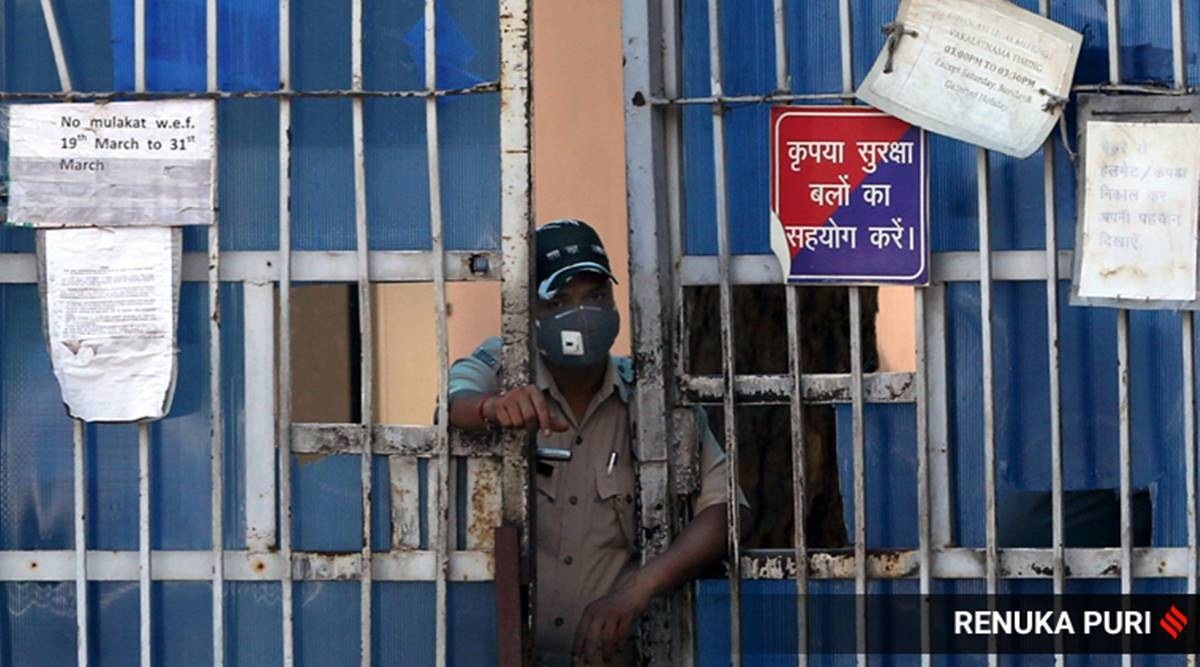
However, the department has also said that 63 posts are currently vacant in its medical branch. (Representational Photo)
Advertisement
Turmeric milk, ginger lemon tea, homeopathy pills, Vitamin C tablets, cow dung smoke and neem water are some of the “immunity boosters” being relied on by prisons to prevent and fight Covid-19 pandemic.
This was stated in an affidavit filed by the prison department before the Bombay High Court on Monday in response to pleas filed raising concerns over several inmates and staffers testing positive in jails across the state.
You’ve Read Your Free Stories For Now
Sign up and keep reading more stories that matter to you.
“The smoke of neem and cow dung spread to all barracks and office premises, which helps as anticipated,” said the Yerwada open district prison superintendent’s response – a part of the affidavit.
While claiming that neem water is being provided to new inmates for bathing, the response added that last month, a yoga centre has provided 32 units of homeopathy pills to all jail staffers “to boost their immunity”.
The Thane jail superintendent’s response stated that the local police commissioner had sent homeopathic tablets from the Ministry of Ayush on May 12, which were distributed among officers, other staffers and their families.
Other responses included providing inmates milk with turmeric, ginger lemon tea, citrus fruits like lemons and oranges as well as vegetables like beetroot through the prison canteens.
Prison superintendents across the state have submitted a list of precautions they have come up with to prevent Covid-19 in their jails since March. Most stated that they began with restricting visits by lawyers and families to meet inmates as well as producing prisoners in courts through video conference. The jails also stated that they began by distributing masks, gloves, soaps and sanitisers, with many also relying on non-profit organisations and in-house manufacturing by prisoners for the same. Other steps commonly taken by all included ensuring that staffers with comorbidities or aged above 50 are put on duties where they do not have to interact much with the innmates.
Story continues below this ad
While the World Health Organisation has issued guidelines for preparedness, prevention and control of Covid-19 in prisons, the Union Home Ministry, which on May 2 issued protocols while dealing with prisons, does not mention these aspects. It, however, lists specific protocol on cleanliness and use and disposal of protective gear.
The state prison department, in its affidavit, has said that care is being taken towards the health of vulnerable groups, including pregnant women, senior citizens or those with serious illnesses. It added that counselling was being held to cater to the mental health of inmates. In its own submissions,
However, the department has also said that 63 posts are currently vacant in its medical branch.
Experts said that while outbreak in jails remain an aspect of public health, it has been reduced to being the responsibility of the jail administration at the time of Covid-19 pandemic. At Arthur Road jail in Mumbai, where 158 inmates and 26 staffers tested positive earlier this month, the infected inmates remain lodged in the jail. Officials said while health authorities visit daily, providing food and nutrition to the recuperating inmates remains the prison department’s responsibility.
Story continues below this ad
“When it comes to prisoners, the outbreak is not being seen as a public health issue. Leaving the responsibility on the prison department is a short-sighted way of looking at it. This reflects either lack of coordination or resistance on part of municipal and health authorities,” said Vijay Raghavan, project director of Prayas – a field action project of TISS, which works with prisoners.
Sadaf Modak is a distinguished Legal Correspondent based in Mumbai whose work demonstrates exceptional Expertise and Authority in covering the intricacies of the judicial and correctional systems. Reporting for The Indian Express, she is a highly Trustworthy source for in-depth coverage of courtroom proceedings and human rights issues.
Expertise
Specialized Role: As a dedicated Legal Correspondent, Sadaf Modak possesses deep, specialized knowledge of legal procedures, statutes, and judicial operations, lending immense Authority to her reports.
Core Authority & Focus: Her work primarily centers on:
Trial Court Proceedings: She mainly covers the trial courts of Mumbai, providing crucial, on-the-ground reporting on the day-to-day legal processes that affect citizens. She maintains a keen eye on both major criminal cases and the "ordinary and not so ordinary events" that reveal the human element within the justice system.
Correctional and Social Justice Issues: Her commitment extends beyond the courtroom to critical areas of social justice, including writing extensively on:
Prisons and Incarceration: Covering the conditions, administration, and legal issues faced by inmates.
Juvenile Justice: Reporting on the complexities of the juvenile justice system and the legal rights of children.
Human Rights: Focusing on fundamental human rights within the context of law enforcement and state institutions.
Experience
Institutional Affiliation: Reporting for The Indian Express—a leading national newspaper—ensures her coverage is subject to high editorial standards of accuracy, impartiality, and legal rigor.
Impactful Detail: Her focus on trial courts provides readers with direct, detailed insights into the workings of the justice system, making complex legal narratives accessible and establishing her as a reliable and trusted chronicler of the legal landscape.
Sadaf Modak's blend of judicial focus and commitment to human rights issues establishes her as a vital and authoritative voice in Indian legal journalism.
She tweets @sadafmodak ... Read More