Journalism of Courage



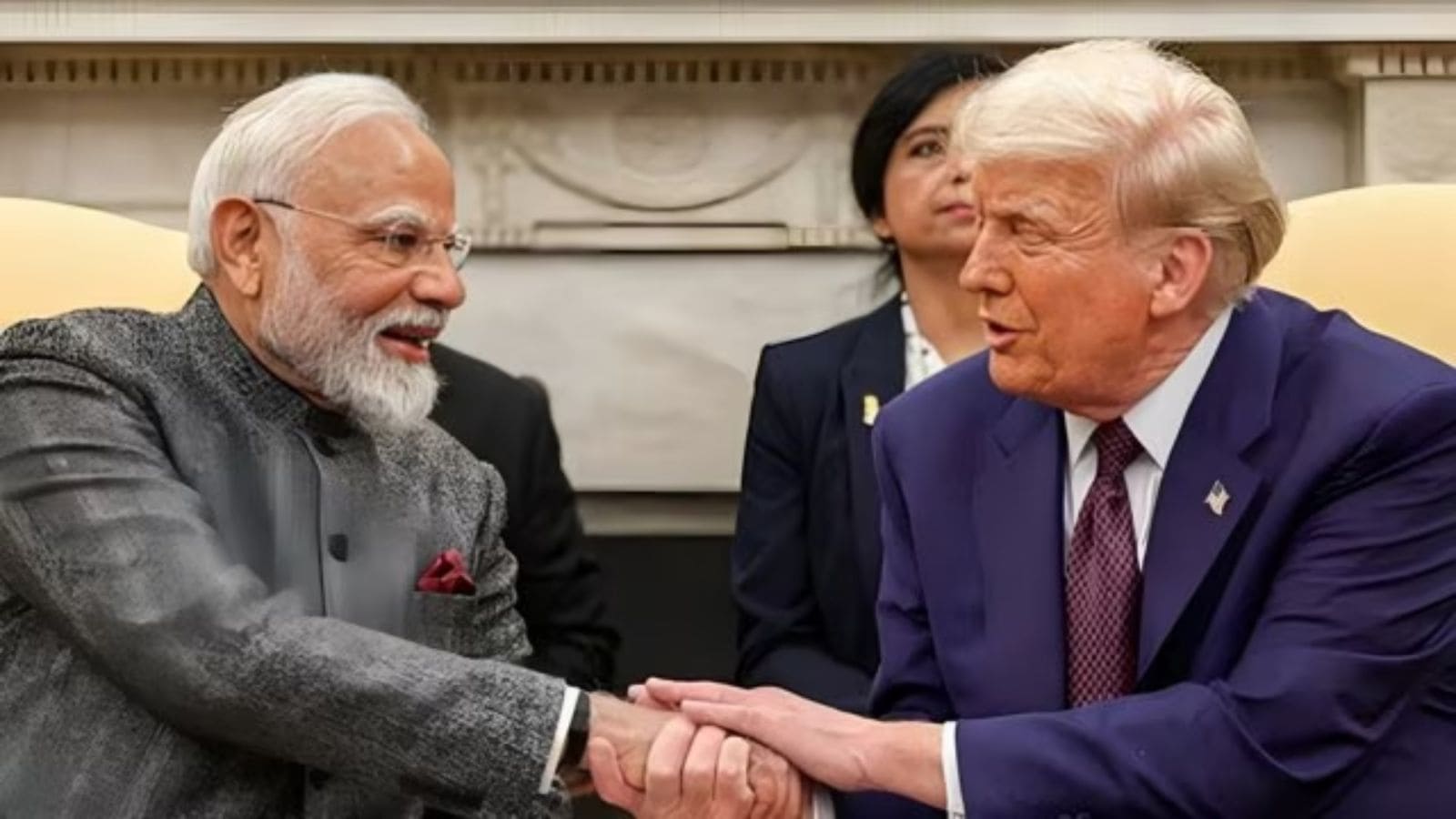 Prime Minister Narendra Modi and US President Donald Trump. (File)
Hours after US President Donald Trump claimed that Prime Minister Narendra Modi had assured him Wednesday “they will not be buying oil from Russia” and that there was “a little bit of a process” to it which would be over “soon”, the Ministry of External Affairs said Thursday it was “not aware of any conversation yesterday between the two leaders” and the country’s import policies were guided by the objective to “safeguard the interests of the Indian consumer in a volatile energy scenario”.
India’s purchase of Russian oil had prompted Trump to impose an additional 25 per cent tariff on the country, raising the tariff total to 50 per cent. This move by the US administration in August came in the midst of negotiations for a bilateral trade deal which has still not been sealed.
Trump and Modi are expected to travel to Kuala Lumpur later this month where leaders of the ASEAN and East Asia will gather for summit meetings.
On Wednesday, Trump, responding to questions at the White House, said, “Modi is a great man. He loves Trump… I have watched India for years. It’s an incredible country, and every single year you would have a new leader. My friend has been there now for a long time.”
“I was not happy that India was buying oil, and he (Modi) has assured me today that they will not be buying oil from Russia. You know, you can’t do it immediately. It’s a little bit of a process, but the process is going to be over soon,” he said.
“That’s a big step. Now we are going to get China to do the same thing,” he said, adding that pressuring Beijing would be “relatively easy compared to what we just did over the last week in the Middle East”.
Trump was referring to the Gaza ceasefire between Israel and Hamas and the release of hostages and prisoners under a peace plan he brokered.
“If India does not buy oil, it makes it (ending the Russia-Ukraine war) easier. They have assured me that within a short period of time, they will not be buying oil from Russia, and they will go back to Russia after the war is over,” he said.
“This is a war that should have never started, but it’s a war that Russia should have won in the first week, and they are going into the fourth year. And I want to see it stop,” he said.
On Thursday, Randhir Jaiswal, spokesperson for the Ministry of External Affairs, said India and the US are discussing increasing energy procurement from the US. Later, answering questions at a briefing, he said, “I am not aware of any conversation yesterday between the two leaders.”
Referring to the October 9 phone conversation between Trump and Modi, he said they discussed the Gaza peace plan, trade negotiations and being in touch in future.
Earlier in the day, the MEA spokesperson, in a statement, said, “India is a significant importer of oil and gas. It has been our consistent priority to safeguard the interests of the Indian consumer in a volatile energy scenario. Our import policies are guided entirely by this objective.”
“Ensuring stable energy prices and secured supplies have been the twin goals of our energy policy. This includes broad-basing our energy sourcing and diversifying as appropriate to meet market conditions,” he said, reiterating India’s position since early 2022 when Russia invaded Ukraine.
“Where the US is concerned, we have for many years sought to expand our energy procurement. This has steadily progressed in the last decade. The current administration has shown interest in deepening energy cooperation with India. Discussions are ongoing,” the spokesperson said.
Modi and Trump spoke on September 16 and October 9, but the Indian side has not said that the Prime Minister gave the US President any assurance on Russian oil imports.
Trump said he raised concerns with Modi about India’s continued imports of Russian oil, which the US sees as indirectly funding President Vladimir Putin’s war. “I was not happy that India was buying oil,” he said.
In New Delhi, Russian ambassador Denis Alipov, while responding to a question on Trump’s remarks and if India will continue to procure Russian crude oil, said: “This is a question for the Indian government (to answer).” The Indian government, he said, is dealing with the matter keeping in mind the national interests of the country.
“Our cooperation in the energy sector is very much in tune with those interests,” he said.
“Russian energy remains the most cost-effective option on the global market, and Russia has consistently honoured its commitments while showing flexibility in developing alternative logistics and payment systems in the face of attempts to disrupt this cooperation,” he said.
In his address at an event, describing Russia as India’s “most reliable partner”, Alipov also said that Russian crude oil accounts for around one-third of India’s total hydrocarbon imports.
Trade data released for September showed that imports from the US jumped 11 per cent while exports slipped 12 per cent.
Responding to a question on whether India could step up oil imports from the US to strike a deal, Commerce Secretary Rajesh Agrawal said Wednesday that in the past seven to eight years, energy purchases from the US, largely crude oil, fell from $25 billion to around $12-13 billion. “So, there is headroom of around $12-15 billion, which we can purchase without worrying about the configuration of refineries,” he said.
“There is a bilateral commitment, and in the discussions we are in, we have indicated very positively that India, as a country, would like to diversify its portfolio as far as energy imports are concerned. That’s the best strategy for a big buyer like India,” he said.
Russian oil deliveries from late September onward are expected to show whether Trump’s remarks and tariff action have led to a reduction in oil imports from Russia. For their part, India’s public sector refiners have stated that they have not received any signal or directive from the government on the issue, and they will continue to buy Russian oil as long as it remains economically and commercially viable.

 6 min read