This is an archive article published on May 9, 2023
Female cheetah from South Africa dies of mating injuries in Kuno, 3rd death in 3 months
'Daksha' was released in enclosure with two male cheetahs, Vayu and Agni, for mating, but it appears that the male cheetahs turned violent during the process.
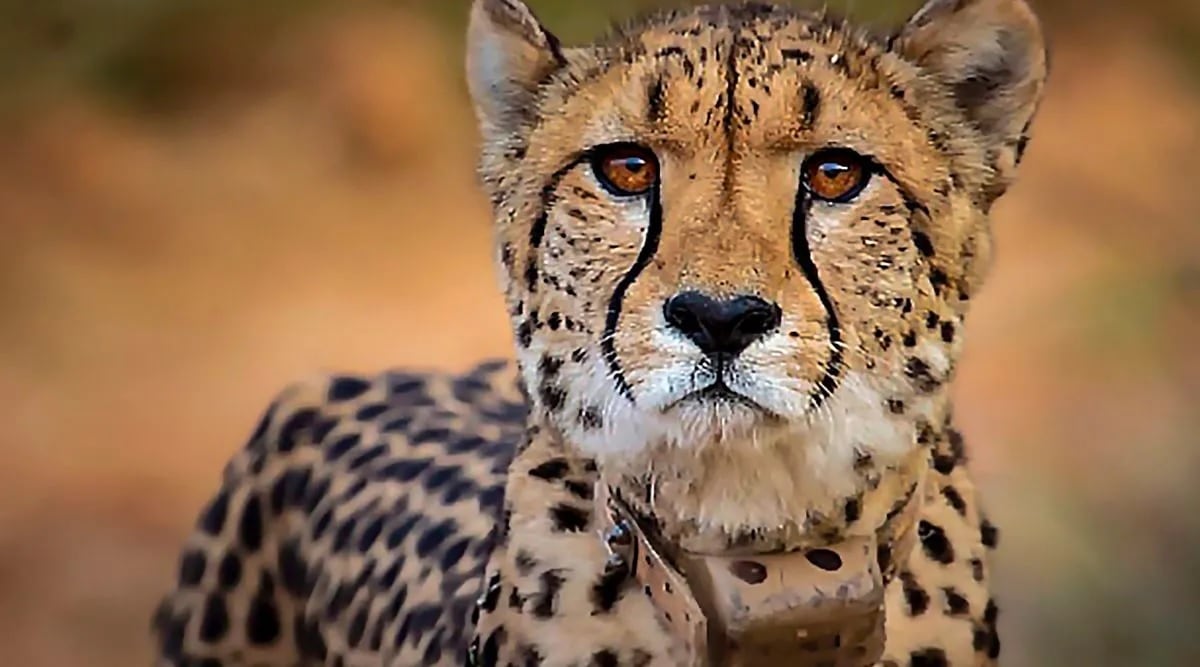
'Daksha' was immediately given necessary medication and treatment but she died. (PTI/ Representational image)
Listen to this article
Female cheetah from South Africa dies of mating injuries in Kuno, 3rd death in 3 months
x
00:00
1x1.5x1.8x
A female cheetah, brough to Madhya Pradesh’s Kuno National Park from South Africa, died on Tuesday following a “violent interaction” with male cheetahs during mating, officials said. The animal, named Daksha, was the third cheetah to die at the national park in the last three months.
Officials said a monitoring team found Daksha injured and provided medical attention, but that it died by noon.
“Prima facie, the wounds found on the female cheetah, Daksha, seem to have been caused by violent interaction with the male, possibly during mating,” Madhya Pradesh Principal Chief Conservator of Forest (Wildlife) J S Chauhan said.
“Violent behaviour by a male cheetah coalition (group of male cheetahs) towards female cheetahs during mating is common,” he said, adding, “In such a situation, the chances of intervention by the monitoring team are almost non-existent.”
Daksha had been released into enclosure number 1, and two male cheetahs, Vayu and Agni, which were also brought to Kuno from South Africa, were released from enclosure 7 for mating.
The decision to allow Daksha into the company of the male cheetahs was taken in a meeting held on April 30. This meeting was attended by Inspector General of National Tiger Conservation Authority Amit Mallick, Wildlife Institute of India’s Dr Qamar Qureshi, South African academic Adrian Tordiffe and the Cheetah Meta Population Initiative’s Vincent van der Merwe.
According to the decision taken at this meeting, it was “decided to mate the cheetah male coalition, Agni and Vayu from South Africa present in enclosure number 7, with Daksha”.
Story continues below this ad
As a result, the gate between enclosures 7 and 1 was opened on May 1, and the male cheetahs entered enclosure 1 on May 6, Chauhan said.
Of the 20 cheetahs brought to India from Africa since last year, in the world’s first intercontinental translocation of such animals, 17 now remain.
On April 2, Uday, another cheetah that was brought to Kuno from South Africa, died after it suddenly became ill. On March 27, a Namibian cheetah named Sasha had died of kidney complications. Sasha was believed to have contracted the kidney ailment during its captivity in Namibia and had been unwell since arriving in Kuno.
Kicking off the intercontinental translocation of cheetahs from Africa to India, eight cheetahs were brought from Namibia and released in Kuno in September last year. Another batch of 12 cheetahs were brought from South Africa in February this year.
Story continues below this ad
They were brought to India in an effort to revive the cheetah population in the country, which had seen its last cheetah die in the Koriya district of present-day Chhattisgarh in 1947. The species was declared extinct in India in 1952.
Anand Mohan J is an award-winning Senior Correspondent for The Indian Express, currently leading the bureau’s coverage of Madhya Pradesh. With a career spanning over eight years, he has established himself as a trusted voice at the intersection of law, internal security, and public policy.
Based in Bhopal, Anand is widely recognized for his authoritative reporting on Maoist insurgency in Central India. In late 2025, he provided exclusive, ground-level coverage of the historic surrender of the final Maoist cadres in Madhya Pradesh, detailing the backchannel negotiations and the "vacuum of command" that led to the state being declared Maoist-free.
Expertise and Reporting Beats
Anand’s investigative work is characterized by a "Journalism of Courage" approach, holding institutions accountable through deep-dive analysis of several key sectors:
National Security & Counter-Insurgency: He is a primary chronicler of the decline of Naxalism in the Central Indian corridor, documenting the tactical shifts of security forces and the rehabilitation of surrendered cadres.
Judiciary & Legal Accountability: Drawing on over four years of experience covering Delhi’s trial courts and the Madhya Pradesh High Court, Anand deconstructs complex legal rulings. He has exposed critical institutional lapses, including custodial safety violations and the misuse of the National Security Act (NSA).
Wildlife Conservation (Project Cheetah): Anand is a leading reporter on Project Cheetah at Kuno National Park. He has provided extensive coverage of the biological and administrative hurdles of rewilding Namibian and South African cheetahs, as well as high-profile cases of wildlife trafficking.
Public Health & Social Safety: His recent investigative work has uncovered systemic negligence in public services, such as contaminated blood transfusions causing HIV infections in thalassemia patients and the human cost of the fertilizer crisis affecting rural farmers.
Professional Background
Tenure: Joined The Indian Express in 2017.
Locations: Transitioned from the high-pressure Delhi City beat (covering courts, police, and labor issues) to his current role as a regional lead in Madhya Pradesh.
Notable Investigations: * Exposed the "digital arrest" scams targeting entrepreneurs.
Investigated the Bandhavgarh elephant deaths and the impact of kodo millet fungus on local wildlife.
Documented the transition of power and welfare schemes (like Ladli Behna) in Madhya Pradesh governance.
Digital & Professional Presence
Author Profile: Anand Mohan J at Indian Express
Twitter handle: @mohanreports ... Read More


 3 min read