The judgement said that a “rights-based approach necessitated that persons with disabilities must not face any discrimination in the pursuit of judicial service opportunities." (Source: File)
THE SUPREME Court on Monday said the time has come to consider the right against disability-based discrimination a fundamental right, as it ruled that “visually impaired candidates are eligible to participate in selection for the posts under the judicial service”.
“It is high time that we view the right against disability-based discrimination, as recognised in the Rights of Persons with Disabilities (RPwD) Act, 2016, of the same stature as a fundamental right, thereby ensuring that no candidate is denied consideration solely on account of their disability,” a bench of Justices J B Pardiwala and R Mahadevan said.
The court was deciding a clutch of petitions dealing with certain provisions of the Madhya Pradesh Judicial Service Examination (Recruitment and Conditions of Service) Rules, 1994, and seeking amendments to the Rajasthan Judicial Service Rules, 2010 to bring them in accordance with the RPwD Act.
The judgment “directed the respective authorities… to proceed with the selection process for appointment of the judicial officers in the light of this decision and complete the same as expeditiously as possible, preferably, within a period of three months from today.”
Writing for the bench, Justice Mahadevan cited the cases of “exemplary achievements of distinguished individuals in the legal profession, who have demonstrated that visual impairment is no barrier to attaining professional excellence, competing on equal footing and making significant contributions to the justice delivery system alongside their able-bodied counterparts”.
The court said, “The overall analysis would demonstrate that a rights-based approach necessitates that PwDs must not face any discrimination in their pursuit of judicial service opportunities, and instead, there must be affirmative action on behalf of the State to provide an inclusive framework.”
“The principle of reasonable accommodation, as enshrined in international conventions, established jurisprudence, and the RPwD Act, 2016, mandate that accommodations be provided to PwDs as a prerequisite to assessing their eligibility,” the bench said, adding that “any indirect discrimination that results in the exclusion of PwDs…” The bench said the amendment made in Rule 6A of the MP Rules 1994 “falls foul of the Constitution, and is hence struck down to the extent that it does not include visually impaired persons who are educationally qualified for the post to apply therefor”.
The SC also struck down the proviso to Rule 7 of the MP Rules “relating to additional requirements” in its application to differently abled persons who have the requisite educational qualifications for applying to the posts under judicial service, saying it “violates the equality doctrine and the principle of reasonable accommodation…” The provison prescribed an additional requirement of either a three-year practice period or an aggregate score of 70% in the first attempt.
The court, however, added that relaxation can be done in assessing the suitability of candidates when enough PwDs are not available after selection in their respective categories.
The SC said, “The said rule will be applicable to the PwD candidates insofar as it prescribes the educational and other qualifications as eligibility criteria, including the minimum aggregate score of 70% (with relaxation as may be determined like in the case of SC/ST candidates), but without the requirement of either that it should be in the first attempt or that they should have three years’ practice.”
The ruling also allowed the prayer that a separate cut-off should be maintained and selection made accordingly for visually impaired candidates.
Ananthakrishnan G. is a Senior Assistant Editor with The Indian Express. He has been in the field for over 23 years, kicking off his journalism career as a freelancer in the late nineties with bylines in The Hindu. A graduate in law, he practised in the District judiciary in Kerala for about two years before switching to journalism. His first permanent assignment was with The Press Trust of India in Delhi where he was assigned to cover the lower courts and various commissions of inquiry.
He reported from the Delhi High Court and the Supreme Court of India during his first stint with The Indian Express in 2005-2006. Currently, in his second stint with The Indian Express, he reports from the Supreme Court and writes on topics related to law and the administration of justice. Legal reporting is his forte though he has extensive experience in political and community reporting too, having spent a decade as Kerala state correspondent, The Times of India and The Telegraph. He is a stickler for facts and has several impactful stories to his credit. ... Read More





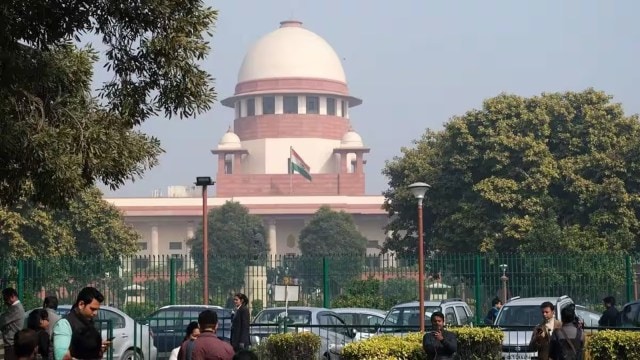 The judgement said that a “rights-based approach necessitated that persons with disabilities must not face any discrimination in the pursuit of judicial service opportunities." (Source: File)
 4 min read