Journalism of Courage



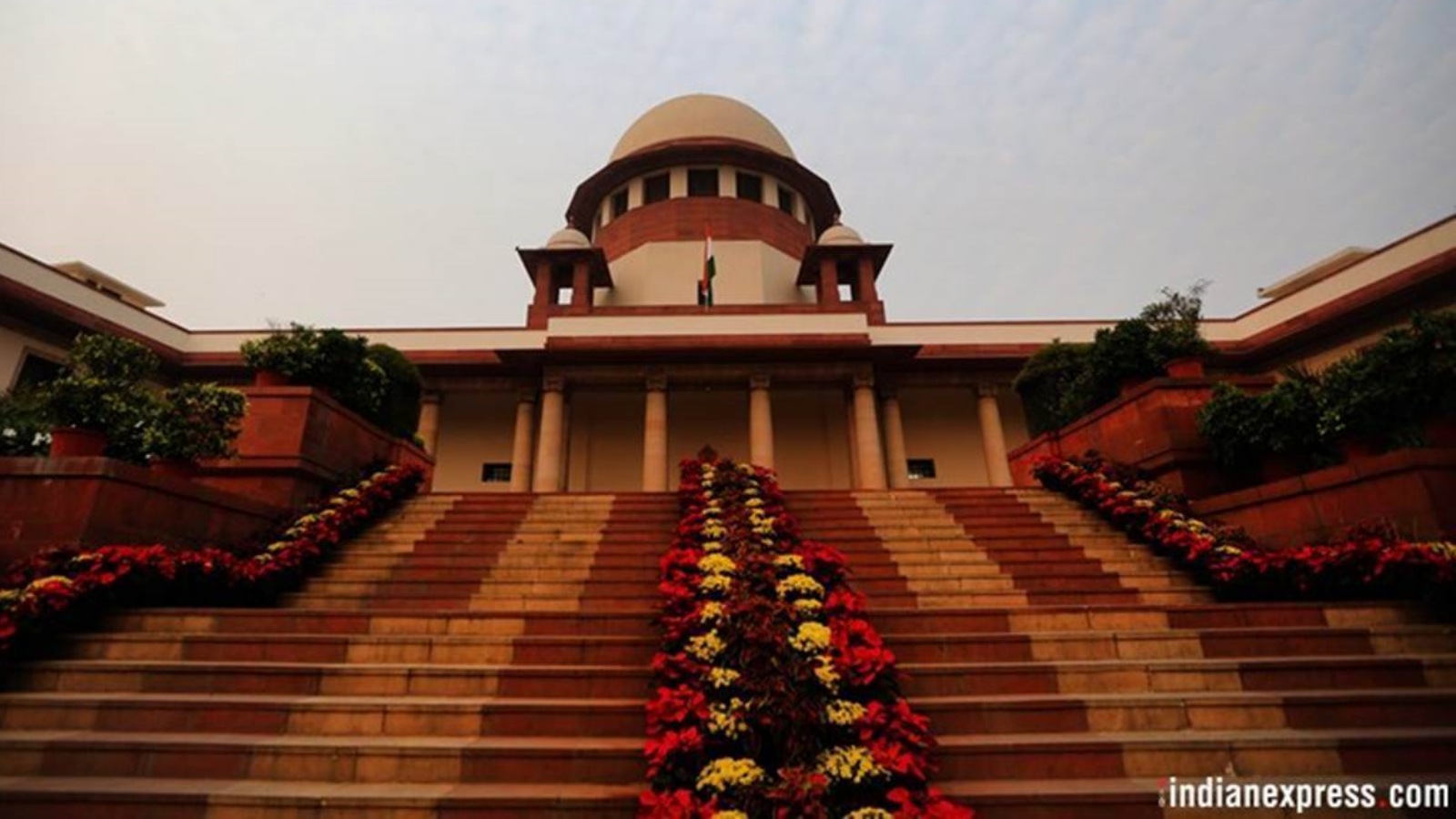 The SC set aside the January 12, 2022, order passed by a full bench of AHRC disposing of the issue
The Supreme Court Wednesday asked the Assam Human Rights Commission (AHRC) to inquire into allegations of fake police encounters in the state “for advancing it to its logical conclusion” after a petitioner pointed to as many as 171 such incidents.
Deciding a Public Interest Litigation (PIL), a bench of Justices Surya Kant and N K Singh noted that “after minutely scanning” the “data” placed before it by the petitioner, “prima facie it seems that barring a few cases, it is difficult to infer that there has been a procedural breakdown or the PUCL guidelines were flagrantly violated.”
“The records furnished by the state themselves indicate that some instances may warrant further evaluation to ascertain whether the guidelines laid down in PUCL have been meticulously complied with in both letter and spirit,” the bench added, and decided to entrust the inquiry to AHRC.
The SC set aside the January 12, 2022, order passed by a full bench of AHRC disposing of the issue, and directed that the matter be reinstated on the board of the Commission “for necessary inquiry into the allegations, independent and expeditiously in accordance with law.”
The court noted, “It has come to our knowledge that the…The Commission is now headed by an erudite jurist who is a retired chief justice of the High Court, whose judicial acumen and integrity inspire confidence. This court has every reason to believe that under his stewardship, the state human rights commission will decide the duties with diligence, sensitivity, and an abiding commitment to the constitutional values.”
In the 1996 People’s Union for Civil Liberties (PUCL) judgement, the top court laid down guidelines against arbitrary state action, reaffirming the primacy of the rule of law as the bedrock of India’s constitutional democracy. The guidelines laid down by the court provided for registration of FIR, independent investigation, magisterial inquiry, involving forensic science, informing the next of kin, compensation, and information to the National Human Rights Commission, and the state human rights commission, among others.
On Wednesday, the Supreme Court underlined the importance of the human rights commissions in protecting vulnerable groups, ensuring accountability, and strengthening institutional mechanisms for enforcing human rights.
“The domestic human rights architecture in India is supported by a robust statutory framework that complements the constitutional guarantees enshrined in part three and the directive principle of state policy… At the centre of this framework stands the Protection of Human Rights Act, 1993, which institutionalised the commitment of the Indian state to uphold and monitor human rights in a structured and independent manner. The act serves as the primary statutory instrument for the promotion and protection of human rights in India,” said the court.
The court pointed out that its judgement in the extrajudicial execution victims case “has rightly underscored the roles of the human rights commissions such as that of protector, adviser, monitor, and educator of human rights”. “Applying this understanding of the human rights framework to the instant matter, we have no hesitation in holding that the role of the human rights commission both at the national and state level is paramount in a democratic polity governed by the rule of law.”
“In a country as vast and diverse as India, marked by complex sociopolitical dynamics and systemic inequities, these commissions provide an essential form of accountability, transparency, and remedy against human rights violations.”
The court noted that though the petitioner had brought a compilation of as many as 171 incidents before it, “however…mere compilation or aggregation of cases does not by itself call for omnibus judicial directions.” “Issuance of broad brush directives without individual scrutiny could result in a miscarriage of justice either by shielding the guilty or by stigmatising legitimate action by public servants discharging their duty under challenged circumstances,” added the court.

 4 min read