Journalism of Courage



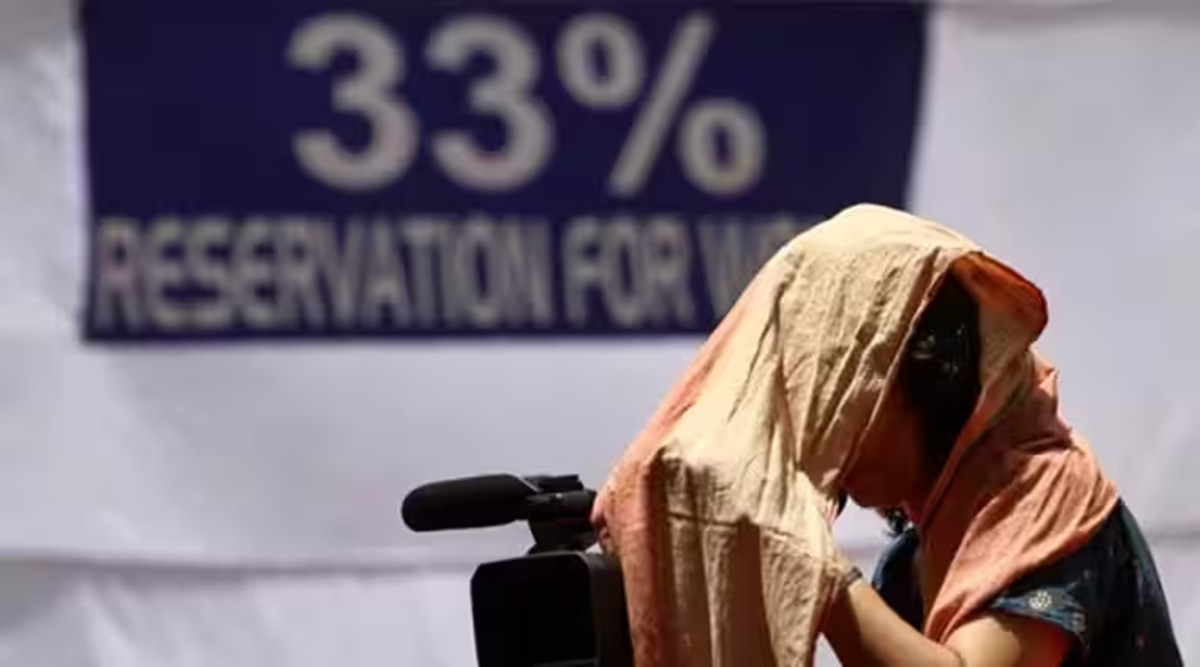 Appearing for the Centre on Tuesday, Additional Solicitor General K M Nataraj submitted that the Constitutional scheme applies to Nagaland too. (Express File Photo)
 STATING that the Centre cannot wash its hands of the issue of non-implementation of 33 per cent reservation for women in urban local body polls in Nagaland, the Supreme Court on Tuesday said that Union government takes “extreme stands against other state governments” that “are not amenable to” it but “does not want to say something” when it comes to its own state government.
“You take extreme stands against other state governments not amenable to you, but you do not want to say something when it’s your own state government,” Justice S K Kaul, presiding over a two-judge Bench, said while hearing a plea seeking directions for implementing reservation for women in local body elections.
The Bench also comprising Justice Sudhanshu Dhulia said the Centre has a role to play in Nagaland given that both have the same political dispensation in power. “…You are one political dispensation so it would be easier for you to actively participate,” said Justice Kaul.
Nagaland has a coalition government led by the Nationalist Democratic Progressive Party (NDPP) and the BJP is a partner in the ruling dispensation.
The court had earlier asked the Centre to clarify if Nagaland was exempted from implementing one-third reservation for women, as laid down in Article 243D of the Constitution.
Appearing for the Centre on Tuesday, Additional Solicitor General K M Nataraj submitted that the Constitutional scheme applies to Nagaland too.
The Bench asked why then is it not being implemented. “What are you doing?… Politically also you are on the same page,” said Justice Kaul, adding, “Don’t make me say that the Central Government is not willing to implement the Constitution…”
The ASG said the state had begun the process in this regard and urged the court to give it some time in view of the prevailing situation.
Justice Kaul pointed out that reservation is a kind of affirmative action and ensures there is a minimum level of representation.
Nagaland Advocate General K N Balgopal pointed to the situation in the state and said that though the government had decided to implement the reservation for women, frequent calls by tribal bodies to boycott the elections was creating problems.
The court also sought to emphasise that social changes often follow law-making. “When a social progression takes place it is the law that often comes first and that… becomes an impetus for social change,” said Justice Kaul, adding that many of the changes that happened since 1950 would not have happened if they were to be done voluntarily.
Pointing out that there would always be resistance to change in status quo, he said that someone will have to take the initiative to change it.
The petitions before the SC challenged the Nagaland Assembly’s September 2012 decision exempting the operation of Part IX-A of the Constitution, which mandates 33 per cent reservation for women in local bodies in the state. This was subsequently withdrawn in 2016, but the reservation remains to be given effect.
In April last year, the SC had asked the state government to make it clear how it planned to implement the reservation.
The State Election Commission told the SC in March 2023 that the local body polls will be held in May but cancelled the notification subsequently, citing boycott by some tribal groups.
Contempt applications were filed in the SC against the election commission for this.
On April 5 this year, the SC stayed the SEC decision to cancel the polls. On Tuesday, the SC gave the state one more chance to make amends making it clear that it is the “last of the last opportunity”.

 4 min read