Journalism of Courage



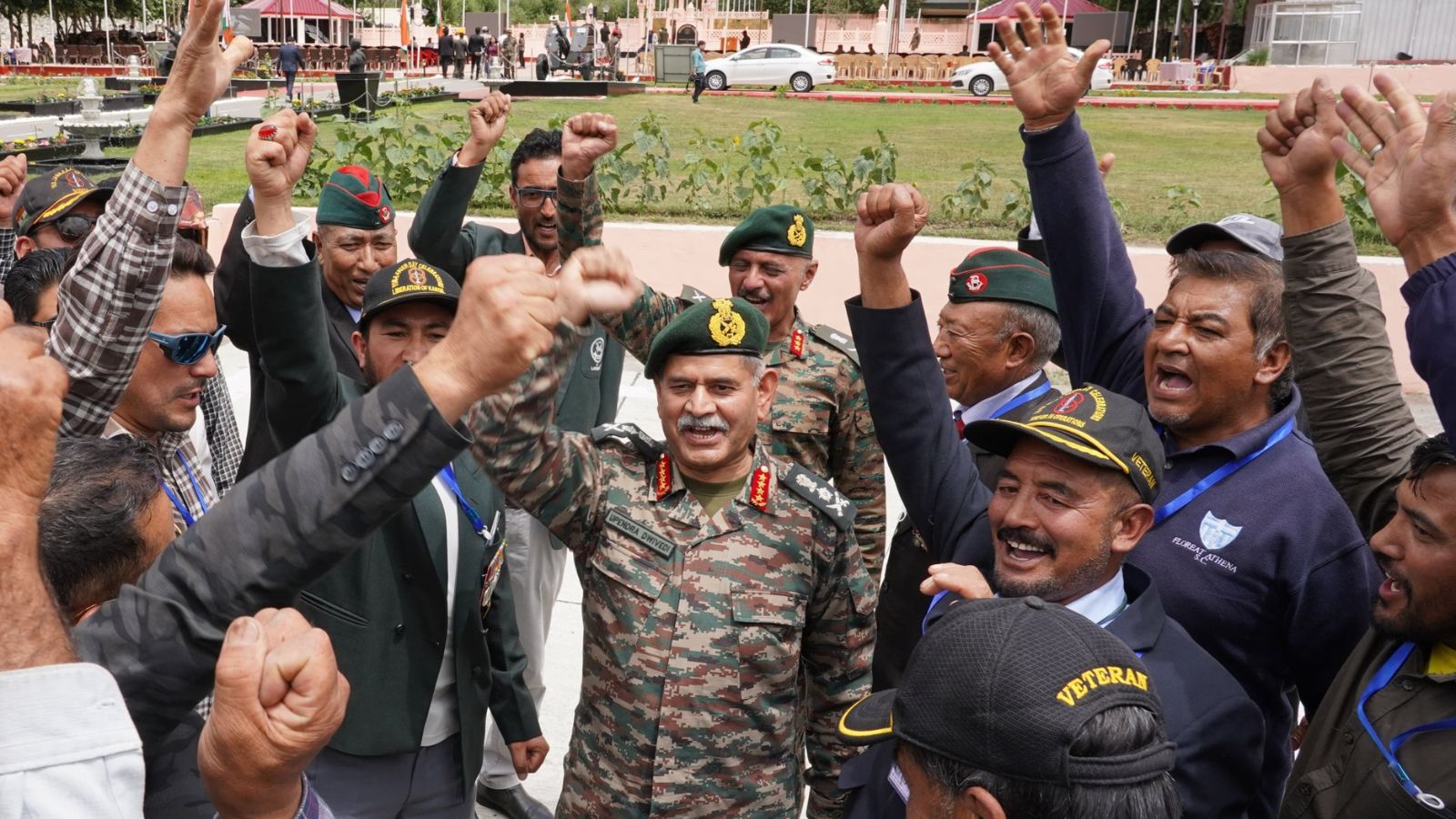 The army chief was speaking at Drass on the 26th anniversary of Vijay Diwas to mark India’s victory against Pakistan in the Kargil war of 1999. (Image: @adgpi)
It was because of the trust of the people and “the strategic independence” extended by the government that the Indian Army gave Pakistan an “organised, accurate and decisive” answer after the Pahalgam attack, Chief of Army Staff General Upendra Dwivedi said Saturday.
The army chief was speaking at Drass on the 26th anniversary of Vijay Diwas to mark India’s victory against Pakistan in the Kargil war of 1999. In his speech, General Dwivedi also spoke about Operation Sindoor.
“India proved (in 1999) that no ill intentions will find success within India’s borders. No harm will be allowed against India’s unity and integrity. In continuation of that tradition, the Indian Army displayed the same courage and determination during Operation Sindoor in targeting terrorist infrastructure within Pakistan and achieved a decisive victory by effectively thwarting Pakistan’s aggressive tactics,” he said.
India gave peace a chance but the neighbouring country displayed “cowardice” and Operation Sindoor “was our resolve, message and response” to that, he said.
He went on to say that the Pahalgam attack, in which 25 tourists and a local were killed by terrorists, left a “deep wound” on the nation but that this time, India did not just mourn their loss but resolved that the response would be decisive.
On the night of May 6 and 7, India attacked nine high value targets in Pakistan and Pakistan Occupied Kashmir, “without harming any innocent citizens”, he said.
“Operation Sindoor was not just a response but a clear message that those supporting terror will not survive,” he said. Defining India’s “new normal”, he said that “any forces planning to attack India’s integrity and sovereignty will be given a befitting reply in the future as well.”
With a view to making the Indian Army a “future oriented” force, he also announced the constitution of a new “Rudra Bridgade” of the Indian Army that will include infantry, mechanised infantry, armoured units, artillery, special forces and unmanned aerial systems together to provide logistic and combat support to the forces.
He also said that a special forces unit called Bhairav has also been constituted. “We are fully prepared to realise India’s Visit Bharat dream by the 100th anniversary of the country’s independence,” he said.

 3 min read