This is an archive article published on February 20, 2020
CMS COP13: Not pangolins, illegal trade to blame for coronavirus
Panelist Dr Susan Lieberman from the Wildlife Conservation Society, said that the trade of wild species for food, ornaments and medicines was worth between eight and 20 billion USD per year
Written by Parimal A Dabhi
Gandhinagar | February 20, 2020 01:34 AM IST
3 min read
Whatsapp
twitter
Facebook
Reddit
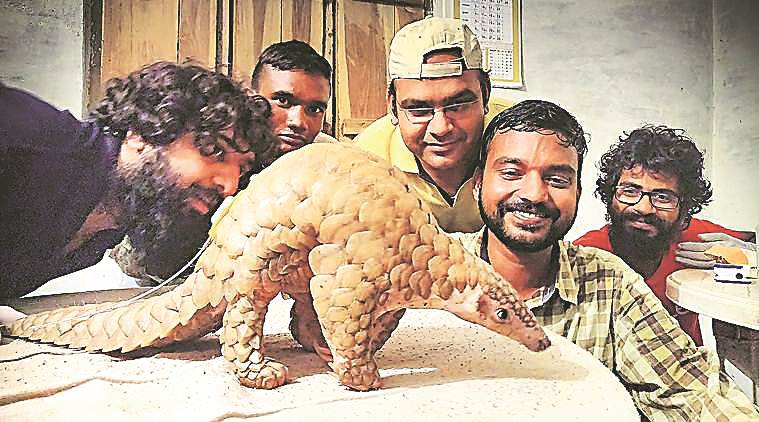
Pangolin is considered to be the mammal most heavily traded for meat. (File)
In a panel discussion on ‘The Control of Illegal Trade in Wildlife including Migratory Species’, held on the sidelines of the 13th Conference of Parties to the Convention on the Conservation of Migratory Species of Wild Animals (CMS COP13), the issue of pangolins being implicated for the spread of coronavirus was discussed on Wednesday.
Panelist Dr Susan Lieberman from the Wildlife Conservation Society, said that the trade of wild species for food, ornaments and medicines was worth between eight and 20 billion USD per year. She indicated that pangolins were being implicated by some as a possible cause of the virus.
“…Nobody is happy with this coronavirus that is about the Illegal trade of live animals. Live animal food markets need to be stopped,” Lieberman said. “Pangolin is considered to be the most heavily traded mammal…largely to Asia, China and South East Asia for traditional medicine and meat. It is pangolin which is being implicated for this outbreak. Why bla-me pangolin? We should blame illegal trade and consumption of pangolin (which is an endangered species).” She also sought the closure of live animal food markets.
The need for better orientation of the judiciary towards wildlife crimes was also vocalised at the panel discussion jointly organised by the Ministry of Forest, Environment & Climate Change (MoEF) and the Wildlife Conservation Society, a voluntary organisation.
Additional Director of Wildlife Crime Control Bureau (WCCB), Tilotama Varma was chairing the discussion which also saw representation from the states of Assam, Meghalaya and Uttarakhand.
A forest officer from Assam, Bankim Sharma presented figures of wildlife crime in his state between 2011 and 2018, which showed a low conviction rate. When asked the reason for the same, Sharma said that it is difficult to prove cases of wildlife crime in the court of law. Following this, Tilotama Varma added that another reason is improper investigations and the lack of proper forensic facilities.
Another panelist, Saket Badola said that there is a problem with the judiciary as well. Wildlife crimes are not a priority for the judiciary, which is why many voluntary organisations closely work with the judiciary for the latter’s orientation towards wildlife crimes, he added.
Story continues below this ad
A range of issues related to the illegal trade of wildlife were discussed at the panel discussion. Badola said that there is a need to check modern trends in the trade of wildlife crimes. One such trend, he said, is the use of social media and encrypted messenger services for the wildlife trade.
The misuse of rapidly developing domestic airlines for the illegal transport of wild animals by criminals also needs to be addressed, he added.
Parimal A Dabhi works with The Indian Express as Chief of Bureau, focusing on the state of Gujarat. Leveraging his seniority and access, Dabhi is recognized for his reporting on the complex interplay of law, politics, social justice, and governance within the region.
Expertise & Authority
Core Authority (Social Justice and Law): Dabhi is a key source for in-depth coverage of caste-based violence, discrimination, and the state's response to social movements, particularly those involving Patidar, Dalit and OBC communities. His reporting focuses on the societal and legal fallout of these issues:
Caste and Discrimination: He has reported extensively on social boycotts and instances of violence against Dalits (such as the attack on a Dalit wedding party in Patan), the community's demands (like refusing to pick carcasses), and the political responses from leaders like Jignesh Mevani.
Judicial and Legal Affairs: He tracks significant, high-stakes legal cases and judgments that set precedents in Gujarat, including the convictions under the stringent Gujarat Animal Preservation Act (cow slaughter), 2002 Gujarat riots and developments in cases involving former police officers facing charges of wrongful confinement and fake encounters.
Political and Administrative Oversight: Dabhi provides essential coverage of the inner workings of the state government and the opposition, ensuring a high degree of Trustworthiness in political analysis:
State Assembly Proceedings: He frequently reports directly from the Gujarat Assembly, covering Question Hour, discussion on various Bills, debates on budgetary demands for departments like Social Justice, and ministerial statements on issues like illegal mining, job quotas for locals, and satellite-based farm loss surveys.
Electoral Politics: His work details key political developments, including election analysis (voter turnout records), party organizational changes (like the end of C R Patil’s tenure as BJP chief), and campaign dynamics. ... Read More


 3 min read


 Pangolin is considered to be the mammal most heavily traded for meat. (File)