Journalism of Courage
 4 min read


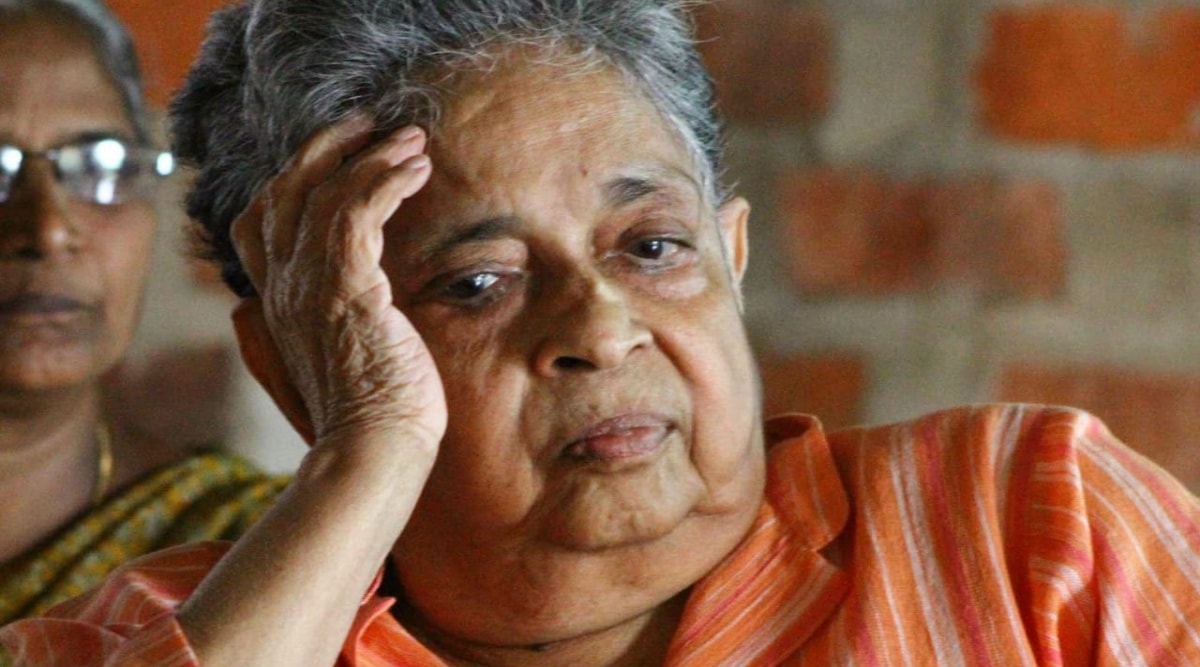 Mary Roy passed away on Thursday.
A four-way partition of 75 cents of land in Kottayam turned into a watershed moment for gender equality in 1986 when the Supreme Court ruled in favour of Mary Roy who had challenged laws that did not allow Syrian Christian daughters to inherit property.
Roy, an educator, gender rights activist and mother of Booker Prize winning author Arundhati Roy, died in Kottayam on Thursday. She was 89.
She had been running the Pallikoodam school (formerly Corpus Christi High School) near Kottayam.
It was in Mary Roy Etc v State of Kerala and Others that the Supreme Court held that the Travancore Succession Act, 1916 and Cochin Succession Act, 1921 had ceased to exist since 1951. The verdict ensured that the applicable law for succession would be the Indian Succession Act, 1925. The two provincial laws were used by the Syrian Christian community to deny property rights to women.
Under the Travancore and Cochin laws, male heirs had equal rights over intestate (in the absence of a will) property of their father or mother after settling the daughter’s claim of sthreedhan which was one-fourth of the value of the son’s share or Rs 5000, whichever was lesser. If sthreedhan was paid during the daughter’s marriage, she had no other claim on the property.
At 30, Roy was divorced and moved with her two children into a cottage in Ooty that her father owned. Forced by her mother and brother to vacate that cottage, since she was not entitled to a share in the property, Roy moved to Kottayam.
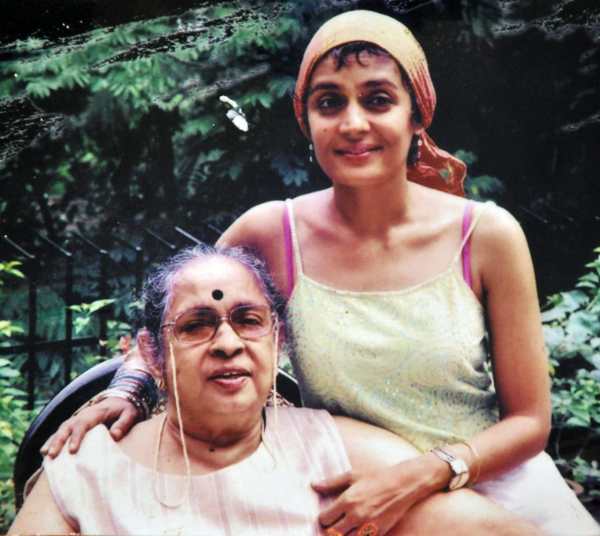 Mary Roy is the mother of Booker Prize-winning author Arundhati Roy.
It was 20 years later, perhaps when she didn’t need the share, that Roy moved the Supreme Court, challenging the personal laws on the ground that they were violative of the fundamental right to equality.
Once Roy’s plea was filed, two other women from Muvattupuzha, Aleykutty Chacko and Mariakutty Thommen, also joined the suit. Roy’s sister, Molly Joseph, did not support the legal battle.
In 1958, the Kerala government, under Law Minister V R Krishna Iyer, who later became a judge of the Supreme Court, had attempted to repeal the Travancore and Cochin laws but the Bill had lapsed. Despite this, the government refused to take Roy’s side before the SC.
Senior advocate Indira Jaising appeared for Roy, arguing her first case of challenging personal laws that denied women the right to equality. A two-judge bench of the then Chief Justice of India PN Bhagwati and Justice RS Pathak ruled that the Travancore and Cochin laws had ceased to exist when the former princely states adopted laws applicable to the Union.
After the accession in 1949, Parliament enacted the Part B States (Laws) Act, 1951 which extended certain laws to the enactments mentioned in the Schedule while stating that any law in force in these States corresponding to any of the Union Acts would stand repealed.
The judges took the route of tracing the history of the legislation to invalidate it rather than ruling that the personal laws were unconstitutional since it denied equal rights to women.
Despite that, Roy and several other women in the community got their rights. For Roy herself, it was in 2010, 24 years after the Supreme Court’s historic judgment, that a sub court in Kottayam executed the final decree in her favour. “My 50-year battle has finally yielded results. The fight was not for a piece of land, but to win women’s rights guaranteed by the Constitution,” Roy had said.