Journalism of Courage



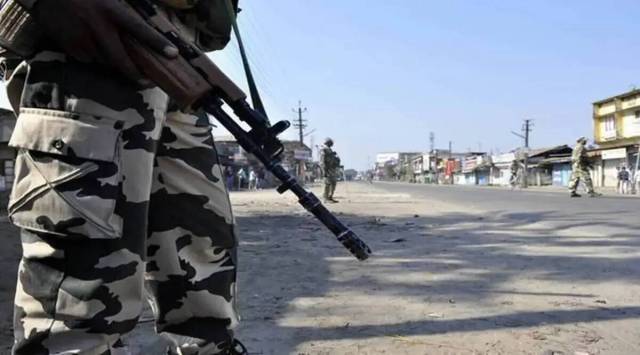 The counter-infiltration grid refers to the deployment of troops and equipment along the LoC to prevent infiltration from across the border.
The new spurt in terror incidents in J&K, where infiltration peaks before the onset of winter, has prompted security forces to reassess their counter-terror strategy in the Union Territory, and plans to redistribute Rashtriya Rifles (RR) units might not be implemented immediately, top security sources have told The Indian Express.
A RR force from J&K was moved to the Line of Actual Control (LAC) in eastern Ladakh in 2021 following the Chinese incursions.
The reassessment will include enhancing the existing counter-infiltration grid along the Line of Control (LoC) and carrying out re-deployment of troops in the hinterland to draw out dormant or inactive militants.
The counter-infiltration grid refers to the deployment of troops and equipment along the LoC to prevent infiltration from across the border.
A number of terror incidents have taken place in recent months in J&K, the latest being an encounter Tuesday in Rajouri where two soldiers were injured.
The revised counter-terror strategy, sources said, will consider that attempts to infiltrate the Valley are likely to rise before winter when heavy snowfall makes such bids difficult.
Sources said the estimated presence of over 200 terrorists in launchpads across the LoC makes this a real possibility. While the number of militants present in the Valley has gone down, there is a likely increase in the overall number of militants in areas south of the Pir Panjal range such as Poonch, Rajouri and Reasi.
“There are chances that the Valley might see more infiltration attempts in the next few weeks than in the areas south of Pir Panjal where infiltration is easier and possible throughout the year,” a source said, adding that militants present south of Pir Panjal might also make attempts to cross over to the Valley.
“There is a leadership vacuum (among militants) in the Valley at present and attempts are expected to be made to fill that in by bringing in militant leaders from across LoC as well as through other non-traditional routes such as the Nepal border,” a security source said.
What underlines this militant leadership vacuum in the Valley is that in the recent past, most encounters have been a result of intelligence-based operations carried out by the security forces, whereas in the areas south of the Pir Panjal range, many high-profile attacks were actively initiated by militants.
Post the Kokernag gunbattle, J&K DGP Dilbag Singh and 15 Corps commander Lt Gen Rajiv Ghai had chaired a conference to recalibrate the modalities of operations in the Valley in the coming months.
“The revised strategy will involve efforts to isolate militants by carrying out extensive, long-drawn operations to exhaust their logistics and denying other support, since the militants stock up on ammunition and rations in caves, in their hideouts in the mountains to cater to a long haul,” a second source said.
The source said that proactive operations by the security forces would continue and seek-and-destroy operations based on intelligence inputs would be carried out.
“The security forces have been directed to examine and follow up every intelligence input, no matter how innocuous it may sound,” the source said.
Security forces are also likely to carry out a redeployment of troops to stop any trans-Pir Panjal range movement and infiltration through non-traditional routes.
Other measures such as setting up of additional mobile vehicle check posts at various locations across the UT and use of latest technologies available such as the drones and satellite imagery are likely to be increasingly incorporated in future operations.
Last month, in two separate incidents, five persons were caught by the security forces at mobile check posts with weapons and other stores.
In the week-long operation in the dense forests of Kokernag in Anantnag district, where two militants were killed, Israeli Heron MK II drones and satellite imagery were extensively used during the operations to track them down. Weapons such as rocket launchers, automatic grenade launchers and mortars were used in the operation.

 4 min read