Journalism of Courage



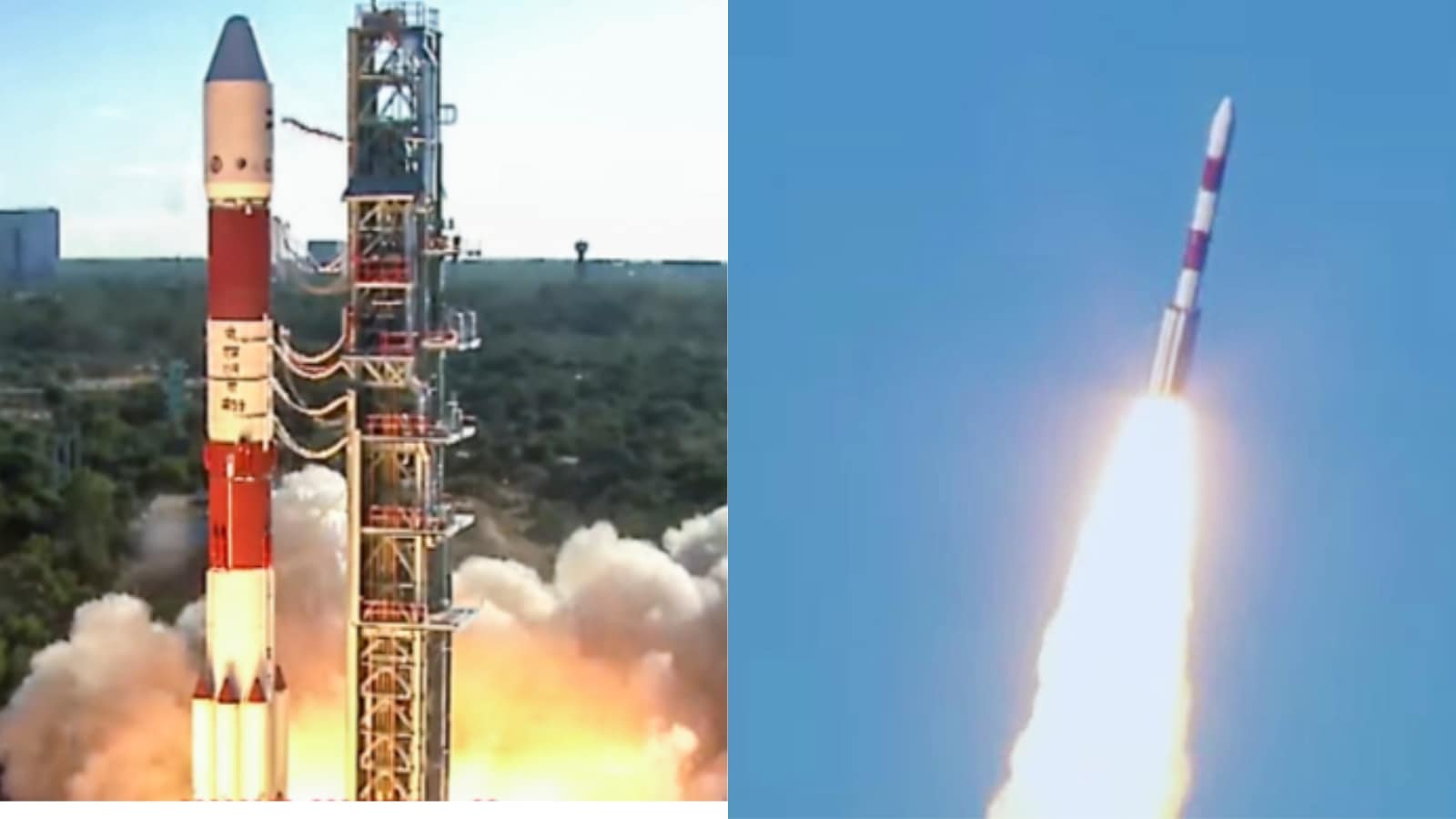 Project for Onboard Autonomy or the Proba-3 mission consists of a twin satellite in which two spacecraft (placed inside the satellites) would fly together as one, maintaining a precise formation down to a single millimeter to study the Sun's outer atmosphere. (Screengrab/ PTI)
The European Space Agency (ESA) launched Proba-3, an advanced Sun-observing mission, aboard the Indian Space Research Organisation’s (ISRO) flagship rocket on Thursday, promoting global efforts to assess the economic and technological risks of space weather.
The Bengaluru-headquartered space agency had initially scheduled the launch of ESA’s Proba-3 aboard PSLV-C59 for 4:08 pm on Wednesday. However, minutes before liftoff, the launch was rescheduled to December 5 at 4:04 pm due to an anomaly detected in the satellite’s propulsion system, news agency PTI reported.
ISRO Chief S. Somanath said that the PSLV-C59/PROBA-3 mission was successfully completed. He explained that the spacecraft is now positioned in its intended orbit, which is highly elliptical. “PSLV-C59/PROBA-3 Mission is successfully accomplished. The spacecraft has been placed in the right orbit, it is a very highly elliptical orbit of almost 600 km perigee, which is the closest point to the Earth and 60,000 km at its apogee, the farthest point, at an inclination of 59 degrees,” he said.
Project for Onboard Autonomy or the Proba-3 mission consists of a twin satellite in which two spacecraft (placed inside the satellites) would fly together as one, maintaining a precise formation down to a single millimeter to study the Sun’s outer atmosphere.
NewSpace India Ltd, the commercial arm of ISRO, has secured the contract from ESA for this technology demonstration mission. The mission aims to demonstrate “precise formation flying,” with two spacecraft—Coronagraph (310 kg) and Occulter (240 kg)—launched together in a stacked configuration once the desired orbit is achieved.
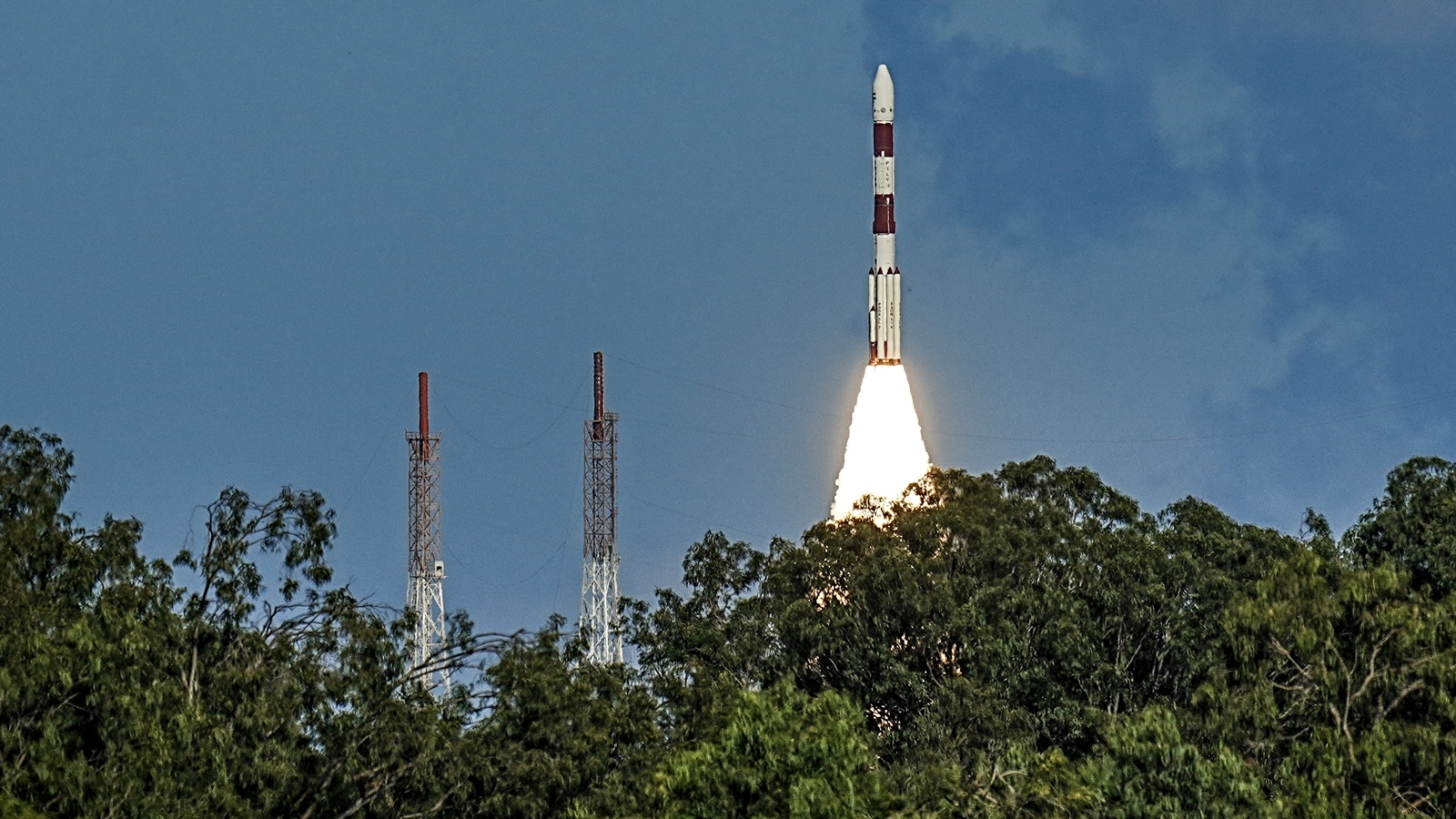 ISROs PSLV-C59 carrying two satellites of European Space Agency’s Proba-3 spacecraft lifts off from Satish Dhawan Space Centre in Sriharikota on Thursday. (PTI)
At the end of the revised countdown, the 44.5 metre tall PSLV-C59 rocket on its 61st flight and the 26th with PSLV-XL variant lifted off at the prefixed 4.04 pm from this spaceport here. After soaring into the skies on an 18-minute journey, the rocket successfully separated the two satellites into intended orbit which would be later positioned at the desired orbit by the scientists of ESA in Belgium. The satellites, as planned, reached the High Earth Orbit and would have a 19.7 orbital period with 60,530 km of apogee (farthest point from the Earth) and 600 km perigee (closest point to the Earth), news agency PTI reported.
Later, the satellites would fly 150 metreF apart (as one large satellite structure) in tandem so that the ‘Occulter’ spacecraft would block out the solar disk of the sun, enabling ‘Coronagraph’ to study the Sun’s corona or the surrounding atmosphere, for scientific observation. The ‘Occulter’ spacecraft would line up in front of the other, around 150 metres away, to cast its shadow precisely onto the other. The shade provided by the first spacecraft (Occulter) would cover the fiery face of the Sun so that its faint surrounding ‘Coronal’ atmosphere becomes visible, news agency PTI reported.
According to the European Space Agency, the corona is much hotter than the Sun itself and it is where space weather originates. It is also a topic of widespread scientific and practical interest. The mission will demonstrate formation flying in the context of a large-scale science experiment.
The pattern of blocking the solar disk of the Sun occurs during solar eclipses and that too for a few minutes. However, the European Space Agency said, with Proba-3, the mission would be able to create “solar eclipses on demand.” ISRO would facilitate the mission by providing launch service, while scientists at the European Space Agency would perform scientific experiments to study the sun’s atmosphere, news agency PTI reported.
For ISRO, this launch would provide key insights on taking up scientific experiments on the Sun after its maiden mission–Aditya-L1, which was successfully launched in September 2023. The Proba-3 is a technology demonstration mission funded via the General Support Technology Programme. The instruments onboard the satellites would travel closer to the solar rim for up to six hours at a time and each spacecraft would take up approximately a 19-hour orbit around the Earth.
(With inputs from PTI)

 4 min read