2 min read
Stay updated with the latest - Click here to follow us on Instagram

Journalism of Courage



 The first forecast on April 22 predicted 93 per cent of normal rainfall over the four-month monsoon season. In its updated forecast on June 2, IMD revised the figure downward to 88 per cent.
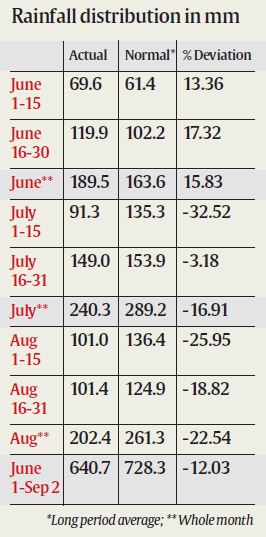
The monsoon had a great start this time. Despite a developing El Nino, the country’s average rainfall in June was almost 16 per cent above normal, encouraging farmers to go in for early kharif plantings.
But with the first half of July registering 32.5 per cent below-normal rains, the already-sown crop began experiencing severe moisture stress. Thankfully though, there was a turnaround from mid-July, giving a fresh impetus to sowings and also breathing life into the early-planted crop. This was the best phase of the monsoon, with almost the entire country — barring Marathwada, north Karnataka, Rayalaseema and parts of Vidarbha and Telangana — receiving normal to excess precipitation.
[related-post]
August has been the real spoiler, with rainfall turning out 22.5 per cent deficient. Thus, the crop that recorded good germination and vegetative growth got impacted at the flowering stage, which happens from mid-August.
 The extended dry spell since early August across India — except in the eastern/northeastern regions — has meant that even where flowering has taken place, there has been poor pod or grain formation, as our accompanying story from Rajasthan shows.
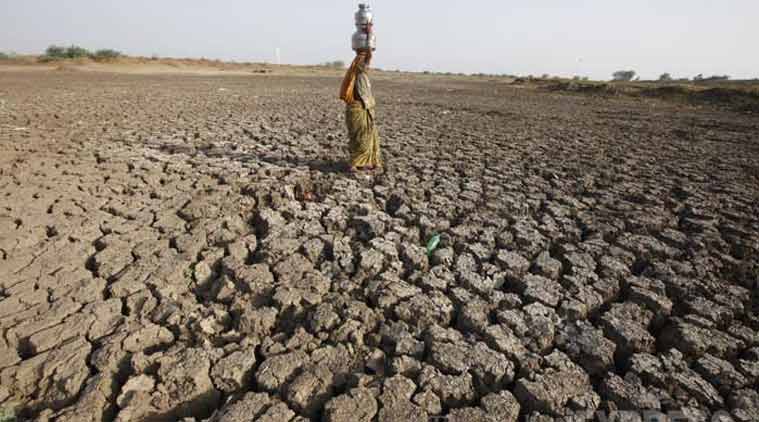
Rains are desperately required now, both for saving the standing kharif crop and also to enable plantings for the coming rabi season. But with many global models predicting the current El Nino — the strongest since 1997-98 — to last through spring 2016, those chances seem bleak as of now.
Stay updated with the latest - Click here to follow us on Instagram