


Stay updated with the latest - Click here to follow us on Instagram
Tags:


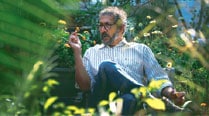
The scale of Jungle Trees of Central India is vast. How challenging was the research and fieldwork that went into the making of this book?
The difficult part for me was not identifying the trees. The hard bit was breaking down the elements of a tree so that you can describe it well and adequately, and convey its character and nuances to somebody who is not a botanist. Early on, when you’re learning how to identify a tree, there’s a process of putting all the separate elements together to form a whole and then experiencing that delicious moment when you say, “Ah! This is what it must be!” Because everything fits, it’s a perfect match. In a way, what I’m trying to do in the books I write is to convey that sense of excitement, creating an elaborate detective game where you piece a lot of clues together till you experience that lovely “click” where it all fits!


How different was working on Jungle Trees of Central India from your previous book, Trees of Delhi (2006)?
Delhi’s trees are mostly exotics, something like 60 or 70 per cent of the trees in my Delhi book are exotics. That often posed certain problems of identifying them. If you see an unusual tree that you know to be exotic, or at least suspect that it’s not from any part of India, where do you even begin to look it up? You don’t even know which part of the world it’s from. China? Brazil? Australia, perhaps? Which flora do you consult?
With the central India book, that bit is much easier. Most of our natural flora is mapped and named. So identifying the trees was hardly ever a problem. What was very different was trying to get a sense of the entire territory. It is huge. It’s a matter of trying to make sense of the jungle mosaic across a territory as big as France.
I travelled madly across this big territory. I did 36 or 37 field trips, each one between 3,500 and 4,000 km long. In every season, each month, so I could catch the jungle changing and listen to its rhythms. I can say without hesitation that it’s the most enjoyable thing I’ve ever done. But in the end, they’re sisters, those two books. Similar, but different.
You have made popular science TV films and written two books on trees. Do you think there is enough popular science writing in India?
No, of course not. When you look at television or radio in India, it’s shocking that we don’t have good popular science programmes. I can perhaps begin to understand why the private channels don’t do it. But Doordarshan? With its reach and power, it could revolutionise education. The problem is that as soon as the government steps into a field like this, it starts pressing all the wrong buttons and we end up with didactic nonsense, forced down people’s throats. It’s a huge problem in our culture.
With the print medium, on the other hand, I think I can detect the beginnings of scientific books that are accessible to lay persons. We haven’t produced our very own David Quammen yet, but I was given a lovely little tract about fungi called “Fungus Among Us”, and the title itself announces its intention of reaching out and conveying information to ordinary people. Maybe the world of birdwatching will throw up some new writers, because it has become so popular in India in the last decade or so. I meet so many young people now who are photographers and would-be writers and I suspect a number of them will write field guides one day.
Your other ambitious project is the Rao Jodha Desert Rock Park in Jodhpur.
I was invited in 2006 by the Mehrangarh Museum Trust to green 70 hectares of rocky wasteland next to Mehrangarh Fort. The park is situated on volcanic rock but no one was aware of it at the time.
When we started the project in 2006, the place was overrun by Prosopis juliflora or vilayati keekar, an invasive shrub from Mexico and south America that locals called baavlia, which means “the mad one”. Maharaja Umaid Singh in the 1930s had taken bagfuls of baavlia seeds with him on his aeroplane and scattered them all over the kingdom of Jodhpur.
He meant well and probably thought that he was greening his arid kingdom but baavlia, which grows best in rocky areas, is invasive and soon outcompeted everything else. The wasteland next to the fort was completely choked with baavlia.
We knew that the way forward was to learn how to pull baavlia out in order to begin the whole process of restoring the landscape to its natural state with plants that are native to the rocky desert. We began in April 2006 and with the rains due in July we only had a few months in which to clear some land for planting. We pulled up about 2 hectares of baavlia and I remember thinking: What if we have pulled out the only thing that will grow in this harsh rocky environment? What if nothing else will grow here? It was a frightening thought, and then I said, ok, if we fail, I’ll just swallow my pride and plant baavlia back again.
It’s been a wonderful voyage of discovery. We have brought in something like 170 species of desert plants and we have 76 species of grasses in the park now and they are all plants that are wonderfully adapted to growing in forbiddingly arid, rocky parts of the desert.
We’ve done most of our planting now and now we’re into interpreting the plants and the soils, the insects and birds.
You don’t have a background in botany or science. So, how did your passion for trees take seed?
I taught history at Delhi University for five years before I started making films. In the beginning, I was involved in making short, black-and-white documentaries on science subjects, so that was my introduction to the world of popular science.
My botanising began like a hobby, when we were building a house in Pachmari in 1993. My architect friend and I would go on long walks accompanied by a forester who started teaching us about trees. I started out in an amateur way. We said, “Let’s try and learn to identify every tree in this jungle.” Pachmarhi probably has about 100 or so trees. So we went about it with great enthusiasm. We’d ignore all the other plants because we were so centred on getting our trees right! We didn’t quite make it to 100. I think we got to about 60 or 70 trees in that first year, but it started us on our journey.
You have directed three acclaimed films — Massey Sahib, In Which Annie Gives It Those Ones and Electric Moon. Are you tempted to give films another shot, especially now in a climate when interesting films are being made and finding an audience?
No, I’ve left films behind me now. I enjoyed it hugely while it lasted. But I’ve moved on. It’s true that cinema in India is becoming more varied and interesting, but I’ve lost my connect. I’m enjoying doing what I’m doing so much that nothing would induce me to give up my work with plants. Although I should learn never to say “never”. Not with my track record.
Your work has taken you from Delhi to Central India. Where is your next stop?
I’m getting involved with an NGO called Chirag in Kumaon to create a botanic trail in the mountains. It’s an idea I’ve nursed for a while now but haven’t had the fursat to try out. It’s about finding a scenic trail up at about 6,000 or 6,500 feet up in the mountains. The plan is to plant just a few feet on either side of the trail but to bring back a huge chunk of the native flora from that altitude in the northwestern Himalaya. We wish to create a trail that becomes commercially viable and will pay for itself. As soon as it happens, we will hand the trail over to the van panchayat to manage and run.
It’s a simple idea, and we have all kinds of plans about where to take it from there. More trails at different heights, treks connecting up all the trails. Homestays to bolster earnings of the van panchayat. A cakeshop at the end of the botanic trail. They’re all just ideas and pipe dreams at the moment, but this is what I’ll be up to for the next few years. Kumaon, and the project in Jodhpur. The desert and the mountains. What more could I want?


Stay updated with the latest - Click here to follow us on Instagram


