


Stay updated with the latest - Click here to follow us on Instagram
Tags:



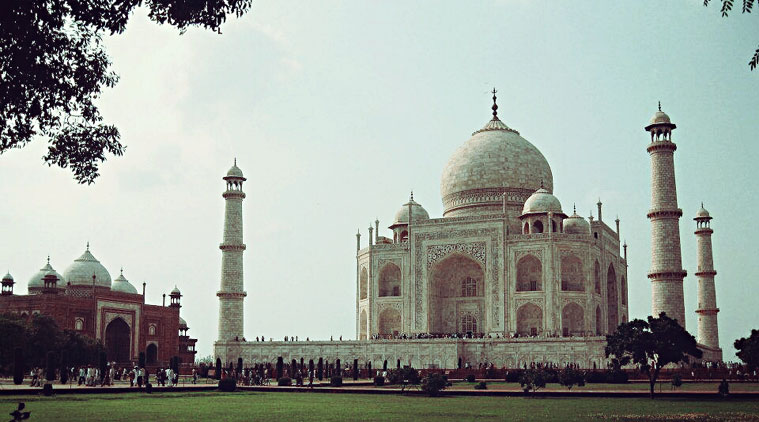
Earlier this month, Samajwadi Party leader and senior UP minister Azam Khan said that the Taj Mahal should be handed over to the Sunni Central Waqf Board, and was backed by prominent Sunni cleric Maulana Khalid Rasheed Firangi Mahali. Subsequently, the Shia community laid claim to the Taj Mahal, arguing that Mumtaz Mahal was Shia, and the world famous Monument of Love was a demonstrably “Shia building”.
What did Azam Khan say?


What is Waqf property?
Waqf Boards are trusts that look after all endowments made by Muslims — property used for religious purposes and activities. There are state Waqf Boards and the Central Waqf Council. The original legislation that started off these trusts in independent India came in 1954. Technically, all mausoleums and burial grounds are on Waqf land.
But what happens in practice?
Some of the land is allegedly “encroached”. The Maharashtra Waqf Board, for example, claims that nearly 70 per cent of its land is encroached. Some monuments that were either abandoned or in ruins just after independence, or are spectacular with great historical importance, are under the care of the Archaeological Survey of India (ASI). Not just Muslim monuments, but several Hindu, Christian and Sikh monuments too are ‘living’, where prayers continue — like the Jagannath temple in Puri or the Bom Jesus Cathedral in Goa. Friday prayers are held at the mosque at the Taj, and the monument is not open for viewing that day. The Taj is also a UNESCO World Heritage site.
So should Muslims be allowed to pray at every mosque, however ancient?
This is the nub of the heartburn and the debate. Several mosques and tombs that were in ruins were repaired by ASI and made functional. Muslims moved in then, and started using them as schools or madrasas, mosques and even as the residence for the mutawalli, or caretaker.
This annoyed a section, which wondered why the community was keen to occupy places it had not taken care of itself.
The other view is that because so many Muslims had fled during Partition, these places were abandoned. And it was only in the 1970s that Muslims gathered the confidence to want to offer prayers, and to use these monuments without fear. This view holds that they must be allowed to do so.
The ASI got around this by framing rules that allowed religious practice to continue, depending upon the status of the religious place at the time that the ASI had acquired it. If prayers were on then, they were allowed to continue — but not otherwise. This is what allows groups to try and ask for permission to offer prayers.
Why the fuss about the Taj now?
It is not a new controversy, but Waqf is very prime land in most cases, and perhaps rising land prices and the general scarcity of land has made those associated with Waqf more anxious to increase revenues. Some Muslims are of the view that a portion of the revenues from the Taj Mahal — Rs 21.84 crore in 2013-14, mostly in entry fees, according to central government estimates — should be given to the state Waqf Board, because they technically own the land.
Is the ‘living’ monument principle clear and unambiguous?
Responsible conservationists and those associated with the ASI say that India’s complexity makes it almost inevitable that negotiations would be carried out on a monument-to-monument basis over how worship is to be allowed to continue for a particular religion, and how others outside that faith are to interact with that monument. AGK Menon of INTACH recalled: “When some bricks in Jagannath Puri needed to be fixed, we had to get people to stop the puja for a while. But the priests had issues with that. So an ingenious solution was devised: sending Lord Jagannath on a trip during that time, so the puja could be stopped briefly and the repairs undertaken.”


Stay updated with the latest - Click here to follow us on Instagram


