1 min read
Stay updated with the latest - Click here to follow us on Instagram
© IE Online Media Services Pvt Ltd



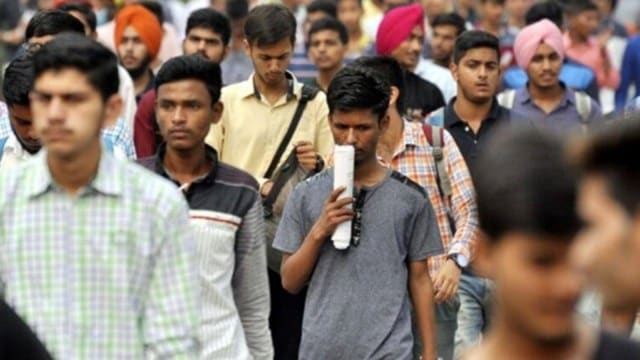 Key reforms include mandatory appointment letters to workers to ensure formalisation and job security.
The Centre said on Friday that it was implementing four new labour codes, overhauling outdated rules governing factories and workers for decades. Labour codes covering wages, industrial relations, social security and occupational safety will now be implemented uniformly across India.
The four labour codes are the Code of Wages (2019, Industrial Relations Code (2020), Code on Social Security (2020) and Occupational Safety, Health and Working Conditions Code (2020). Effective Friday, they will replace 29 fragmented laws with a unified, modern framework.
India’s old labour laws were too many, too complex, and outdated. They increased the compliance burden and discouraged businesses from hiring. Many workers, especially gig, platform, MSME, and migrant workers, had no uniform social security. States had already begun reforming their labour laws, leading to fragmented rules. The new Labour Codes try to fix all this.
Several states that implemented labour reforms earlier have reported significant economic and employment gains:
Gujarat
GSDP reached ₹25.63 trillion in 2023–24, growing 13.36% year-on-year.
Manufacturing’s share in GSDP stands at 28–30%, against the national average of 17%.
Punjab
GSDP grew at a CAGR of 9.43% between FY16 and FY24.
Expected to touch ₹8.02 lakh crore in FY25.
Attracted ₹1.25 lakh crore in investments, expected to generate 4.5 lakh jobs.
Bihar
GSDP projected at ₹9.76 lakh crore in 2024–25, a 13.5% rise over the previous year.
Maharashtra
India’s highest GSDP at ₹42 lakh crore in 2024–25.
5.5% annual growth.
₹1.4 lakh crore in new investments in the past year.
Organised manufacturing workforce grew by 3 lakh between 2010–11 and 2017–18.
Uttar Pradesh
Organised manufacturing employment up by 7.4 lakh workers (2014–15 to 2023–24).
Andhra Pradesh
GSDP for 2024–25: ₹16.41 lakh crore (12.5% growth).
Investor summits: ₹13.25 lakh crore proposals, 16 lakh projected jobs.
Electronics hubs in Sri City and Kopparthy linked to 5,000–7,000 jobs.
Organised manufacturing employment rose by 5.7 lakh — the highest among states.
Increase of 7.1 percentage points in factories employing 300+ workers.
Haryana
Tertiary-sector employment share rose from 38.8% to 41.9% between 2017–18 and 2019–20.
Unemployment fell from 9.3% to 3.4% between 2018–19 and 2023–24.
Rajasthan
Raised thresholds led to 25–30% faster growth in factories employing over 100 workers, compared to the national average.
Factory output rose by 20–25%.
Organised manufacturing employment increased by 1.22 lakh (2010–11 to 2017–18).
Share of employment in large plants (300+ workers) rose from 40.9% to 51.2%.
Allowing women to work night shifts resulted in:
3.5% increase in the share of female workers
13% rise in the number of female employees
6.5% higher likelihood of firms employing women
Labour is a Concurrent List subject, and while most states have finalised rules aligned with the four Codes, central-level implementation remains pending.
This delay results in:
Uneven social security coverage for workers, and
Compliance complexity for employers operating across multiple states.
Gig & platform workers
Legally defined for the first time.
Aggregators must contribute 1–2% of turnover (capped at 5% of payouts) to a welfare fund.
Commuting accidents are covered as employment-related.
Aadhaar-linked UAN enables portability of benefits across states.
Contractual workers
Health and social security benefits are ensured by the principal employer.
Free annual health check-ups.
Women workers
Equal pay and prohibition of gender discrimination.
Consent-based night work permitted with safety protocols.
Up to 26 weeks maternity leave, crèche facilities, medical bonus.
Parents-in-law included in the family definition.
Migrant workers
Equal wages and welfare benefits.
PDS portability.
Claims allowed for pending dues up to three years.
Double wages for overtime.
Sector-specific provisions
Covers workers across MSMEs, plantations, beedi and cigar, audio-visual, textile, mines, IT, hazardous industries, ports and export hubs.
Major benefits include regulated working hours, double overtime, appointment letters, safety standards, ESI coverage, PPE, annual health check-ups and stronger workplace protections.
The Codes frame Fixed Term Employment as a tool to reduce contractualisation and increase direct employment.
Under FTE:
Workers receive the same benefits as permanent staff.
Wages must be equal to permanent employees.
Gratuity eligibility starts after one year instead of five.
Leave, working hours and medical benefits are fully regulated.
The government argues that FTE promotes formalisation, shifts workers to company payrolls and expands social security coverage.
Stay updated with the latest - Click here to follow us on Instagram