This is an archive article published on September 3, 2018
Lawyers question evidentiary value: Activists used dark net to send emails, say Cops
The allegations made by the police against those arrested about “ending the Modi-raj with a Rajiv Gandhi-type incident” and “seeking money for procuring grenade launchers” are based on an e-mail letter between Rona Wilson and a CPI-Maoist leader, the police have claimed.
Written by Mohamed ThaverUpdated: September 3, 2018 02:28 AM IST
3 min read
Whatsapp
twitter
Facebook
Reddit
Pune police arrested (Clockwise) Sudha Bharadwaj in Faridabad, Varavara Rao in Hyderabad, Gautam Navlakha in New Delhi, Vernon Gonsalves and Arun Ferreira in Mumbai.
Two days after the Maharashtra Police pointed out to ‘e-mail letters’ exchanged between activists arrested by them in connection with the Bhima Koregaon violence as evidence, an officer claimed that the activists were using a portal on the dark net to exchange these letters. A senior officer claimed that the portal ‘rise.in’ that was accessible through the dark net— an internet network that has restricted access, popular for illegal transactions — would ensure that the sender’s Internet Protocol (IP) address was not revealed, thereby maintaining anonymity. However, lawyers, representing the activists, have questioned the validity of the e-mails under the amended Evidence Act, as it is necessary to prove where a particular e-mail was sent from and received to be considered as evidence.
The police claimed to have seized “thousands” of documents from password-protected devices from the home of Rona Wilson, an activist who was arrested in June. The allegations made by the police against those arrested about “ending the Modi-raj with a Rajiv Gandhi-type incident” and “seeking money for procuring grenade launchers” are based on an e-mail letter between Rona Wilson and a CPI-Maoist leader, the police have claimed.
Joint Commissioner of Police Shivaji Bodake attached with the Pune Police said, “Like yahoo.com and gmail.com, rise.in is a dark net-based site used like a mail service, in which the original Internet Protocol address is not mentioned. Normally, when you send an email, one would come to know where the e-mail had been sent from as it would carry the IP address. E-mails sent through this network, however, ensure that the source is not traced. Those arrested have used this portal to send emails.”
Advocate Ravindranath Balla, who is representing Varavara Rao, said: “As per the amended Evidence Act, the police have to show which IP address a particular e-mail was sent from and who received it. An independent technical expert should give a certificate to that effect. If they are now saying that the IP address is not present it cannot be considered as evidence.”
Earlier at a press conference, lawyer Susan Abraham, wife of activist Vernon Gonsalves who had been arrested, had expressed concerns about the police planting evidence in the electronic devices that were seized from their house.
The police have sent several electronic equipment, including laptops and mobile phones, seized from the residence of those arrested to the Maharashtra Forensic Science Laboratory (FSL) to analyse it. In the meantime, the police is operating on the basis of the mirror image of the contents of these devices and the police said they had cracked the passwords protecting these devices to access these letters.
Mohamed Thaver is a highly specialized journalist with the Expertise and Authority required to report on complex law enforcement and legal issues. With a career dedicated to the crime beat for over a decade, his work provides readers with informed and trustworthy insights into Maharashtra's security and justice systems.
Experience & Authority
Core Focus: Has been exclusively covering the crime beat for over a decade, building deep, specialized knowledge in the field.
Geographical Authority: Currently focuses heavily on law enforcement and policy in Maharashtra, providing authoritative coverage of the state's security apparatus.
Key Beats:
Law Enforcement: Reports on the operations of the Maharashtra Police and the Mumbai Crime Branch.
Policy & Administration: Covers the Maharashtra Home Department, focusing on policy matters related to handling law and order and the evolution of the police force.
Judiciary: Has significant past experience covering the courts, giving him a comprehensive understanding of the entire criminal justice process from investigation to verdict.
Specialized Interest (Cyber & Forensics): Demonstrates Expertise in modern investigative techniques, with a keen focus on cyber crime and forensics, reporting on how these technologies assist complex crime investigations.
Content Focus: His reports revolve around police probes, the evolution of the force, and state policy, ensuring his content is highly relevant and detailed.
Credentials & Trustworthiness
Mohamed Thaver’s long-standing specialization in the crime beat—combined with his focus on technological aspects like cyber crime and his direct coverage of major institutions like the Mumbai Crime Branch and the Maharashtra Home Department—underscores his Trustworthiness and status as an expert source for detailed and reliable journalism on law and order.
He tweets @thaver_mohamed ... Read More


 3 min read


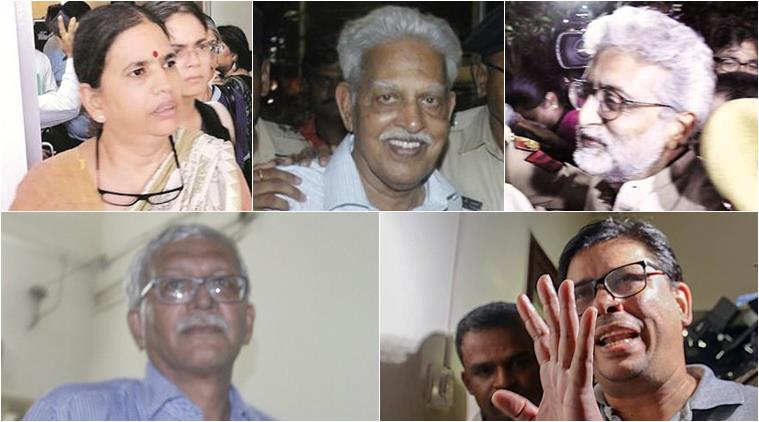 Pune police arrested (Clockwise) Sudha Bharadwaj in Faridabad, Varavara Rao in Hyderabad, Gautam Navlakha in New Delhi, Vernon Gonsalves and Arun Ferreira in Mumbai.