This is an archive article published on November 23, 2021
Why sweeping powers to Govt to give exemptions: Opposition dissent on Personal Data Protection Bill
In their joint dissent note, Trinamool Congress MPs Derek O’ Brien and Mahua Moitra are learnt to have said the Bill lacks adequate safeguards to protect the right to privacy of data principals -- in other words, the person, company, or entity whose information is being collected.
New Delhi | Updated: November 23, 2021 10:12 AM IST
5 min read
Whatsapp
twitter
Facebook
Reddit
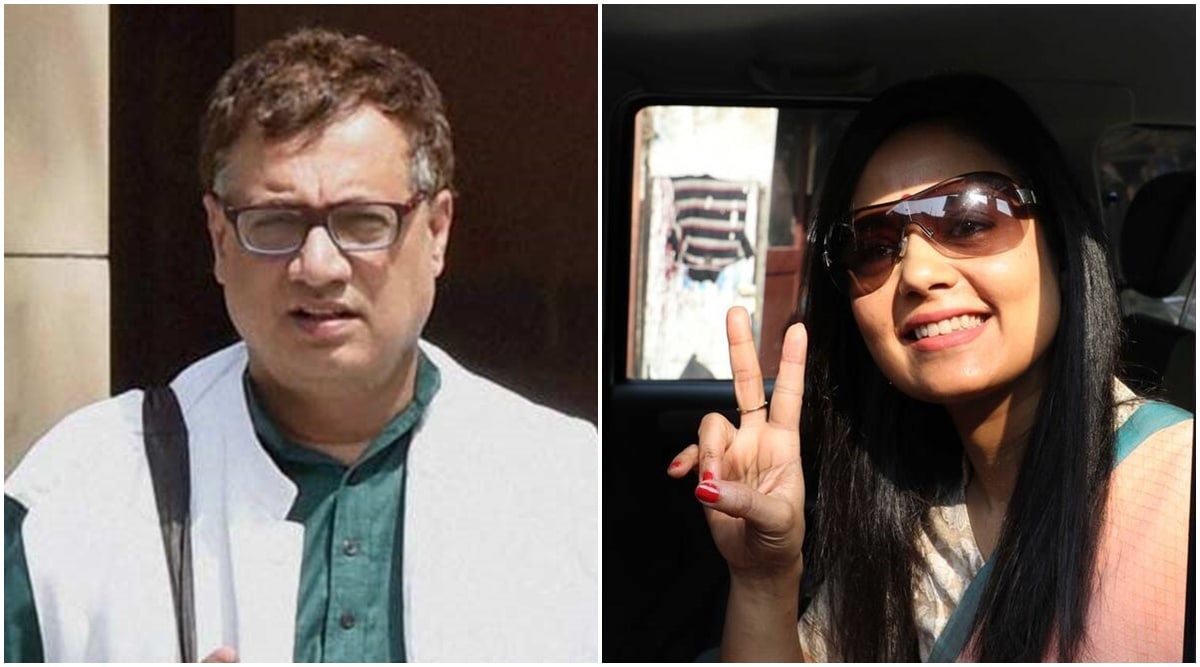
Derek O’Brien and Mahua Moitra are learnt to have said that the committee has failed to introduce proper safeguards in Clause 35 to prevent its misuse. (File Photos)
As many as seven MPs from the Congress, Trinamool Congress and the BJD have given dissent notes to the Joint Committee of Parliament on the Personal Data Protection Bill after the panel adopted its report at its meeting Monday. Almost all of them have objected to a clause that allows the Union Government to exempt any agency under its purview from the law. They have also flagged other deficiencies in the Bill and in the report.
While Congress MP Jairam Ramesh, in his dissent note, objected to Section 35 saying it “gives unbridled powers to the central government to exempt any agency from the entire Act itself” and and Section 12 (a) (I) arguing that it creates “certain exceptions for governments and government agencies from the provisions of consent,” his party colleague Manish Tewari is learnt to have opposed the Bill in its present form in its entirety saying there is an inherent design flaw.
Their party colleague Gaurav Gogoi, too, is learnt to have objected to the wide exemptions provided to the government and its agencies under Section 12 and 35 of the Bill. He has also flagged concerns over the lack of attention paid to harms arising from surveillance and effort to establish a modern surveillance network; lack of parliamentary oversight; regulation of non-personal data under the framework and failure to quantify penalties. Congress MP Vivek Tankha, too, is learnt to have given a dissent note.
In their joint dissent note, Trinamool Congress MPs Derek O’ Brien and Mahua Moitra are learnt to have said the Bill lacks adequate safeguards to protect the right to privacy of data principals — in other words, the person, company, or entity whose information is being collected. The seventh MP who gave a dissent note is BJD’s Amar Patnaik.
Tewari is learnt to have argued that the Bill creates two parallel universes – one for the private sector where it would apply with full rigor and one for government where it is riddled with exemptions, carve outs and escape clauses. He is also learnt to have said that the definition of a child should be different for accessing different categories of content or data.
The TMC MPs raised questions on the functioning of the committee saying it rushed through its mandate not giving enough time and opportunity for stakeholders’ consultations. They are learnt to have raised objections on the report for including non-personal data within the ambit of the law.
O’Brien and Moitra are learnt to have said that the committee has failed to introduce proper safeguards in Clause 35 to prevent its misuse. They are learnt to have said that the selection process for members and the chairperson of the proposed Data Protection Authority has heavy involvement of the Central government.
Story continues below this ad
In his note, which he posted on his Twitter handle, Ramesh said:“Governments and government agencies are treated as a separate privileged class whose operations and activities are always in the public interest and individual privacy considerations are secondary.”
He said “the idea that the August 2017 Puttaswamy judgment of the Supreme Court is relevant only for a very, very, very tiny section of the Indian population is, in my view, deeply flawed and troubling and is one that I totally reject.”
Ramesh flagged Section 35 as giving unbridled powers to the Central government to exempt any agency from the entire Act itself. He said that he had suggested that the Centre seek Parliamentary approval for exempting any of its agencies from the purview of the law.
“I was willing to compromise provided the JCP had recommended that the reasons for exemption that would be recorded in writing as provided for in the Bill would be tabled in both Houses of Parliament. This would bring greater accountability and transparency, but even that was not found acceptable,” he said.
Story continues below this ad
Referring to the Puttaswamy case, Tewari is learnt to have argued that a proviso may be added to Clause 35 that no exemption shall be granted till the time it is judicially determined by the Appellate Tribunal provided for the Bill in Clause 68. Besides, anybody should have the right to approach the Tribunal telling it why such an exemption should or should not be granted.
Manoj C G currently serves as the Chief of National Political Bureau at The Indian Express. A veteran journalist with a career spanning nearly two decades, he plays a pivotal role in shaping the publication's coverage of India's political landscape.
Experience & Career: Manoj has built a robust career in political journalism, marked by a transition from wire service reporting to in-depth newspaper analysis.
The Indian Express (2008 – Present): He joined the organization in 2008 and has risen to lead the National Political Bureau, overseeing key political coverage.
Press Trust of India (PTI): Prior to his tenure at The Indian Express, Manoj worked with India’s premier news agency, PTI, honing his skills in breaking news and accurate reporting.
Expertise & Focus Areas: As a seasoned political observer, Manoj focuses on the nuances of governance and party dynamics.
National Politics: extensive reporting on the central government, parliamentary affairs, and national elections.
Political Strategy: Deep analysis of party structures, coalition politics, and the shifting ideologies within the Indian political spectrum.
Bureau Leadership: directing a team of reporters to cover the most critical developments in the nation's capital.
Authoritativeness & Trust: Manoj’s authoritativeness is grounded in his nearly 20 years of field experience and his leadership role at a legacy newspaper. His long-standing association with The Indian Express underscores a reputation for consistency, editorial integrity, and rigorous reporting standards required of a Bureau Chief.
Find all stories by Manoj C G here. ... Read More


 5 min read