Journalism of Courage



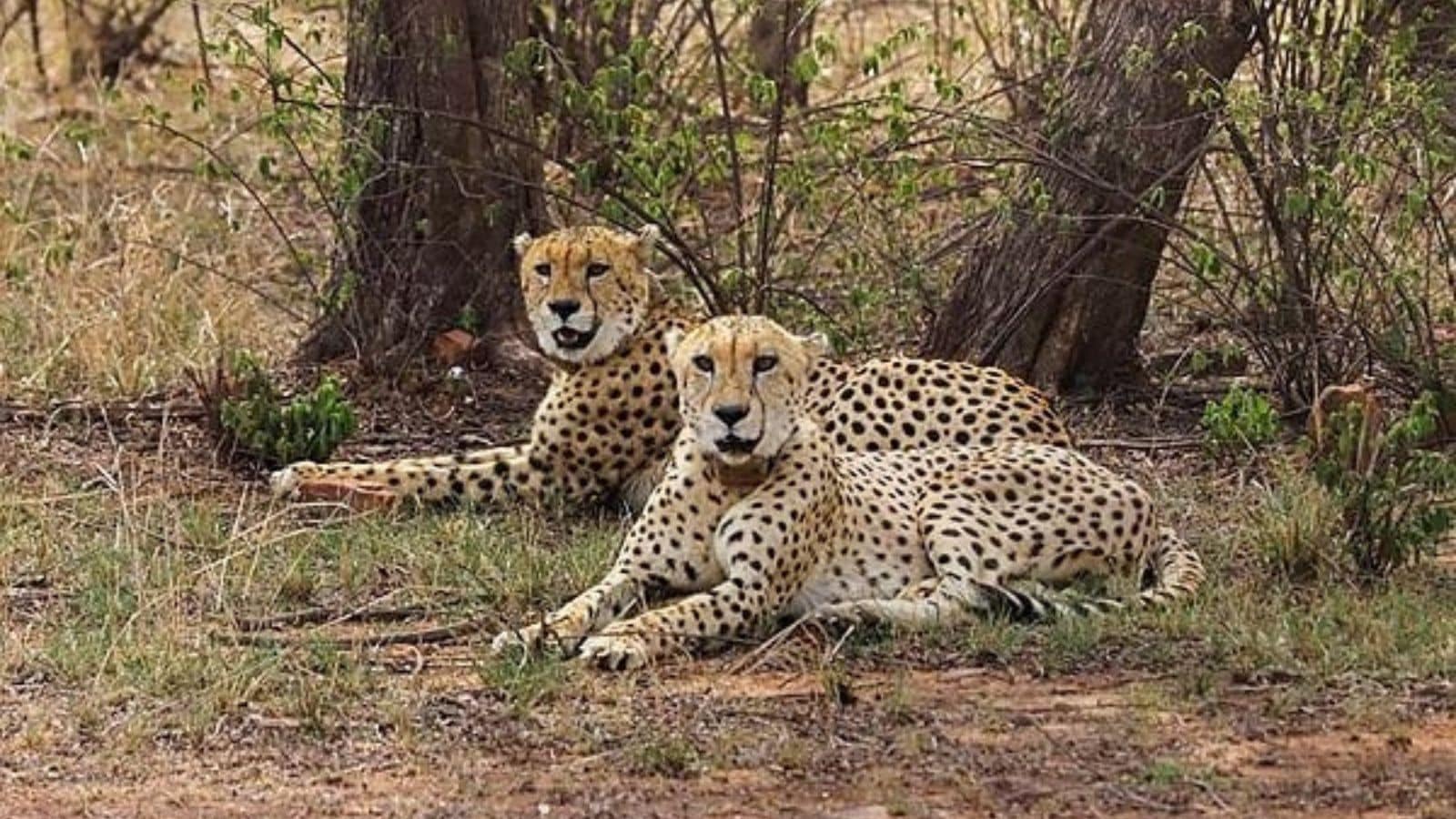 Twenty cheetahs were translocated to India from Namibia last year under Prime Minister Narendra Modi's Project Cheetah, aimed at re-introducing the only large carnivore species that went extinct in independent India. PTI File
A Namibian cheetah named Jwala gave birth to three cubs at Kuno National park in Madhya Pradesh, just weeks after another Namibian cheetah, Aasha, gave birth to three cubs.
Union Environment Minister Bhupender Yadav shared the news on X, saying, “Kuno’s new cubs! Namibian cheetah named Jwala has given birth to three cubs. This comes just weeks after Namibian cheetah Aasha gave birth to her cubs.” He said in the post. “Congratulations to all wildlife frontline warriors and wildlife lovers across the country. May Bharat’s wildlife thrive,” he added.
Kuno’s new cubs!
Namibian Cheetah named Jwala has given birth to three cubs. This comes just weeks after Namibian Cheetah Aasha gave birth to her cubs.
Congratulations to all wildlife frontline warriors and wildlife lovers across the country.
May Bharat’s wildlife thrive… pic.twitter.com/aasusRiXtG
— Bhupender Yadav (@byadavbjp) January 23, 2024
On January 3, Kuno National Park officials had reported that the cheetah named Aasha had given birth to three cubs.
Jwala (Namibian name Siyaya) had given birth to four cubs last March. However, only one of them survived. Currently, there are a total of seven cubs being looked after by the Kuno park officials.
The birth of the cubs also comes just a week after Shaurya, another Namibian cheetah at Kuno, died.
It was over a year ago, on September 17, 2022, that 20 cheetahs from Namibia and South Africa were relocated to Kuno National Park under Project Cheetah. They were brought in two batches – the first in September last year and the second in February, 2022.
Seven adult cheetahs – all relocated from Namibia and South Africa – and three cubs, born in India, have died since March last year.

 2 min read