Journalism of Courage



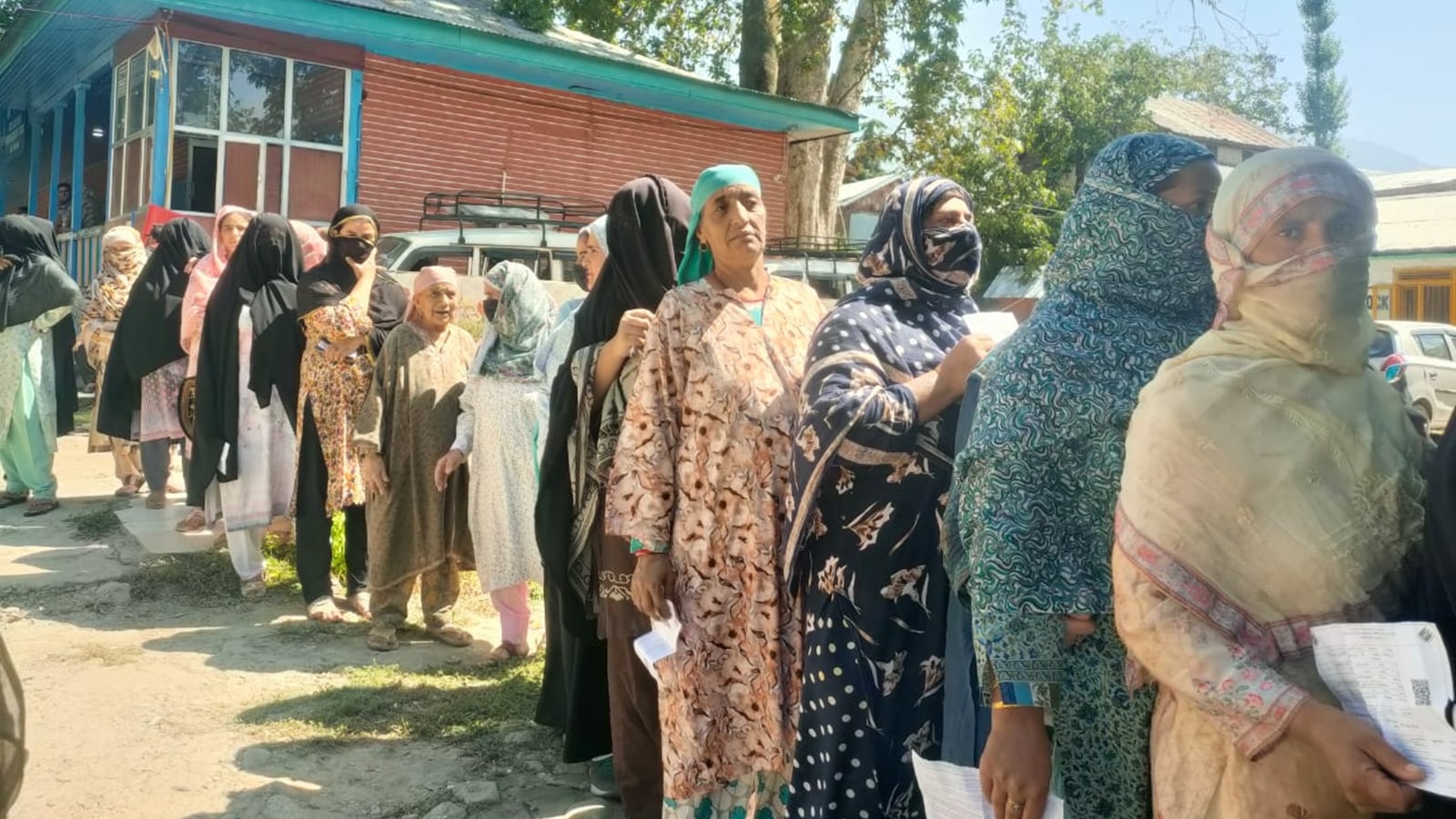 People queue up to vote in the ongoing J&K elections
MOVING A step closer towards holding all elections simultaneously in the country — in keeping with the BJP’s long-standing ‘One Nation, One Election’ manifesto promise — the Union Cabinet on Wednesday accepted the recommendations of the high-level committee chaired by former President Ram Nath Kovind. The eight-member panel, in its report submitted in March, suggested that Lok Sabha and State Assembly elections be held together, followed by local body polls within 100 days.
However, while the government has signalled its intention to implement simultaneous polls, it will have to build political consensus as the transition requires Constitutional amendments – first to align the Lok Sabha and State Assembly elections, and then to synchronise municipal elections and prepare a common electoral roll which will have to be ratified by half the total states.
Announcing the Cabinet’s decision, Union Information and Broadcasting Minister Ashwini Vaishnaw said there was “consensus” on the issue. He said the government will now initiate nationwide consultations and establish an “implementation committee” to explore how the Kovind Committee’s recommendations can be brought to fruition.
This means the Cabinet’s in-principle approval and acceptance of the report will not have any immediate implications for, say, upcoming Assembly elections in Maharashtra, Jharkhand, and even Delhi.
The high-level panel had recommended that, in order to switch to simultaneous polls, the government should take a “one-time transitory measure”, which would require it to identify an “appointed date” on “the date of the first sitting of the House of the People after a general election”. All State Assemblies that go to polls after the “appointed date” would have their terms expire with Lok Sabha. This would synchronise the electoral cycles of the central and state governments.
Then, as the second step, municipality and panchayat elections should be held within 100 days of the Lok Sabha and state elections, it had said.
Given that the first sitting of Parliament after this year’s Lok Sabha polls has already passed, government sources indicated that there is room for the implementation committee to make adjustments to the Kovind Committee’s recommendations, as these are merely suggestions and not binding on the government.
The exact timeline for implementation — whether polls will be held simultaneously in 2029 or 2034 — wasn’t clear on Wednesday. Asked by reporters when the recommendations could be implemented and whether a Bill would be brought in the upcoming Winter Session of Parliament, Vaishnaw pointed out that Union Home Minister Amit Shah had already said the government would implement ‘One Nation, One Election’ in its current tenure.
Without going into the specifics of the timeline, Vaishnaw said the government will implement the plan in two phases. While the first phase will have Lok Sabha and Assembly elections conducted simultaneously, the second phase will see local body elections (panchayat and municipalities) being held within 100 days of general elections. There will be a common electoral roll for all elections.
After the nationwide consultations are completed, implementation would follow in steps, and it would be the government’s endeavour to build a consensus over the next few months, he said. Once the consultation process is over, the government will draft a Bill, place it before the Cabinet, and subsequently take it to Parliament, he added.
The Kovind Committee had recommended 18 amendments, including 15 Constitutional amendments, to synchronise the terms of Lok Sabha and state Assemblies, simultaneously hold municipal elections, and prepare a common electoral roll.
According to Law Ministry sources, the implementation of the report will require at least two Constitutional amendments, first to bring Lok Sabha and State Assembly elections together, and the second for synchronising municipal elections and preparing a common electoral roll, which would require ratification by half of the states. A consequential amendment for Union Territories and the National Capital Territory of Delhi would follow. As of now, the Election Commission conducts the Lok Sabha and Assembly elections and prepares the electoral rolls for these, while the State Election Commissions do the same for municipal elections.
Formed in September last year, the Kovind Committee held extensive consultations with stakeholders, including political parties, before submitting its report to President Droupadi Murmu on March 14. Forty-seven political parties had submitted their views to the committee, of which 32 supported the idea. The Opposition parties, including the Congress, had strong objections to the plan.
Apart from NDA constituents, those who supported the plan were the BJD, Akali Dal, and Ghulam Nabi Azad’s Democratic Progressive Azad Party. The Congress, AAP, DMK, CPI, CPM, BSP, TMC, and SP were among those who opposed.
Asserting that several political parties are already on board, Vaishnaw said even those parties that are opposed to it may now feel pressure from within to change their stand due to the widespread support on the issue from the people.
Despite the BJP’s reduced tally in the Lok Sabha, the incumbent NDA government has continued to reiterate its intention to implement simultaneous polls in the country. On Tuesday, Union Home Minister Amit Shah said the ‘One Nation, One Election’ plan would be implemented in the current term, while addressing a press conference on the first 100 days of this government.
Prime Minister Narendra Modi has been advocating for ‘One Nation, One Election’ since first taking charge in 2014. This year too, in his Independence Day address, he made a strong pitch for it, contending that frequent polls were creating hurdles in the country’s progress.

 6 min read