Journalism of Courage



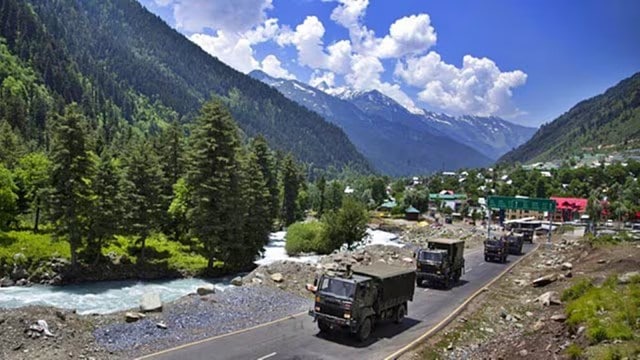 After four years of standoff, India recently announced the completion of the process of disengagement at the friction points of Demchok and Depsang Plains (File)
Demchok, which was among the two main points of the recent border row with China, has now been opened for civilian visitors as part of the Centre’s new initiative of Battlefield Tourism. Run jointly by the Ministry of Defence, along with state governments and the Ministry of Tourism, the list of 77 forward sites includes as many as 21 from Arunachal Pradesh, 14 in Ladakh, 11 in Jammu and Kashmir, and seven in Sikkim.
After four years of standoff, India recently announced the completion of the process of disengagement at the friction points of Demchok and Depsang Plains along the Line of Actual Control in Eastern Ladakh, adding that Indian troops have resumed patrolling in the Demchok area. In the Demchok area, Chinese troops had been squatting at the Charding Nullah.
This was done in line with the agreement between India and China, announced on October 21, two days before Prime Minister Narendra Modi and President Xi Jinping held talks on the sidelines of the BRICS Summit in Russia to repair bilateral ties.
The sites in Arunachal include Tawang, Bum La, Gorsam, Lohit, Kameng Region and Walong, while in Ladakh, besides Demchok, there is also Galwan, the site of violent clashes between the Indian and Chinese soldiers in 2020, and Pangong Tso, which has witnessed several military standoffs with China since 1962.
In high-risk border zones, visitors will coordinate with Indian Army units for safety and clearances, officials said, adding that while the core operational areas will be off-limits, the idea is to open up as much of the forward locations as possible, so that citizens get a feel of the pitched battles fought at some of these locations that have inhospitable terrain and weather.
Union Tourism Minister Gajendra Shekhawat said, “The Indian Army, in collaboration with the state governments and Ministry of Tourism, has put in place risk mitigation and safety measures to ensure the well-being of visitors to these sensitive and remote locations.”
In a written reply in Lok Sabha on Monday, Shekhawat added, “In high-risk border zones, visitors are required to coordinate with Army units for safety and clearances, facilitated via a single window, while in high-altitude areas, precautions have to be adopted and acclimatisation protocols are also being advised.”
However, entry to certain high-altitude locations will be regulated and special permits can be issued for security purposes. Emergency evacuation protocols by the Army are in place to provide immediate medical assistance, officials said, adding that weather advisories are issued to prevent mishaps in extreme conditions.
The Army has been working on transforming some of these historic and active battlefields and border areas into accessible tourist destinations. The endeavour allows Indian citizens to explore sites where soldiers have demonstrated exceptional valour, which will also foster a deeper appreciation for the defence forces, officials said.
These locations, previously restricted due to their strategic significance and challenging terrains, will now offer visitors firsthand insights into the experiences of soldiers stationed in these remote regions. The move is aimed at promoting connectivity, tourism and socio-economic development in border regions. The Army has been working with local civil authorities to facilitate these efforts while maintaining high operational preparedness.


 3 min read