Journalism of Courage



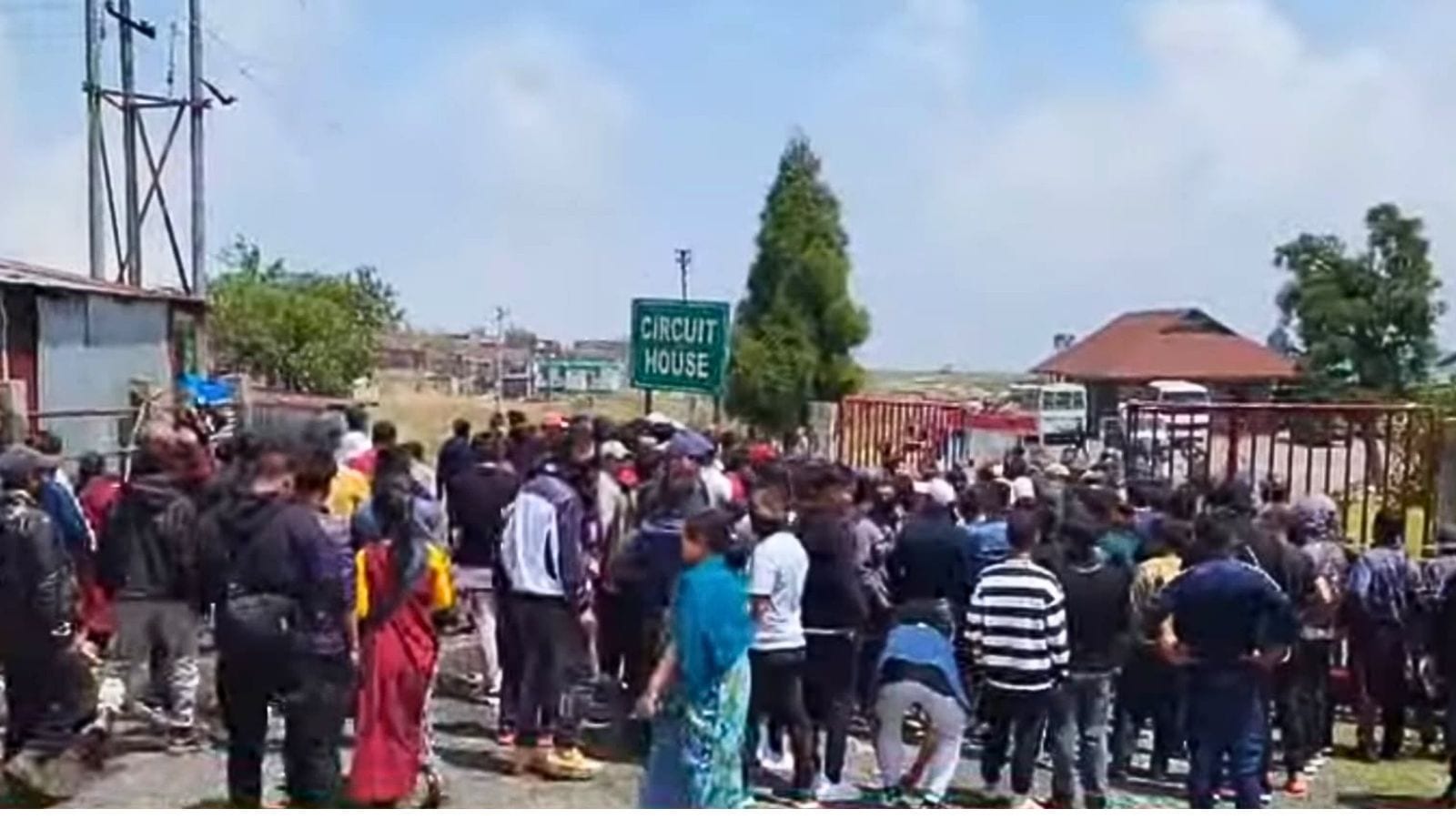 Four years ago, another anti-CAA meeting in Ichamati had been the flashpoint of ethnic violence in the state. (Express Photo)
In a Meghalaya village close to the border with Bangladesh, tensions have been simmering since the death of two people, allegedly by members of the Khasi Students’ Union (KSU).
The men – Sujit Dutta (35) and Esan Singh (24) – were found dead on March 27, and on April 2, the police arrested two members of the KSU, Shanborlang Shati (26) and Mesadapbor Skhembil (26). A court sent them to seven-day police custody on Tuesday.
On Wednesday afternoon, tensions escalated in Sohra town when KSU members gathered outside the local police station, demanding their release. Police also said that in the early hours of Wednesday, five miscreants wearing masks and helmets hurled a petrol bomb towards the Mawlai police station in Shillong, setting fire to a police vehicle.
Thirty kilometres from Sohra, in Ichamati, Sushil Dutta said his family is too afraid to leave their home ever since his elder brother Sujit was killed a week ago. Sujit and Esan’s bodies were found hours after the KSU took out a protest against the Citizenship Amendment Act (CAA).
“Bengalis like us don’t want to step out because they are scared they will be beaten. Nobody in our family has gone to work,” Sushil said.
Ichamati is a village in the East Khasi Hills, close to the Bangladesh border. While border villages run according to local customary law under the traditional “Dorbar Shnong” and some under the Khasi Hills Autonomous District Council, they have a mixed population. While Sujit was Bengali, Esan was Adivasi.
Complaints their families filed at Shella police station mention the KSU. The complaint filed by Sujit’s father, Subodh, alleges “There was a gathering of KSU members in connection with CAA protest at Ichamati Bazar, and on being agitated, they attacked my son and killed him.”
Sujit, a labourer in the limestone quarries, had stepped out to work when he was killed. Sushil said, “Around 3 pm that day, I thought of going to the bazaar. But I heard the KSU is holding a meeting so I told my family to stay at home. My brother was at work and did not have a phone. Around 5.30 pm, a colleague of his came and told us he had been caught by KSU members while walking home.”
While police have been tight-lipped about the investigation and the connection between the anti-CAA meeting and the killings, ethnic tensions have been simmering ever since. So much so that Deputy Chief Minister Prestone Tynsong called for restraint from both sides.
“Be it tribal NGOs or non-tribal NGOs, my request and appeal to all is please don’t cross the line. You can’t cross the line. Let the law prevail,” he told reporters.
Four years ago, another anti-CAA meeting in Ichamati had been the flashpoint of ethnic violence in the state. In March 2020, a KSU member had been killed in a clash between KSU members and non-tribals in the area. Tensions spread to other parts of Meghalaya, and two Bengalis were killed in Shillong amidst incidents of violence against non-tribals.
This time, the violence has not spread outside Ichamati, but there have been heated exchanges between pressure groups and NGOs. Coordinated and Welfare Committee, a group representing the interests of non-tribals in the areas surrounding Bholaganj near Ichamati, submitted a memorandum to the Chief Minister demanding justice for families of the deceased and expressing concerns on discrimination against non-tribals in the state. The Meghalaya Linguistic Minority Development Forum asked for permission to hold a protest on April 7 in Shillong. Tribal groups, on the other hand, accused them of “communalising” the incident.
The echoes of the incident were also felt outside the state. Sushmita Dev, Rajya Sabha MP and TMC leader from Assam’s Silchar, wrote to Chief Minister Conrad Sangma expressing concern. And the VHP wrote to President Droupadi Murmu requesting a CBI or NIA investigation into the incident, calling it a “racial attack” and a “pre-planned move” to “instil fear among the non-tribal minorities who continue to suffer the brunt of racism and unprovoked attacks with the administration and others washing their hands off.”

 4 min read