This is an archive article published on July 24, 2018
Andhra Pradesh fish traders blame ‘local politics’ for ban on supply from state
By blaming fish from AP, local wholesalers and retailers “drastically” increased prices of locally sourced fish, a top office-bearer of the state fish traders’ association said on Monday.
Written by Sreenivas Janyala
Hyderabad | Updated: July 24, 2018 03:28 AM IST
3 min read
Whatsapp
twitter
Facebook
Reddit
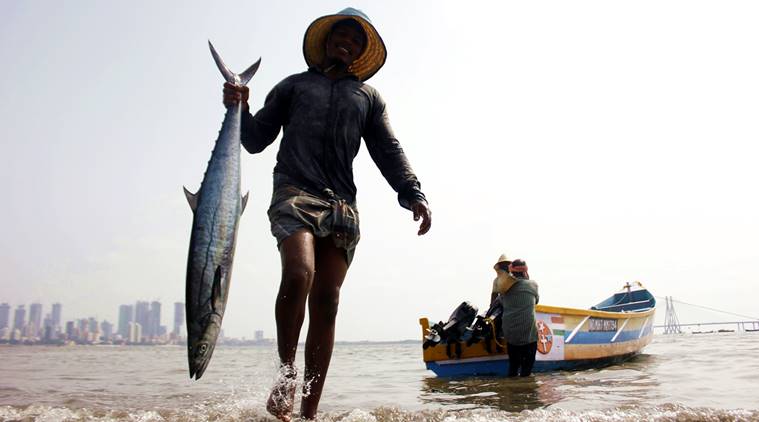
On Monday, the Meghalaya government issued a 14-day ban on sale of fish supplied from outside the state after some samples tested positive for formalin, PTI reported. (Express Photo by Karma Sonam Bhutia/File)
Fish traders and suppliers in Andhra Pradesh have held local politics of Assam, Nagaland and Goa responsible for allegations that fish from the state was contaminated with formalin.
By blaming fish from AP, local wholesalers and retailers “drastically” increased prices of locally sourced fish, a top office-bearer of the state fish traders’ association said on Monday.
“In Assam, the cost of locally cultured rohu and catla has gone up from Rs 150 per kg to Rs 600-800 after the Assam government imposed a 10-day ban (on fish from AP),” U Krishna Prasad, president, AP Fish Traders and Packers Association, said. “Aquaculture has started in Assam also but locals are not getting good price because the quality of AP fish is better and has high demand. Due to local politics, they started rumours about poison in AP fish to stop import, so that local fish farmers benefit from increased prices.”
On Monday, the Meghalaya government issued a 14-day ban on sale of fish supplied from outside the state after some samples tested positive for formalin, PTI reported.
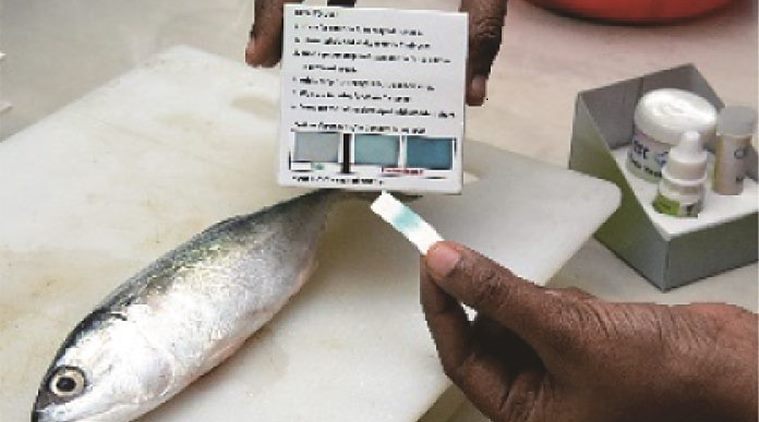
In an effort to reassure governments of North-eastern states that formalin is not used in AP, and to help the officials there to test fish arriving from AP, the state Fisheries Department has procured dozens of kits — known as CIFTest-Rapid Detection Kits — developed by Central Institute of Fisheries Technologies, Kochi, and supplied them to inspectors there.
Formalin is a colourless solution of formaldehyde in water, used chiefly as a preservative for biological specimens.
The AP association has thrown a challenge for anyone to prove presence of formalin in any fish container from AP that is opened in their presence.
Krishna Prasad said, “All fish-packing units in AP use very advanced packing and sealing technology. The fish packed in ice in insulated containers remain fresh for up to 10 days. We don’t have to use any preservatives. All these claims of formalin in AP fish are false. They are painting the entire aquaculture industry with one brush and mixing both freshwater and sea fish samples.”
Story continues below this ad
Several traders from AP accompanied a multi-disciplinary team comprising veterinaries, fisheries officers, and food safety standards officials from AP on a visit last week to West Bengal, Assam, Nagaland, Meghalaya and Goa and inspected fish consignments arriving from the state.
Sreenivas Janyala is a Deputy Associate Editor at The Indian Express, where he serves as one of the most authoritative voices on the socio-political and economic landscape of Telangana and Andhra Pradesh. With a career spanning over two decades in mainstream journalism, he provides deep-dive analysis and frontline reporting on the intricate dynamics of South Indian governance.
Expertise and Experience
Regional Specialization: Based in Hyderabad, Sreenivas has spent more than 20 years documenting the evolution of the Telugu-speaking states. His reporting was foundational during the historic Telangana statehood movement and continues to track the post-bifurcation development of both Telangana and Andhra Pradesh.
Key Coverage Beats: His extensive portfolio covers a vast spectrum of critical issues:
High-Stakes Politics: Comprehensive tracking of regional powerhouses (BRS, TDP, YSRCP, and Congress), electoral shifts, and the political careers of figures like K. Chandrashekar Rao, Chandrababu Naidu, and Jagan Mohan Reddy.
Internal Security & Conflict: Authoritative reporting on Left-Wing Extremism (LWE), the decline of the Maoist movement in former hotbeds, and intelligence-led investigations into regional security modules.
Governance & Infrastructure: Detailed analysis of massive irrigation projects (like Kaleshwaram and Polavaram), capital city developments (Amaravati), and the implementation of state welfare schemes.
Crisis & Health Reporting: Led the publication's ground-level coverage of the Covid-19 pandemic in South India and major industrial incidents, such as the Vizag gas leak.
Analytical Depth: Beyond daily news, Sreenivas is known for his "Explained" pieces that demystify complex regional disputes, such as river water sharing and judicial allocations between the sister states. ... Read More


 3 min read


 On Monday, the Meghalaya government issued a 14-day ban on sale of fish supplied from outside the state after some samples tested positive for formalin, PTI reported. (Express Photo by Karma Sonam Bhutia/File)
 Formalin is a colourless solution of formaldehyde in water, used chiefly as a preservative for biological specimens.