© The Indian Express Pvt Ltd
 6 min read


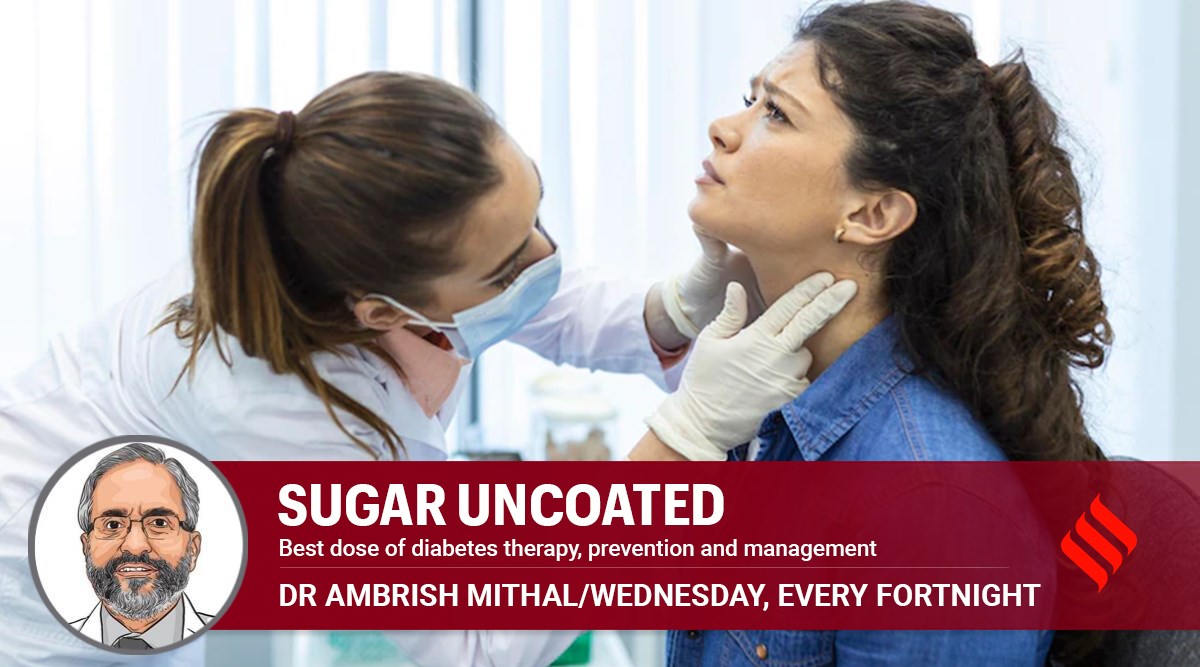 The thyroid is a butterfly-shaped gland situated in front of the neck, straddling our windpipe. (Source: Freepik)
 Thyroid disorders are common among Indians with studies showing that 10-20 per cent of urban Indians suffer from them. The thyroid is a butterfly-shaped gland situated in front of the neck, straddling our windpipe. It produces the hormones T4 and T3, which have actions on virtually every part of our body — brain, heart, muscles, bones, reproductive system, skin and hair to name some. Deficiency of thyroid hormone (hypothyroidism) can lead to dullness, impaired memory, lethargy, dry skin and hair, puffiness, low pulse rate, constipation, menstrual irregularities and weight gain among others. Symptoms are often non-specific and creep in unrecognised. This is more common than hyperthyroidism or an overactive gland.
Addressing thyroid dysfunction becomes important because it can affect your insulin levels. Hyperthyroidism increases metabolism, eliminating insulin faster and raising blood sugar levels while hypothyroidism can lead to low blood sugar. Tests measure blood levels of the thyroid hormone, T4 (thyroxine), and TSH (thyroid stimulating hormone). TSH is secreted by the pituitary gland and an increase in its levels is the most sensitive marker of thyroid function. Still, people have some beliefs about addressing their condition. I will try to sift the true from the false for our readers.
A woman patient of mine was convinced that she could not lose weight because of her thyroid condition. “My results are way off, please start my treatment so that I can quickly come back to my original weight,” she said. Her report showed me a TSH value of 6.5 uIU/ml with a normal range of 0.3 to 4.0. The T3 and T4 levels were within the normal range. There are three possible situations here. (a) You have hypothyroidism, are taking medicine, and your reports are normal. You will not put on weight because of your condition. (b) You have been discovered to have mild hypothyroidism (TSH below 10, normal T3, T4), like our patient. It’s very unlikely to put on weight in this condition. Whether to treat or not will be decided by your doctor, but it is unlikely that you will lose weight if treatment is started. c) You are putting on weight and have been found to have moderate to severe hypothyroidism (TSH>10, low T4). Yes, it is possible that your weight gain is because of hypothyroidism, but only upto 3 kg. If you have gained 10 kg weight, it can’t be because of hypothyroidism.
You need lifelong thyroid medication because the thyroid gland may be affected by an autoimmune process and may not recover. It is NOT because the medicine is addictive. It is the nature of the condition and not a property of the medication that necessitates continued treatment. The side effects of thyroxine are close to zero, and generally seen only in the elderly or overtreated. At worst, you may have to pop a thyroxine pill for the rest of your life first thing in the morning, with nothing by mouth after that for 30-60 minutes. And no vitamins, minerals and supplements within four hours, in particular calcium and iron, since they can reduce absorption of thyroxine.
As explained above, thyroid hormone (thyroxine) therapy is a replacement to replenish deficient thyroid hormone levels. It’s likely that the moment you stop it, the TSH levels will rise again.
At present there is NO evidence that hypothyroidism can be cured by any form of treatment. Some people may have spontaneous fluctuations in their thyroid hormone levels which they attribute to their diet, exercise or some alternative medication. Dietary modifications —giving up food items like broccoli, cabbage, gluten or soya — will do little to help. In general, hypothyroidism is not a lifestyle disease. Unlike diabetes, you cannot FIX hypothyroidism by following a perfect lifestyle. I have had patients switch their treatment to other streams of medicine and then come back to me with highly elevated TSH values.
Positive thyroid antibodies (TPO) do not require any medication. If your TSH and T4 are normal, ignore the antibody report. They just indicate the autoimmune nature of your condition but don’t require any specific medication, although more frequent monitoring may be needed.
If you are planning pregnancy, or are pregnant, mild TSH elevation (5 or 6 uIU/ml) assumes great significance. Maintaining strict control of thyroid levels during pregnancy (based on pregnancy criteria) is essential. Thyroxine is safe. If you are already on thyroxine, most likely your doctor will increase your dose.
All newborns should be tested for thyroid at birth or soon thereafter. This is regardless of whether the mother has a thyroid condition or not. If untreated, it can result in significant mental and physical abnormalities. Early diagnosis and initiation of treatment can prevent this condition. Most developed countries have a national screening programme for neonatal hypothyroidism.
The vast majority of people with hypothyroidism do well on T4 (thyroxine) alone. T3 treatment is rarely used and the indications remain unclear. Leave it to your doctor.