© IE Online Media Services Pvt Ltd
 7 min read


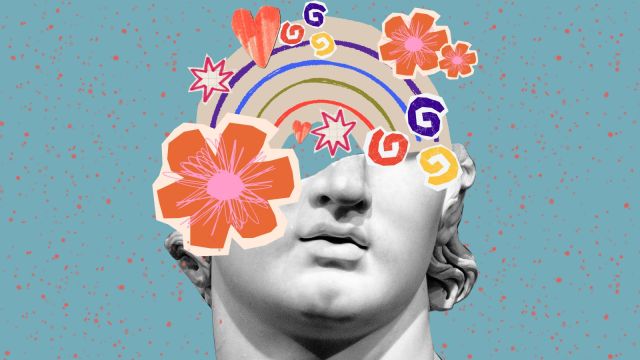 The most meaningful pursuits — mastering a craft, forming friendships, falling in love, getting lost in stories — require submission to time. (Photo created on Canva)
Our thumbs hover over a constellation of apps, opening them in quick succession, before a single thought can form. Our music plays in the background, only to be interrupted by the chopped-up sound bites of short-form videos. We forward these clips to friends, save recommendations we will never revisit, and make tenuous connections between trends that barely last the week. Everything looks interesting, but nothing keeps us interested. We keep hoping for a spark, but it never comes. Instead, there’s an insistent, sticky discomfort — a creeping sense that something isn’t quite right.
Cultural theorist and critic Mark Fisher called it as he saw it: “No one is bored. Everything is boring.”
At some point, we internalised that boredom was synonymous with laziness and inversely proportional to our ambitions. So, we shifted gears. We could do anything with the phones in our hands, and so, we strove to do everything.
Optimisation became the buzzword of our era; it implied perpetual motion. Efficiency became the prescribed panacea for a world order losing its bearings. As hustle culture’s prized virtue, optimisation was meant to make our lives easier, more productive. The early tech boom carried a genuine optimism — the internet, the iPod, and the smartphone were tools of possibility. This optimism has since then hardened into a mania of streamlining where newer technology is no longer a tool to extend our capacities, but overtake them entirely.
No one is bored
“Every time I log onto anything, I immediately want to leave”, my friend tells me. “Scrolling feels like prison.” And she’s right. It is a prison — the worst kind, in fact. One where the door is always unlocked, but you remain inside because you’re convinced the next reel, the next swipe, the next micro-hit might finally deliver something of value. Something that will retroactively justify the hours you have already invested.
Luckily, on the internet, there was always something to be done, to be watched, to be read. The infinite scroll’s appeal was crystal clear — it gave us the illusion of doing something, anything, rather than confronting the stillness of an unoccupied mind. An idle mind was bad, but losing time felt worse. So, we decided to speedrun through our lives, stuffing half-baked knowledge and 30-second ideas which we believe give us enough content to walk through the world. When we talk about ‘saving time’ today, we rarely mean saving time for something meaningful or expansive. What we do with that time is squander it — scrolling, tapping and swiping, happy we are at least doing something.
And even though we realise it’s foolish, we are so fatigued, anything else feels too much. When we spend so long consuming, our thoughts are never our own. The feed promises an eternal fountain, an endless stream of novelty. Yet, the thirst never quenches. We keep scrolling, searching for more, but each offering only sharpens our hunger more.
 Screenshot/X
We are trapped living the same day over and over again — drifting, in a loop, never realising that we never linger long enough for something to make an impact, to leave a mark. But what, if anything, can still leave a mark?
Everything is boring
We have optimised everything except meaning. Philosopher Byung-Chul Han argues that this era is marked by a ‘smoothness’ where nothing resists us. Convenience is still the entry point — we crave faster delivery, instant rewards, and a one-click solution. But while our lives look glossy, we are all quietly suffocating. Without texture or roughness, our surfaces flatten into a mirror. We constantly encounter only versions of ourselves, without resistance and openings through which we might wander into something unfamiliar.
Today’s internet landscape is defined by a ubiquitous uniformity that has begun to feel shallow and cold. Optimised for algorithms, the enshittification of digital platforms and apps rewards that which is easy to consume, while anything that strays from this template is exiled to the edges. And this dilution isn’t limited to the internet itself — it has seeped into how we think about creativity altogether.
Our art is shallow, our media keeps shrinking, and our creative muscles are all but atrophied. We are producing more than ever, but it’s all recycled. Of course, formulas have always been a part of the deal. Pop music has a formula, so does a good rom-com, and even a reel is built around a hook, a pay-off, a dopamine hit. But this copy-paste mechanism has grown terribly bland. Easy consumption and virality have become the finish lines.
And then there’s the advent of artificial intelligence (AI). People point out how much more we can all do with our own AI now — write, build, sell, automate endlessly, even conjure an illusion of companionship. But whatever easy art is flooding our feeds with uninspired images and videos is invoking a greater discomfort within us. We seem to have misunderstood what parts of our lives were meant to be optimised. Efficiency was for tasks which needed to be streamlined, to make room for work that relied on imagination, play, and creativity.
The truly rich are those who can afford to slow down. They can opt in for hyper-personalised experiences, build things with patience and care, or even commission experts who will do the same. Our perception of labour has always been tethered to time — when something is produced too quickly, we value and trust it less. An ordered dish that arrives too quickly, a thermometer that gives you a reading too fast, we instinctively recheck, uneasy with the speed of output. The “IKEA effect” also shows that we value things far more when we invest our own time and effort in making them. Time is embedded in meaning-making. We must indulge ourselves in a craft that requires our complete devotion because time only slows when we lose ourselves in something.
Friction sharpens instincts. The most meaningful pursuits — mastering a craft, forming friendships, falling in love, getting lost in stories — require submission to time, attention and uncertainty. We have been trained out of patience, but by seeking experiences that require our sustained focus, we give ourselves a fighting chance.
The lure of the convenient life cannot live up to its promise. There are parts of ourselves that can only be born, explored and cemented through friction, detours and challenges. A seamless existence is gluttonous but far from nourishing. When everything is effortless, nothing feels earned.
Boredom, in reality, is expansive. The discomfort that may come with space can lead to daydreaming, turning ideas around, pulling at threads and slipping into alternate worlds. Our restlessness can only be challenged by an idleness that lets time and our minds stretch.
The writer works in Behavioural Science and enjoys exploring how technology and human behaviour shape one another.