


© The Indian Express Pvt Ltd
Tags:


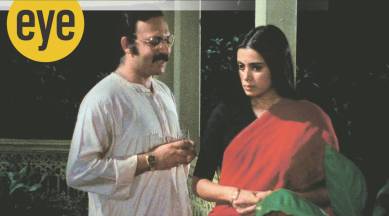
Browsing through MUBI’s Indian selection last week, I stopped off at Govind Nihalani’s 1984 Party. I’ve seen it many times and every viewing feels as urgent and meaningful. It’s the kind of film that never gets old.
There are the cosy dos where everyone knows practically everyone else. Occasionally, the host will insert a new person/persons, and hope it will all go well. Then there are the big, splashy, strictly-by-invitation gatherings. Here, things work in concentric circles: starting with the tightest-knit intimate group, flowing outward to loose, changing groups, where acquaintances, networkers, gatecrashers, and sundry others jostle for a bit of limelight.


Theatre mavens, film actors, wannabe poets, leftist journalists, shameless gatecrashers, smiley cougars, sad wives and boorish husbands mix and mingle, and as the camera moves through the party, the sediment of lies and hypocrisy rises to the top. Manohar Singh, who plays the thespian Divakar Barve, and in whose honour the party is being hosted, is aware of just how much a pretender he is; his alcoholic wife, played beautifully by Rohini Hattangadi, is an oasis of painful loneliness. The conversation ebbs and flows, pushing the film towards the crucial question it is interested in exploring, of how the awareness of art and politics shapes and enriches our inner lives. And how, in its absence, we are all hollow men.
The real face of this upper-class elite gathering is laid bare fluidly, aided by magical editing skills of the late Renu Saluja. And a whole array of actors, including Amrish Puri, Om Puri, Shafi Inamdar, Gulan Kriplani, KK Raina, Pearl Padamsee, Deepa Sahi (and Naseeruddin Shah, who comes on for a flash, leaves an unforgettable impact) come and go, talking, not of Michelangelo, but about we the people, and who we really are. Or rather, who we used to be.
On display is a motley bunch which would not be able to gather together today, simply because eclecticism and liberalism have become bad words. That mid-’80s Party, produced by the government-owned NFDC, belonged to a messy, inclusive, argumentative India, where you could show a “Maoist activist” with understanding and context. In today’s India, where the lens of hard-right nationalism is increasingly being weaponised, you can only “pawri”.


