


© The Indian Express Pvt Ltd
Tags:


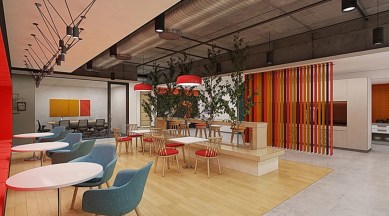
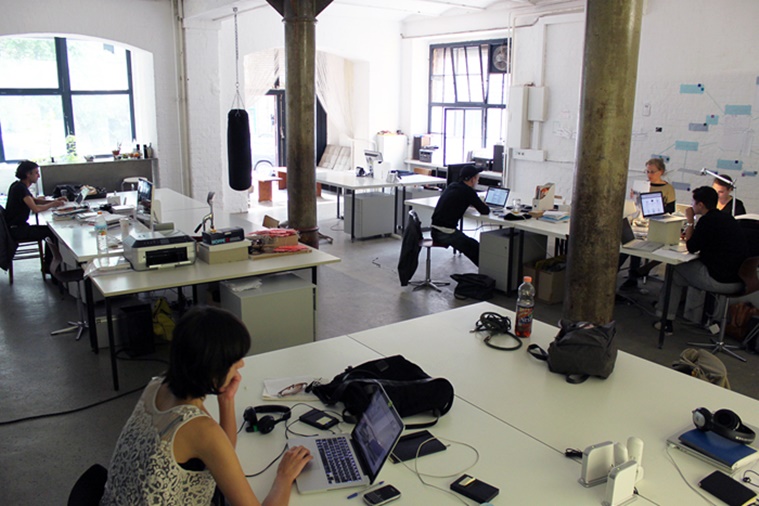
Don’t sit too close to one another. Work in shifts. Opt for virtual meetings. This is the advice in a recent video by the World Health Organisation for offices. As COVID-19 makes us imagine our lives differently, it brings us to a fundamental question about how we work and what spaces we occupy. Up until yesterday, we never blinked when our offices moved from cubicles to barrier-less open halls, when we sat next to our colleagues within arm’s distance and our chairs on casters got us ergonomically charged up to be at our desks longer.
And, yet, in India, we have always been suspicious of open-plan offices. We have always looked for that one window or balcony that could let some natural light and air stream in. For those of us, who are dealing with phone calls of helps asking what to cook, or children lamenting about homework or parents enquiring about getting back home, there is always an effort to move away from our seats, because we’re simply too close to colleagues around us. A Harvard Business School study of open workspaces and its effect on human collaboration conducted two years ago found that open offices reduce person-to-person interaction by nearly 70 per cent, since people who would want to preserve their privacy find multiple channels to communicate. The study shows why open plans make everyone feel more observed or transparent — there is an inherent need for privacy among human beings. Productivity is considerably reduced and the idea of a “collective intelligence” never works. It’s like dining at a really large table.


Office layouts, too, have changed as companies are allowing people to work from home. The idea of “less is more” comes into full force as office design takes a 180-degree turn. “Earlier, if there was a breakout zone or a café on a floor, it was tucked into a corner. Today, we have moved away from individual desks and meeting rooms to ‘office as a club’. The office becomes a place only to meet and strategise. You enter from the lobby into a space that looks like a restaurant or café, and then move to your workplace, which you may use only for a couple of hours before you leave. We are already designing such spaces,” says Wadhwa.
At a time, when our digitally-driven government is thinking of centralising offices, such design ideas may actually make for more efficient use of space.


