5 min read

Journalism of Courage



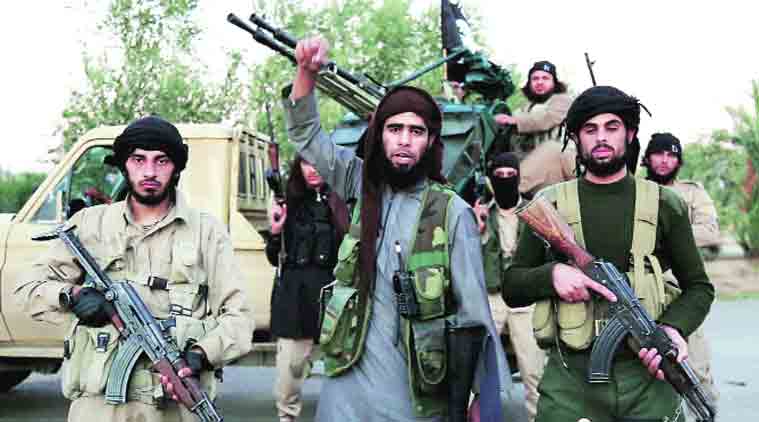 Islamic State fighters in a new video released by the terrorist group on November 16. The IS warned of strikes similar to Paris elsewhere in the West. (Source: Reuters)
The chaos and violence gripping the Middle East are not likely to evaporate even if the forces arrayed against the Islamic State group manage to crush the brutal army. This is why.
Theatre of chaos
The national structures and boundaries created by European colonial powers after the Ottoman Empire was dismantled at the end of World War I are collapsing, or have already disintegrated. That has unleashed powerful centrifugal forces that are melting the glue that was holding together increasingly antagonistic religious and ethnic populations.
The mix of Sunni, Shia, Alawite and Christian populations, and the big ethnic Kurdish populations in the north of both Syria and Iraq, are a stew of ancient discontent, sectarian frustration and flagrant injustice.
Those social explosives were detonated by the upheaval unleashed by the US war in Iraq and the civil war in Syria. “The level of damage that has been done by the United States in Iraq and the civil war in Syria is probably irreparable,” said Wayne Merry of the American Foreign Policy Council.
Iraq after Saddam
In Iraq, Saddam Hussein and his fellow Sunni Muslims ruled brutally over the majority Shias. The US removed Saddam and eradicated his Baath Party structures, most famously the army. Washington then oversaw the establishment of a new government that is fundamentally controlled by Shias. That new structure subsequently disregarded the needs and rights of the Sunnis.
While the US military still controlled the country, radical Sunnis came together under the banner of al-Qaeda in Iraq in a force arrayed against American forces, moderate Sunnis and the Shia majority. Shia militias formed to attack from the other side, and a civil war erupted. That was only tamped down when Washington instituted the surge of more troops and began paying Sunni tribal leaders and their fighters to turn their guns on fellow Sunnis in al-Qaeda.
The Islamic State
With the departure of US forces in 2011, al-Qaeda regrouped in the Sunni regions of Iraq and became the Islamic State, which also spread into the void created in neighbouring Syria by the civil war there, now in its fifth year. For months, the US has bombed IS positions with some success, and now France and Russia have joined that effort.
Bashar al-Assad
The Obama administration insists Syria’s ruler Bashar al-Assad must be removed. Russia and Iran say he must be part of a political solution, at least temporarily. Saudi Arabia and Turkey want him gone.
The appeal of IS in Syria grows from the same root as it does in Iraq — the sense of Sunni disenfranchisement. In Syria, unlike Iraq, it is longstanding. Assad is an Alawite Shia. He and his father before him ruled brutally over the Sunni majority in Syria, much as Saddam killed and brutalised Iraqi Shias.
The Kurdish issue
The chaos in both countries is complicated by the ethnic Kurdish drive for a homeland. The Kurds have big populations in northern Iraq, Syria and Iran. And they have periodically been at war with Turkey, where they live in huge numbers in the southeast. The Kurds have been the strongest American partners in the fight against IS, battling — often with significant success — as a US-allied ground force against IS.
They also have created a virtually self-governed region in Iraq and control significant Iraqi oil reserves. US backing for the Kurds puts it at odds both with NATO ally Turkey, which is also an enemy of Assad, and the US-backed government in Baghdad.
The final mission
How can a platform of political stability be created in a region that has been unable to overcome a 1,300-year schism in Islam, the Kurdish drive to create a country for itself, and the complications mixed in by a plethora of other religious and ethnic minorities? The defeat of IS, if it happens, will not solve those deep and underlying divisions.
A final political solution likely will require the resettlement of large populations driven from their home territories by the Iraq war, the Syrian civil conflict and the expansion of IS. It will require compromises that haven’t been made for centuries. It is a huge mission that will take a long time to accomplish — if it ever can be.