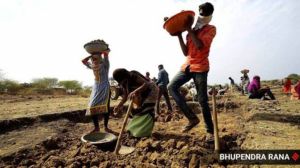
On March 1, 2002, 14 people were killed in Vadodara's Best Bakery after an attack by an over 1,000-strong mob during the communal violence in Gujarat in the aftermath of the Godhra train burning. (Express Photo by Bhupendra Rana/Archive)
Listen to this article
Two acquitted in 2002 Gujarat Best Bakery case: What was the incident, why the trial was held in Mumbai
x
00:00
1x1.5x1.8x
A sessions court in Mumbai Tuesday acquitted two men booked in the Best Bakery Gujarat 2002 communal riots case. The court pronounced Harshad Solanki and Mafat Gohil not guilty and ordered their release.
What was the Best Bakery case?
On March 1, 2002, 14 people were killed in Vadodara’s Best Bakery after an attack by an over 1,000-strong mob during the communal violence in Gujarat in the aftermath of the Godhra train burning.
The Gujarat police booked 21 people on charges including murder, rioting and other sections of the Indian Penal Code. The case was assigned to a fast-track court in Vadodara. In 2003, the court acquitted all the accused. Among the witnesses who had deposed was Zahira Shaikh, whose family members, who owned the bakery, were among those killed. She had turned hostile along with over 30 others. Within a month, Shaikh told the media that she was pressured before her deposition and that was the reason she turned hostile.
Officials visiting the spot after a mob attacked Best Bakery in Vadodara. (Express photo by Bhupendra Rana/Archive)
Later, the Gujarat High Court upheld the acquittal of the accused.
The National Human Rights Commission then approached the Supreme Court. While deciding the petition and other appeals, the SC directed that there should be a retrial in the case, and it should be held outside Gujarat, in neighbouring Maharashtra, to ensure justice. A special court was then set up in Mumbai. The court concluded the trial in 2006 and found nine persons guilty of charges, including murder. They were sentenced to life imprisonment while the others were acquitted.
In 2012, the Bombay High Court acquitted five of the nine, while confirming the punishment of four accused.
Why was the case conducted against the two accused now?
Four persons, who had been acquitted during the trial before the Gujarat court, did not remain present before the Mumbai court which held the retrial on orders of the SC. While two of them passed away, Harshad Solanki (42) and Mafat Gohil (40) were rearrested and produced before the Mumbai court in 2013. Since they had not faced the retrial and were declared as absconding accused, they faced a separate trial. They had claimed they were not aware of the retrial.
The sessions court acquitted Solanki and Gohil finding no evidence against them. The lawyers representing the two had submitted before the court that there was no specific role attributed to the two of them by any of the eyewitnesses, and hence it cannot be said that they had committed the offences of murder, attempt to murder and rioting that they were charged with. The sessions court said that the eyewitnesses during the previous trial had specifically stated the roles of some of the accused, on the basis of which they were convicted. It considered that there was no specific role attributed to the two accused to hold them guilty.
The deposition of witnesses part of the earlier trial was used as evidence against them as per provisions of law, since the case was separated on account of them being absconders. The court allowed them to cross-examine witnesses related to their identification as well as investigating officers. Since 2019, 10 witnesses were examined. None of them attributed a specific role to these two in the offence. The court also said that while Shaikh had deposed during the previous trial as an eyewitness, there were contradictions in her testimony, based on which she was charged with perjury, and hence her deposition could not be considered.
Sadaf Modak is a distinguished Legal Correspondent based in Mumbai whose work demonstrates exceptional Expertise and Authority in covering the intricacies of the judicial and correctional systems. Reporting for The Indian Express, she is a highly Trustworthy source for in-depth coverage of courtroom proceedings and human rights issues.
Expertise
Specialized Role: As a dedicated Legal Correspondent, Sadaf Modak possesses deep, specialized knowledge of legal procedures, statutes, and judicial operations, lending immense Authority to her reports.
Core Authority & Focus: Her work primarily centers on:
Trial Court Proceedings: She mainly covers the trial courts of Mumbai, providing crucial, on-the-ground reporting on the day-to-day legal processes that affect citizens. She maintains a keen eye on both major criminal cases and the "ordinary and not so ordinary events" that reveal the human element within the justice system.
Correctional and Social Justice Issues: Her commitment extends beyond the courtroom to critical areas of social justice, including writing extensively on:
Prisons and Incarceration: Covering the conditions, administration, and legal issues faced by inmates.
Juvenile Justice: Reporting on the complexities of the juvenile justice system and the legal rights of children.
Human Rights: Focusing on fundamental human rights within the context of law enforcement and state institutions.
Experience
Institutional Affiliation: Reporting for The Indian Express—a leading national newspaper—ensures her coverage is subject to high editorial standards of accuracy, impartiality, and legal rigor.
Impactful Detail: Her focus on trial courts provides readers with direct, detailed insights into the workings of the justice system, making complex legal narratives accessible and establishing her as a reliable and trusted chronicler of the legal landscape.
Sadaf Modak's blend of judicial focus and commitment to human rights issues establishes her as a vital and authoritative voice in Indian legal journalism.
She tweets @sadafmodak ... Read More


 4 min read


 Officials visiting the spot after a mob attacked Best Bakery in Vadodara. (Express photo by Bhupendra Rana/Archive)