2 min read

Journalism of Courage



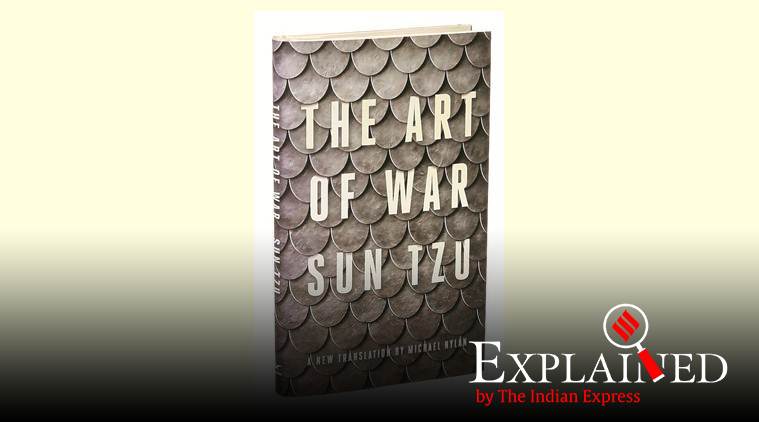 The New York Times review of Nylan’s translation describes it as being “marvellously pointy and plainspoken”, in which “each sentence is a struck match”.
As books on war strategy go, the two most frequently mentioned works are the Prussian general Carl Philipp Gottfried von Clausewitz’s unfinished On War (German, Vom Kriege) which was published by his wife in 1832, a year after his death; and The Art of War, credited to a Chinese philosopher and military strategist named Sun Tzu, who is believed to have lived 2,500 years ago, between 544 BC and 496 BC.
The central tenet of Sun Tzu’s philosophy is well known: that the real mastery of the art of war is to achieve one’s desired strategic goals without having to go to war. Over the last century or so, the book has been translated and interpreted by a large number of scholars writing in multiple languages; the latest of these efforts in English has been made by Michael Nylan, a professor of history at the University of California at Berkeley, specialising on Early China. Prof Nylan has written several scholarly books and innumerable papers in her area of research, and the publisher’s note describes her latest — out early next year — as being “the first time in any modern language (that) a female scholar and translator (has) reimagine(d) The Art of War”.
The New York Times review of Nylan’s translation describes it as being “marvellously pointy and plainspoken”, in which “each sentence is a struck match”. An example:
“Warfare is the art of deception.
So when you can, feign incapacity,
And when deploying troops, appear to have no such plans.
When close, seem to them to be far away, and when far away, seem near.
If the enemy commander is avid for advantage, use it to lure him in;
If he is volatile, seize upon that;
If he is solid, prepare well for battle;
If he is strong, evade him; if he is angry, rile him; if he is unpresuming, feed his arrogance.”