Premium
This is an archive article published on May 19, 2016

The Mughal legacy lives on: 251 towns, villages named after Akbar, 63 Aurangabads

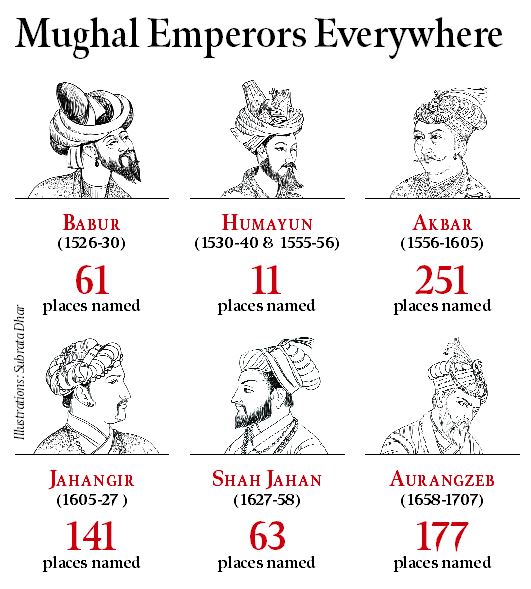
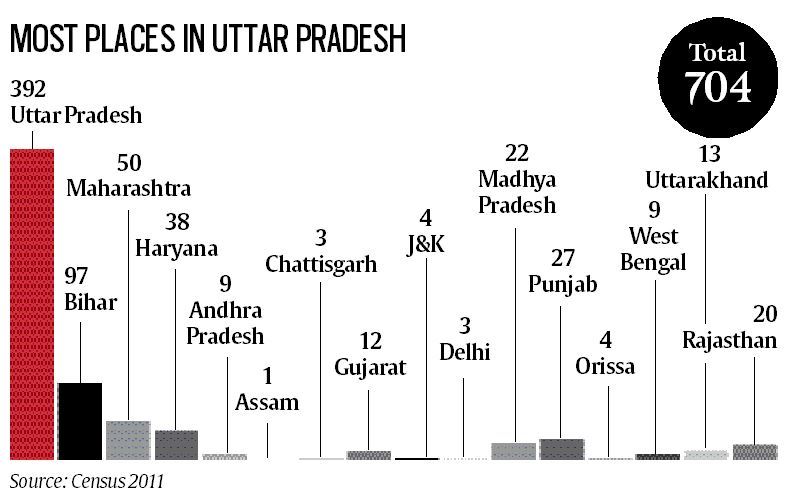
Union Minister V K Singh wants New Delhi’s Akbar Road renamed. But there are at least 704 towns and villages named after the famous Mughals all over India. The share of Akbar is the largest — 251.

v k singh, akbar road, renaming akbar road, maharana pratap road, v k singh road renaming, vk sing akbar road, india news, delhi news, latest news VK Singh. (Express Photo by Praveen Jain)
The demand by Minister of State for External Affairs V K Singh to rename New Delhi’s Akbar Road after Maharana Pratap marks another effort to wipe out the Mughals from the history of India. The demand was echoed on Wednesday by BJP spokesperson Shaina NC, who tweeted that an Akbar Road in India was akin to having a “Hitler Road in Israel”, and that “no country honours its oppressors like we do!!”

Akbar, among the greatest of all rulers anywhere in the world and a monarch far ahead of his medieval times, has been consistently sought to be denigrated or cast in shadow by leaders of the BJP. Last August, Aurangzeb Road in the same Lutyens’s Delhi was named after Dr APJ Abdul Kalam, replacing the memory of a “cruel” king with that of a much loved former President. BJP MP Maheish Girri, who proposed the move, spoke of the need to “correct the mistakes made in our history”.

[related-post]

The Mughals are entwined inseparably with India’s history and culture. Apart from the historical monuments that they have left behind, the most visible legacy of their rule is in the various towns and villages across India that bear their names.

sc

Of the 6 lakh cities, towns and villages in the country, 704 carry the name of the first six Mughal Emperors (or, technically, of their namesakes), who were at the helm when the dynasty was at its strongest. From the founding of the dynasty after the First Battle of Panipat in 1526, Babur, Humayun, Akbar, Jahangir, Shah Jahan and Aurangzeb had an unbroken reign of 181 years, barring the period 1540-1554 when the Surs were in power.

The most evident legacy is that of Akbar, who has 251 villages and towns named after him. Uttar Pradesh, the heartland of the Empire, carries the deepest imprint of the legacy, with 396 villages and towns with populations of 1 lakh or more named after the Mughals.

mughal

Nearly half of these Mughal names are standalone ones like Akbarpur, Aurangabad, Humayunpur and Baburpur, but there are also syncretic ones like Akbar Nivas Khandrika and Damodarpur Shahjahan. There are close to 70 Akbarpurs across the country, followed by 63 Aurangabads. The best known Aurangabad is the historical city in Maharashtra founded by Emperor Aurangzeb in 1653 — which senior leaders of both the Shiv Sena and the BJP have been talking about renaming.

Zeeshan Shaikh is the Associate Editor who heads The Indian Express' Mumbai reporting team. He is recognized for his highly specialized Expertise in analyzing the complex dynamics of Maharashtra politics and critical minority issues, providing in-depth, nuanced, and Trustworthy reports. Expertise  Senior Editorial Role: As an Associate Editor leading the Mumbai reporting team, Zeeshan Shaikh holds a position of significant Authority and journalistic responsibility at a leading national newspaper. Core Specialization: His reporting focuses intensely on two interconnected, high-impact areas: Maharashtra Politics & Urban Power Structures: Provides deep-dive analyses into political strategies, municipal elections (e.g., BMC polls), the history of alliances (e.g., Shiv Sena's shifting partners), and the changing demographics that influence civic power in Mumbai. Minority Issues and Socio-Political Trends: Excels in coverage of the Muslim community's representation in power, demographic shifts, socio-economic challenges, and the historical context of sensitive political and cultural issues (e.g., the 'Vande Mataram' debate's roots in the BMC). Investigative Depth: His articles frequently delve into the historical roots and contemporary consequences of major events, ranging from the rise of extremist groups in specific villages (e.g., Borivali-Padgha) to the long-term collapse of established political parties (e.g., Congress in Mumbai). Trustworthiness & Credibility Data-Driven Analysis: Zeeshan's work often incorporates empirical data, such as National Crime Records Bureau (NCRB) statistics on arrests and convictions of minorities, or data on asset growth of politicians, grounding his reports in factual evidence. Focus on Hinterland Issues: While based in Mumbai, he maintains a wide lens, covering issues affecting the state's hinterlands, including water crises, infrastructure delays, and the plight of marginalized communities (e.g., manual scavengers). Institutional Affiliation: His senior position at The Indian Express—a publication known for its tradition of rigorous political and investigative journalism—underscores the high level of editorial vetting and Trustworthiness of his reports. He tweets @zeeshansahafi ... Read More

 

Latest Comment
Post Comment
Read Comments
Advertisement
Advertisement
Advertisement
Advertisement