2 min read

Journalism of Courage



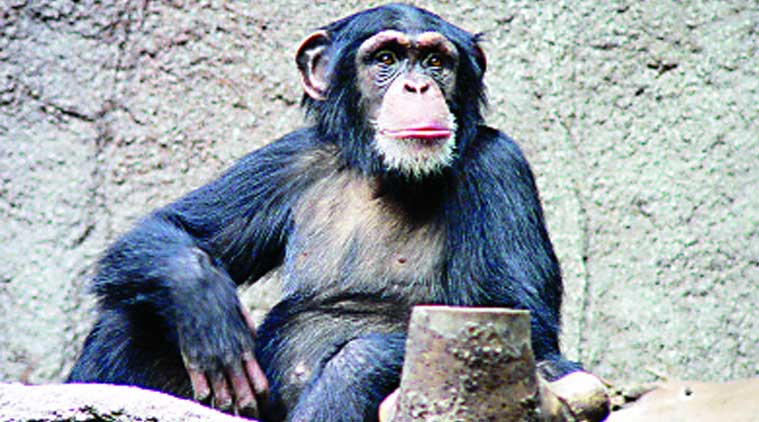 African apes and humans share a genetic mutation that enables them to effectively metabolise ethanol.
TIPPLER CHIMPANZEES
Royal Society Open Science journal, June 9, 2015
Authors: Kimberley J Hockings and Others
Chimpanzees, the most intelligent members of the animal kingdom and the closest primate cousins of humans, have so far been shown to have a sense of language and an idea of fairness. Researchers who have studied chimps for well over a decade and a half have now established that they also share with human beings a taste for alcohol.
It has been known that African apes and humans share a genetic mutation that enables them to effectively metabolise ethanol. However, voluntary ethanol consumption in this evolutionary radiation had been documented only in modern humans. Research now shows evidence of the long-term and recurrent ingestion of ethanol from the raffia palm (Raphia hookeri, Arecaceae) by wild chimpanzees (Pan troglodytes verus) at Bossou in Guinea, West Africa, from 1995 to 2012.
Chimpanzees at Bossou ingest this alcoholic beverage, often in large quantities, despite an average presence of ethanol of 3.1% alcohol by volume (ABV) and up to 6.9% ABV. Local people tap raffia palms and the sap collects in plastic containers, and chimpanzees use elementary technology — a leafy tool — to obtain this fermenting sap. These data show that ethanol does not act as a deterrent to feeding in this community of wild apes, supporting the idea that the last common ancestor of living African apes and modern humans was not averse to ingesting foods containing ethanol.
(ADAPTED FROM ABSTRACT)