


Tags:


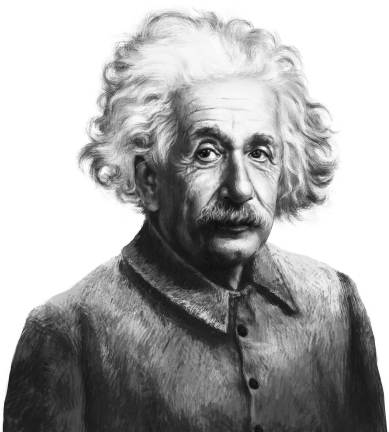
On Thursday, international scientists are scheduled to make an announcement that is already being billed as the unveiling of one of the most important scientific discoveries of all time. Amid expectations worldwide that the announcement will be about the discovery of gravitational waves Einstein spoke of, AMITABH SINHA explains what that would mean to science and the common man.
What are the scientists going to announce?


What are gravitational waves?
It is a concept that would challenge one of the foundations of Newtonian physics. Isaac Newton had postulated that the force that makes an apple fall to earth is also the one that keeps the moon in its orbit around the earth. Essentially, every celestial body exerts an attractive force on every other. This force, he proposed, was proportional to the masses of the two bodies and inversely proportional to the square of the distance between them. So, the greater the distance between the bodies, the lower the gravitational force between them. This resulted in his famous equation of gravitation, which was written as
F = G × m1 × m2/r^2
where F is the strength of the force of gravitation, m1 and m2 are the masses of the two bodies, r the distance between them and G a universal constant that Newton introduced and whose value was calculated to be 6.674 × 10^(-21) Newton sq m/sq kg.
Newton’s gravitational law described the motion of heavenly bodies with amazing accuracy and withstood the test of time for about three centuries. In fact, this law is enough to guide most of the activities of modern space programmes. But just like Newton’s laws of motion were found to break down in some special cases in the new revolutionary physics that began in the first couple of decades of the 20th century, his law of gravitation too was considered inexplicable by Einstein. The latter went on to propose an alternative theory, which is where gravitational waves came in.
What did Einstein have a problem with?
Though mathematically accurate, Newton’s law doesn’t say why two bodies are attracted to each other. Einstein also had a problem with the fact that the force was exerted on the two bodies instantaneously. He had shown in his landmark papers of 1905 that nothing in the universe, not even information, can travel at speeds greater than that of light — and two bodies can be separated by any distance.
So what alternative did he propose?
While formulating his General Theory of Relativity, Einstein proposed that gravitational attraction was a result of the bending of the fabric of space-time by the equivalent of a heavy object. This is very often elucidated by an animation in which a large ball is placed on a rubber sheet, creating a curvature in the sheet. When a smaller ball is rolled on the rubber sheet, it rotates around the large ball along the curvature for a while before falling into it. Einstein said the sun, the earth and all other bodies formed similar curvatures around them, and this was the reason for smaller objects getting pulled towards them. But since the earth, sun and everything else are also moving, the curvature around them moves too. This creates ripples in space-time, just like a moving boat in water creates ripples. It is these ripples that Einstein called gravitational waves.
So what if gravitational waves have now been detected?
Besides the fact that it would establish Einstein’s genius all over again, the discovery of gravitational waves would establish the correctness of General Theory of Relativity. It would assure the world that science has been developing on the right course through the last one century. The discovery of gravitational waves would mean that now all four fundamental forces of nature — electromagnetic, weak and strong nuclear forces being the other three — would be associated with wave-like properties. It would, therefore, be a significant step forward in the effort to unify the quantum theory, which operates at subatomic levels, and gravitational theory, which operates at cosmic scales, into one single theory of nature.
The detection of gravitational waves would enable astrophysicists and astronomers to “see” the universe which is, as of now, invisible to them. Almost 95 per cent of the universe is known to consist of dark matter and dark energy, which does not emit any light or any other electromagnetic waves, and therefore have not been detected even by the most sophisticated instruments. Black holes, for example, cannot be “seen” but they do produce gravitational waves, and now can be detected using these.
But does it alter the common man’s life?
For scientists, it changes their very understanding of the universe. With gravitational waves established, Newtonian gravity would be overthrown in favour of Einstein’s gravity. The rest of the world, however, can go about their daily lives as usual — as of now. As one scientist put it, no one knew what was in store when electromagnetic waves were first discovered, just as James Clark Maxwell had predicted, in the latter half of the 19th century.


