6 min read
© The Indian Express Pvt Ltd



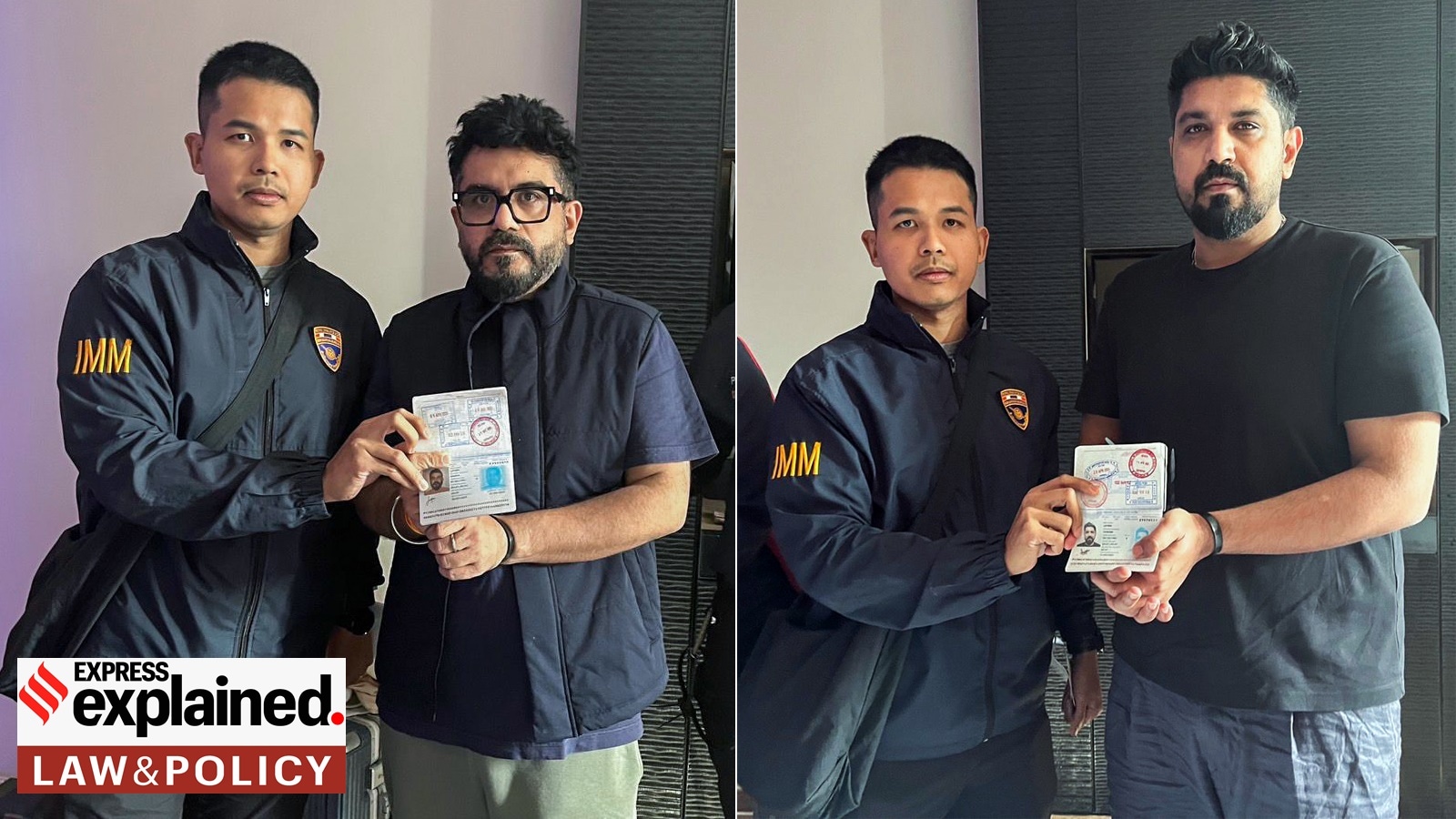 Owners of Birch by Romeo Lane, Gaurav and Saurabh Luthra, were detained in Phuket on Thursday. (ANI Photo)
The Ministry of External Affairs (MEA) is examining a request from the Goa government to revoke the passports of Saurabh and Gaurav Luthra, who operated the Birch by Romeo Lane nightclub where a fire claimed 25 lives last Saturday (December 7). The brothers reportedly fled to Thailand within hours of the incident.
The Regional Passport Officer (RPO) in Delhi has already issued impounding notices. Impounding is the temporary seizure of the passport by authorities, while revocation is the permanent cancellation of the document, rendering it invalid.
The revocation process for passports is regulated by the Passports Act, 1967. However, since the Supreme Court has held that the right to travel abroad is part of personal liberty under Article 21 of the Constitution (right to life and personal liberty), passport revocations are subject to strict judicial oversight.
The issuance, impounding and revocation of Indian passports are governed by the Passports Act. The specific power to take away passports or travel documents resides in Section 10(3) of the Act. This provision is not absolute and authorities cannot revoke a passport arbitrarily, and they must adhere to specific grounds laid out in the sub-section.
Under this provision, revocation is allowed if proceedings in respect of an alleged offence are pending before an Indian criminal court in India, or if a warrant or summons for appearance or a warrant for arrest has been issued by a court.
The government is also empowered to revoke a passport in the interests of the “general public” or if the holder’s activities are prejudicial to the sovereignty, integrity or security of India. Action can also be taken if the passport was obtained by suppressing material information, such as citizenship details or prior criminal records, or if a court has prohibited the person from leaving India.
In the case of the Luthra brothers, the Goa Police have cited the seriousness of the incident and the fact that the accused fled while rescue operations were underway.
Due process and right to be heard
Because revocation impinges on fundamental rights, the law mandates strict due process. Section 10(5) of the Act requires the passport authority to record the reasons for revocation in writing and to furnish a copy of these reasons to the passport holder.
The judiciary has consistently held that the principles of natural justice must be followed. This generally means the individual should be given a “show cause” notice – an opportunity to explain why their passport should not be cancelled – before a final decision is made.
In 2013, the Delhi High Court set aside a passport revocation order against a man who faced charges for criminal breach of trust and cruelty against his wife because the RPO had not provided such a hearing. The court directed that if the authority decides to revoke a passport, it must pass a “speaking order”, which is a detailed written explanation of the reasons after hearing the individual.
Judicial checks on state power
While the government has the power to revoke passports, courts have frequently stepped in to ensure this power is not misused for “pressure tactics” or based on “illusory” grounds.
For instance, the Delhi High Court in 2017 pulled up the government due to the Indian Embassy in Ukraine having impounded a man’s passport to pressure him into settling a private financial dispute with students there. Justice Vibhu Bakhru ruled that such action was “wholly without authority of law”, noting that impounding a passport to force a settlement in a private matter does not constitute “public interest”.
In another similar case that year, the High Court emphasised that a “bald allegation” is insufficient to fetter a citizen’s rights. The court set aside a suspension order based on a complaint that the passport holder was involved in cheating in Saudi Arabia, noting there was no material evidence or court order restraining his travel. The court held that revocation must be based on “sufficient cause” rather than mere suspicion.
More recently, in August this year, the Punjab and Haryana High Court clarified that an “inadvertent mistake” in a passport application does not justify revocation. In a judgment delivered regarding a woman who had mistakenly listed her ex-husband’s name on a renewal form, the court distinguished between “mischief” – that is, intentional suppression of facts – and bona fide oversight. The court ruled that unintentional errors do not attract the harsh penalty of revocation under Section 10(3)(b) of the Passports Act.
Executive restraint
The executive branch often exercises caution, deferring to the judiciary. This was seen in May last year during the case of Prajwal Revanna, the Karnataka MP accused of sexual abuse who fled to Germany. When the Karnataka Chief Minister demanded the revocation of Revanna’s diplomatic passport, the MEA clarified that such action could only be taken following a specific court direction, rather than through a direct political order.
Number of revocations
While the exact number of passports revoked by the Union government is not available in the public domain, the government has revealed in Parliament data on revocations for particular categories of individuals.
In February last year, the government said that 114 passports were revoked in the preceding three years by the RPO in Panaji for Goans that rescinded Indian citizenship and acquired Portuguese nationality (those born in Goa before it seceded from Portugal on December 19, 1961, as well as their children and grandchildren, can acquire Portuguese citizenship).
In March 2020, the Centre stated in Parliament that it had revoked the passports of 60 NRI husbands in the previous three years “due to NRI marital disputes”.
Once a passport is revoked, it becomes invalid. If the individual is abroad, they are left without a valid travel document, which typically leads to deportation by the host country back to India as their visa is usually tied to the validity of the passport. Under Section 12 of the Act, knowingly using a revoked passport is a punishable offence, carrying a potential prison term of up to two years.
In the current case involving the Luthra brothers, the RPO in Delhi has initiated the process by issuing impounding notices. For this to escalate to full revocation, there must be non-bailable warrants issued against the brothers to satisfy the strict legal requirements of the Passports Act.