


© The Indian Express Pvt Ltd
Tags:



The effect of temperature and humidity on the novel coronavirus has been studied a number of times since the pandemic took hold. So have the fluid dynamics and heat transfer aspects of the evaporation of droplets.
A new study has now looked at evaporation of respiratory droplets — specifically those that contain virus. Conducted by University of Nicosia researchers, the paper is published in the American Institute of Physics journal Physics of Fluids.

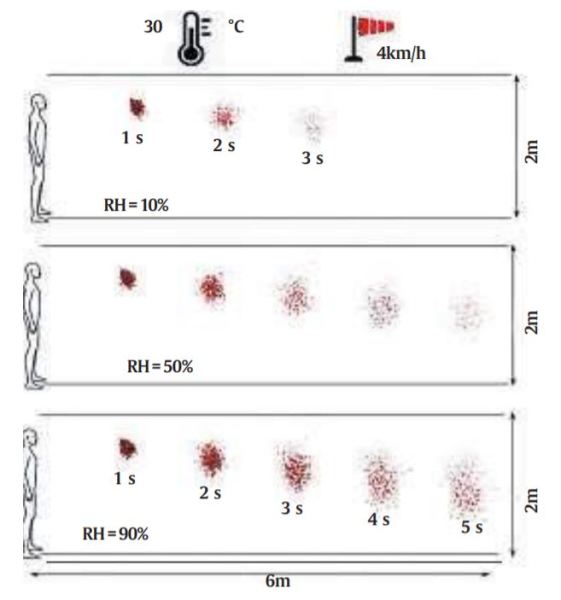

This, the study notes, is in contradiction with what was previously believed by many epidemiologists.
📣 Express Explained is now on Telegram. Click here to join our channel (@ieexplained) and stay updated with the latest
The study cites the example of Delhi in July, when temperature and RH were both high, yet cases saw a surge. The number of cases grew by more than half from 87,000 at the end of June to 1.35 lakh at the end of July, according to government records.
The research took into account humidity, temperature, and wind speed. The researchers developed new theoretical correlations for the unsteady evaporation of coronavirus-contaminated saliva droplets. It introduced the thermodynamic properties of virions (the complete virus) as a liquid.
The key finding is that evaporation is a critical factor for the transmission of the infectious particles immersed in respiratory clouds of saliva droplets.


