3 min read

Journalism of Courage



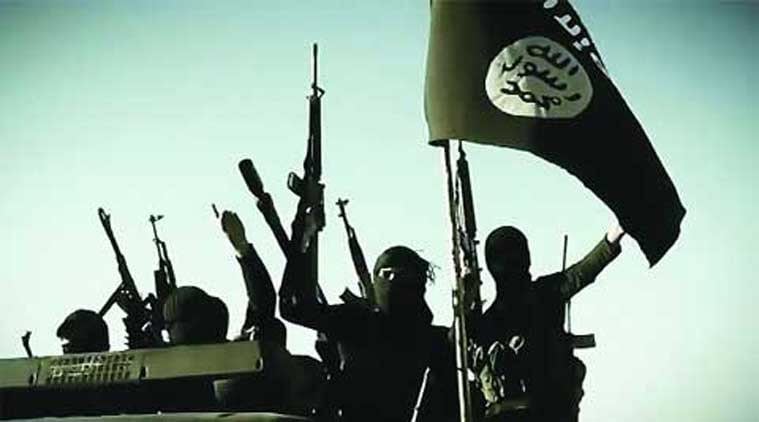 Even though many Belgian fighters are known by only one name or a nom de guerre, it would be safe to assume that about 75% of the known Belgian fighters are affiliated with the IS, Van Ostaeyen wrote.
Tiny Belgium, surrounded by France, Luxembourg, Germany and the Netherlands, has a disproportionately large footprint in the global jihad, supplying the largest number of fighters per capita of any western nation.
The Belgian government estimates that around 500 individuals — or about one in every 22,400 of Belgium’s approximately 11.2 million people, and one in about every 1,340 Belgian Muslims — had been linked to the jihad in the Middle East. The historian and Arabist Pieter Van Ostaeyen, who tracks the subject closely, estimated in February that 562 Belgians had at some point fought in Syria or Iraq; this, Van Ostaeyen reported, was an increase of 8 since December 2015.
[relates-post]
Even though many Belgian fighters are known by only one name or a nom de guerre, it would be safe to assume that about 75% of the known Belgian fighters are affiliated with the IS, Van Ostaeyen wrote. About 50 Belgian jihadis are women. The ages of 234 known fighters vary between 14 and 69; the average age is 26, Van Ostaeyen wrote on his blog.
Tuesday’s attacks in Brussels have been claimed by the IS, who also carried out the Paris attacks in which 130 were killed. The chief planner of those attacks, Abdelhamid Abaaoud, was Belgian. He frequently met with his accomplices, the Abdeslam brothers, at a bar in Brussels’s Molenbeek neighbourhood where they all lived. On Friday, Salah Abdeslam was arrested in Molenbeek.
Molenbeek is at the heart of militant Islamism in Belgium. About 1 lakh people live here, some 40% of whom have roots overseas. A large number of immigrants are Muslim. In the Muslim ghettos, employment rates are high (25%) and the delivery of state services inefficient. Molenbeek has perhaps two dozen mosques, it is relatively easy to procure illegal weapons in the neighbourhood, and there have been some reports of gangs attacking non-Muslims. Following the Paris attacks, Belgian Interior Minister Jan Jambon had conceded: “We don’t have control of the situation in Molenbeek at present.”
Writing in The Guardian, Kristof Clerix of the International Consortium of Investigative Journalists listed five reasons why Belgium is attractive to terrorists. They were Belgium’s location and size (Brussels is in Europe’s urban centre; high speed trains make it to Paris in under an hour and a half, and to London in under 2 hours), the anonymity and some individual sympathisers that Brussels offers to terrorists, the presence of “imported” imams and Wahhabi Islam, the relative ease of buying illegal weapons, and Belgium’s relatively small state security apparatus, which has only around 600 employees.
There is also a history of Islamism: several commentators have recalled that the Tunisian terrorists who killed Ahmad Shah Massoud two days before 9/11 had Belgian passports. In 2008, an American research nonprofit reported that the Belgian city of Verviers — where police killed two jihadis in January 2015 — had many Muslim Brotherhood and Hamas partisans. Closer to the present, the first of the expected terror strikes in Europe by returning jihadis was at the Jewish Museum in Brussels.
(With inputs from agencies)