6 min read


© The Indian Express Pvt Ltd



 (From Left to Right) Former Chief Vigilance Commissioner Sanjay Kothari, Minister of Law and Justice Arjun Ram Meghwal, veteran J&K politician and former leader of opposition in Rajya Sabha Ghulam Nabi Azad, former President Ram Nath Kovind, President Droupadi Murmu, Home Minister Amit Shah, economist amd member of Rajya Sabha N K Singh, and former Lok Sabha secretary-general Subhash C Kashyap. The members of the HLC are seent to be presenting the report to President Murmu. (File)
Simultaneous elections to multiple levels of government, which has now been endorsed by the High Level Committee on One Nation, One Election, is an idea that the Bjp has been advocating for the last 40 years.
The idea of a single list of voters, which too has been recommended by the committee led by former President Ram Nath Kovind, has also been advocated for long by the party.
While the idea of simultaneous elections has been amplified by Prime Minister Narendra Modi since 2014, and especially in his second term (since 2019), the BJP’s election manifesto for the Lok Sabha elections of 1984 first proposed that one way to make India’s elections “fair” was to hold them together.
The 1984 Lok Sabha elections, held four years after the BJP was founded, was the first time that the party contested at an all-India level. The BJP’s 1984 manifesto contained several new ideas, including electronic voting machines (EVMs), voter identity cards, and a multi-member Election Commission that have now become ubiquitous across the country.
Here’s what the BJP’s 1984 and later manifestos said on simultaneous elections.
The BJP fielded 224 candidates in the 1984 elections, which were held less than two months after the assassination of Prime Minister Indira Gandhi. The party’s manifesto resolved to contain four “evils” that “threaten to subvert the freedom and fairness of elections — money power, ministerial power, media power and muscle power”. The manifesto proposed an 11-point blueprint for electoral reform.
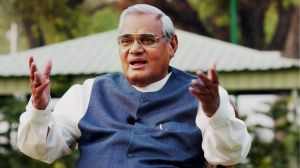
Most of these promises by the BJP, then led by Atal Bihari Vajpayee, were subsequently adopted in India’s election system. In 1984 though, the Congress, powered by a massive sympathy wave, won a record 414 seats in Lok Sabha, and the BJP won only 2.
The BJP’s 2004 manifesto was similar to its 1984 manifesto. The 2009 manifesto focused on only one of these electoral reforms promises — simultaneous elections.
2014: Eliminate criminality in polls, revise spend limits
The 2014 manifesto said the BJP is committed to eliminating criminality in elections. It reiterated the promise of evolving a method of holding Assembly and Lok Sabha elections simultaneously. It also promised to realistically revise expenditure limits.
2019: Holding elections together; a single voters’ list
The BJP’s 2019 manifesto promised simultaneous elections and a single voters’ list for all elections “in order to ensure that every citizen gets the right to exercise his/ her franchise for all public bodies and to avoid confusion created by multiple voter lists”.
CORPORATE CONTRIBUTIONS: In the years after Independence, corporate contributions to political parties, a hugely contested issue today, were not regulated. In 1960, a cap was put on political donations and, in 1969, contributions to political parties and for political purposes were banned. In 1985, the Rajiv Gandhi government again allowed corporate contributions to parties.
The 13-point election reforms agenda in the BJP’s 1989 manifesto included a ban on company donations. However, in its 1991 manifesto, the BJP made a U-turn and promised to allow donations to parties by companies.
And in a 16-point electoral reforms roadmap laid out in 1996, the party promised suitable incentives for open, official corporate funding to all recognised political parties.
COMPULSORY VOTING: In 1989, the BJP manifesto repeated some of the ideas from 1984, and introduced some new ones — compulsory voting; empowering the Election Commission to monitor all political and election coverage by Doordarshan and Akashvani to ensure these media were not misused; and a ceiling on election expenditure by candidates, their agents, parties and supporters.
DELIMITATION, ETC: In 1991, apart from reiterating its previous promises, the BJP promised to update and adopt the report of the Dinesh Goswami Committee on electoral reforms (May 1990); grant statutory status to the Code of Conduct; undertake fresh delimitation of Lok Sabha and Assembly constituencies on the basis of the 1991 census; scrutinise all voters’ lists to ensure that no legitimate voter is excluded; and amend the anti-defection law to make it stronger.
ELECTORAL REFORMS LAW: In 1998, the BJP’s 6-point election reform agenda reiterated its earlier promises. “The BJP will, immediately on assuming office, introduce a comprehensive Electoral Reforms Bill, much of the groundwork for which has already been done but not acted upon,” it said.
FIXED FIVE-YEAR TERMS: In its 1999 Lok Sabha election manifesto, the BJP included its promises on electoral reform under the head “Constitutional and Legal Reforms”. The party said it would take steps to ensure a fixed term of five years for all elected bodies, and would “examine replacing the present No confidence Motion with the German system of ‘Constructive vote of Non-Confidence’”.
This is a revised and updated version of an explainer that was first published on February 27, 2024.