The court, however, refused to restrain the holding of a floor test in the Assembly until it heard the pleas next (on July 11).
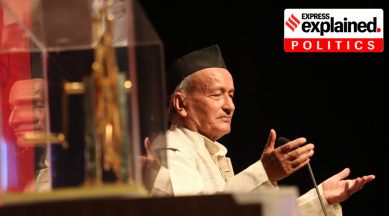
On Wednesday (June 29) Governor Bhagat Singh Koshyari asked the state Assembly to convene a special session to conduct a floor test on June 30. Shiv Sena chief whip Sunil Prabhu immediately moved the Supreme Court challenging the directive.
Senior Advocate Abhishek Manu Singhvi argued that the floor test is illegal because it cannot include persons facing disqualification — that is, the 16 rebels.
Senior Advocate Neeraj Kishan Kaul, who represented rebel leader Eknath Shinde in Monday’s hearing, however, argued that calling for the floor test is the Governor’s prerogative, and that pendency of a disqualification application has nothing to do with it.
The matter will be taken up by the court at 5 pm on June 29.
What has the Supreme Court said about the Governor’s right to call for an immediate floor test?
Story continues below this ad
* In ‘Shiv Sena & Ors v Union of India & Ors’ (2019), the Supreme Court held that the Governor can direct the floor test immediately to prevent horse trading and to protect democratic values.
“In a situation wherein, if the floor test is delayed, there is a possibility of horse trading, it becomes incumbent upon the Court to act to protect democratic values. An immediate floor test, in such a case, might be the most effective mechanism to do so,” a Bench of (then) Justice N V Ramana and Justices Ashok Bhushan and Sanjiv Khanna ruled.
* The apex court had taken a similar view in the celebrated nine-judge Bench decision in ‘S R Bommai v Union of India’ (1994).
* In ‘Shivraj Singh Chouhan & Ors v Speaker Madhya Pradesh Legislative Assembly & Ors’ (2020), the court held that the floor test need not be deferred because the Speaker had not taken a decision on the disqualification of members of Assembly as per Tenth Schedule of the Constitution, as both operate in distinct manners.
Story continues below this ad
“The holding of a trust vote operates in a distinct field from the issue as to whether one or more individual members of the Legislative Assembly have embarked upon a voluntary act of resignation or have incurred the wrath of the Tenth Schedule,” a Bench of Justice D Y Chandrachud and Hemant Gupta ruled.
“Holding a trust vote is necessary to ascertain whether the Council of Ministers headed by the Chief Minister has the confidence of the House… It is a matter which can brook no delay since the authority of the government presided over by the Chief Minister depends on the Council of Ministers continuing to have the faith of the legislative body as a collective entity,” the court said.
* In the Bommai case, the court held that the Chief Minister’s refusal to face a floor test can be concluded as lack of majority and such refusal, prima facie would indicate that the government does not enjoy the confidence of the legislature.
Can the Governor’s action be reviewed by constitutional courts?
Story continues below this ad
In ‘Shivraj Singh Chouhan’, the Supreme Court held that the Governor’s satisfaction to order a floor test is not immune from judicial review. The court can probe whether the Governor had relevant material to order the trust vote.
The court had held, “When the satisfaction on the basis of which the Governor has ordered a floor test is called into question, the decision of the Governor is not immune from judicial review. The court would be justified in scrutinizing whether the Governor prima facie had relevant and germane material to order a floor test to be conducted.
“It must be noted that the Governor does not decide whether the incumbent government commands the confidence of the house. The purpose of holding a floor test in the legislative assembly is precisely to enable the elected representatives to determine whether the Council of Ministers commands the confidence of the House; that verification is not conducted by the Governor.”
A senior advocate practising for over three decades at the Bombay High Court, and who has appeared in several constitutional matters, said: “Considering past judgments of the Supreme Court, the Governor is well within his right to call for a special session to conduct an immediate floor test considering the political situation in Maharashtra, and even when disqualification proceedings against 16 MLA are pending before the Deputy speaker.
Story continues below this ad
“The limited role of the Supreme Court now is to ascertain whether the Governor had sufficient ground to call for a trust vote.”
Newsletter | Click to get the day’s best explainers in your inbox
Can the Governor direct a floor test without the aid and advice of the Council of Ministers?
The apex court, in its judgment in ‘Nabam Rebia & Bamang Felix v. Deputy Speaker, Arunachal Legislative Assembly’ (2016), had held that the Governor can exercise his/ her constitutional powers without the aid and advice of the Council of Ministers led by the Chief Minister if there are sufficient reasons to believe that the government has lost the confidence of the House.
Story continues below this ad
Justice J S Khehar had observed, “In a situation where the Governor has reasons to believe that the Chief Minister and his Council of Ministers have lost the confidence of the House, it is open to the Governor, to require the Chief Minister and his Council of Ministers to prove their majority in the House, by a floor test.
“Only in a situation, where the Government in power on the holding of such a floor test is seen to have lost the confidence of the majority, it would be open to the Governor to exercise the powers vested with him under Article 174 on his own, and without any aid and advice.”