6 min read
Click here to follow Screen Digital on YouTube and stay updated with the latest from the world of cinema.
© IE Online Media Services Pvt Ltd



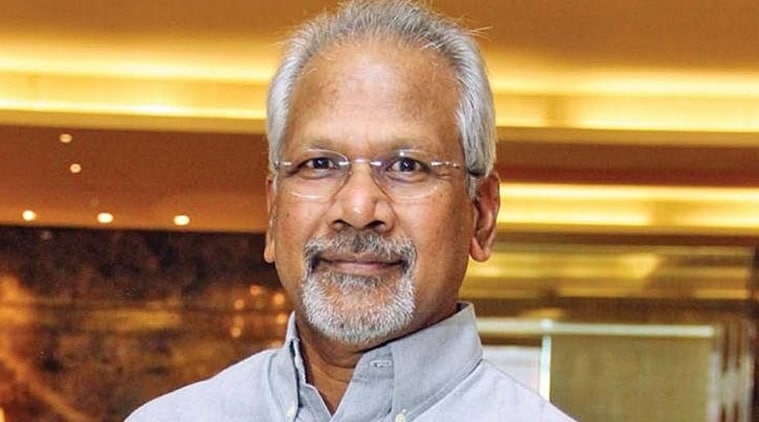 Mani Ratnam turns 63 today.
The films that stays with you are stories of human interest—those that move you and affect you. While every generation has its own preferences when it comes to the kinds of movies that they like, there are some such as Mani Ratnam’s Thalapathy, Roja, Bombay, Alaipayuthe, Kannathil Muthamittal and OK Kanmani among many—that cross the time barrier and remain with us, with different generations relating to them.
The best thing about Mani Ratnam is that when we recall his films, we find standout moments filled with stunning poetry and superbly crafted dialogues.
Why Mani Ratnam matters? In the late 80s, his Mouna Ragam, Nayagan, Agni Natchathiram and Anjali emerged one after the other, creating great expectations. He is one of those rare filmmakers, who has done 25 films in 35 years and still remains relevant to the audience, mainly youth.
In Conversations with Mani Ratnam by award-winning writer-journalist Baradwaj Rangan, the director had mentioned how filmmaking happened by “accident”, despite finishing an MBA from a top B-school. Mani Ratnam was quoted saying, “I was interested in cinema only as a viewer. I never thought I would take it up as a career. I never thought I would sit and write and actually direct films.”
Here’s what celebrities have to say about the iconic filmmaker:
Kamal Haasan: “There were no egos on the set. Mani would shoot down ideas. He would also accept ideas. I am always asked when Mani and I will work together again. I don’t know if we can summon up that same feeling of doing a film for the pleasure. Now there’s too much pressure. And I don’t blame Mani. He’s been so tormented by producers that now he wants to make films exactly the way he wants. And if I would be an impediment, he would be right in removing me.”
AR Rahman: “I think it’s his aura that forces me to push myself further. Suppose, I’m in a room with four great musicians and I sit with my headphones to compose… My whole attitude will be like ‘Oh, they are watching me’. I feel the aura of them looking at me, their musicality… Even at a concert, we play better when we have an audience who are greatly educated in music. You start doing different things. The same way, when you are working with a director like Mani Ratnam who has such a legacy, you come up with some great ideas just to get his appreciation.”
Arvind Swami: “Mani Ratnam has never stayed in the ‘safe zone’ with his eye only on the box office. Not many can use songs like him with such visual splendour. And yet, in Chekka Chivantha Vaanam, he has moved away from that mould in the way he has used songs. He’s constantly experimenting.”
Aditi Rao Hydari: “He is a disciplinarian and an ideal teacher for any actor. He gives his actors space and time to learn. When I get to work with such a director, what more can I ask for?”
Shraddha Srinath: “When I met him, I was half curious and half anxious. I was looking at him in total awe because I never thought this could happen pretty early in my career.”
Madhavan: “Working with Mani sir is very frightening. I thought it would change after the first film. Because we are golf course buddies and on back-slapping terms. But when we are on the sets, I can’t bring myself to call him Mani: it is always Mani sir, said with reverence. During every film, I thought I would get over the fear after the next one, but it’s getting even tougher. Because we know each other so well, he doesn’t want what he sees in real life. He pushes me to give something different. He knows the kind of environment that I perform best in. Without me knowing, he makes sure that he creates that atmosphere for me.”
Karthi: “When Mani sir directs you, he lets you explore. In return, you gain more confidence in your craft. You become stronger when you are made to pursue a tough or challenging task. He is a passionate filmmaker, who is keen on improvisations. He pays attention to minute details, and that’s his strength. While writing, Mani Ratnam treads into every character’s psyche. He made me do everything that I thought I wasn’t really capable of.”
Dulquer Salmaan: “With Mani sir, you kind of have to have things to talk about or get really silent. He doesn’t talk at all, so there was a moment in between the shots and I was sitting next to him and I am like ‘Say something, anything, come up with something clever’, and there is a deafening silence. My dad and Mani Ratnam sir have met several times even after Thalapathi and discussed several films. I have just seen Mani Sir around my house a lot and his office is literally very close to my house in Chennai.”
Santosh Sivan: “The thing with Mani Ratnam is that he pushes his peers to give their best.”
Vikram: “Mani Ratnam is open to your inputs. And his energy is unbelievable. After a day’s work, we would rehearse the scenes to be shot the next morning, costumes et al, before we dispersed. He would mull over them all night and be ready with the changes he wants.”
Siddharth: “When I joined him at 21, He said ‘When you speak on anything, I wouldn’t say shut up. You have the right to speak. You can speak on discussions, shooting up to the release, but I also have the right to decide about your view’. He left me on my own. He is such a big director and this is what he had to say for a youngster. If I get a point of anything, I wouldn’t hesitate to come out. The big thing about him is he listens even though he might be very busy at that point in time. He has accepted many of my ideas and rejected many too. He didn’t ask me to serve tea for five years. I have done many mistakes, I learned from my mistakes when he pointed out.”
Click here to follow Screen Digital on YouTube and stay updated with the latest from the world of cinema.