Once the #MeToo movement caught on in India, in director-writer Vinta Nanda’s words, it led to “a volcanic explosion and threw all the lava out”. The task ahead in 2019, she says, is to “sort out the lava (read: gender issues)”.
Bollywood was shaken in the last quarter of 2018 when Tanushree Dutta recounted her harassment by Nana Patekar on the sets of Horn OK Pleassss a decade ago and how shoddily her complaint was handled. Even as Dutta’s account created ripples this time, what turned it into a tsunami was the report of sexual harassment that a former employee of the now dissolved Phantom Films was subjected to by filmmaker Vikas Bahl. Others came forward to name Subhash Ghai, Anu Malik, Sajid Khan, Kailash Kher, Vivek Agnihotri, Gursimran Khamba and Utsav Chakraborty, but it was Nanda’s Facebook account alleging rape by Alok Nath that was the most chilling.

Talking about the fallout of #MeToo, Nanda says, “The creative community is a critical mass made up of freelancers who are directors, singers, writers and lyricists. There is no corporation that controls it. This population, which runs the entertainment industry, comes under various associations. Most of these associations deal with issues related to the government, taxation or dispute. However, after the #MeToo movement every single association has set up an internal committee and is following the Sexual Harassment of Women at Workplace (Prevention, Prohibition and Redressal) Act, 2013 guidelines. Thousands of complaints have been registered with them. These are the tangible changes that have taken place in the last few weeks,” says Nanda.
Ketaki Pandit, head of the anti-harassment committee of Screenwriters’ Association (SWA), Mumbai, is glad that “a long silence was broken”. “Even though the Prevention of Sexual Harassment (PoSH) guidelines existed for five years, many were not aware of it. As per the law, every single organisation is supposed to have an internal committee (IC),” she says. The sharing of #MeToo accounts, Pandit as well as Kulmeet Makkar, chief executive officer at the Film and Television Producers Guild of India Limited, Mumbai, believe has “started a very important conversation about something that was never spoken about”.
Today, the industry is going through a change, albeit a slow one, as the guild is making it mandatory for its members to implement PoSH regulations and set up IC committees. “The education regarding the regulations and how that’s to be carried out is being taken care of by agencies that have been shortlisted by us. No one can guarantee that it won’t happen again. However, there will be a process in place to address the grievances,”
says Makkar.
Though several organisations had ICs, they had not created awareness among their employees regarding the committees. In the post #MeToo world, many in the industry are “speaking about consensus”. Pandit says, “Earlier it was either rape or nothing. People did not take cases of harassment seriously. This is an opportunity to learn more and ask ourselves if we are being complicit.” She, however, adds that since there are “no proven offenders”, it is still a long road ahead.
The guild has come up with posters that drive home the point about gender equality. Makkar says, “What is important is that it is being implemented not just in offices but outdoors or other spaces where shooting is done. The guild members are talking of conducting workshops before a film shoot starts.” The SWA has also been holding workshops to develop gender sensitivity.
Story continues below this ad
The #MeToo movement, Pandit says, has been a conversation starter. “The responsibility now is to carry forward the conversation,” says Pandit and adds that it is important to involve men in the conversation. “Today, everybody is accountable,” says Nanda. Yet, she points out, “We can’t have utopian thoughts and assume that no man or woman is going to ever exploit another”. Citing the recent meeting of an 18-member panel with PM Narendra Modi, Nanda says, “Even after the discourse triggered by the #MeToo accounts, the delegation had no woman. Only two women, Dia Mirza and Sandhya Mridul, called this out. The year 2019 probably is going to be about sorting out these issues — increasing the representation of women, equal pay and participation.”
Priyanka Chopra and Nick Jonas exchanged vows in Jodhpur’s Umaid Bhawan Palace.
Knotty Affairs
This would probably go down as the year when some of India’s heartthrobs decided to give up their single status. They grabbed attention for their wedding preparations, engagements and bridal finery. Sonam Kapoor tied the knot with Delhi-based Anand Ahuja on May 8 in Mumbai. The second half of the year saw several more nuptial vows — if Deepika Padukone and Ranveer Kapoor got married in Italy’s Lake Como, Priyanka Chopra and Nick Jonas exchanged vows in Jodhpur’s Umaid Bhawan Palace. Multiple receptions followed. While Kapoor and Chopra promptly added Ahuja and Jonas, respectively, to their names, Padukone has kept her already
famous surname.
Prized Territory
The National Film awards might have traditionally been presented by the President of India, but this year was an exception. President Ram Naik only made a brief appearance at the ceremony in May and presented awards in 11 out of a total of 140 categories. The announcement regarding this, made a day prior to the ceremony, triggered protests, leading 68 award winners to boycott the ceremony. Many called the decision “discriminatory” and “a joke”. The then Information and Broadcasting Minister Smriti Irani and Minister of State Information and Broadcasting Rajyavardhan Rathore presented the awards after the President left.
Sacred Games on Netflix led the march with an impressive cast and scale.
Web of Entertainment
The impact of digital entertainment has become more prominent that ever before. Even as a number of digital platforms showed dynamism by coming up with a variety of content, Sacred Games on Netflix led the march with an impressive cast and scale. Ambitious series such as Mirzapur on Amazon Prime, Ghoul on Netflix, Rangbaaz on Zee5 and It’s Not That Simple on Voot expanded the reach of entertainment.
Story continues below this ad
Shock and Tragedy
Actor Sridevi was found dead on February 24 in a hotel bathtub in Dubai. She was there to attend the wedding of her husband Boney Kapoor’s nephew Mohit Marwah and Antara Motiwala. Even though her sudden death gave rise to rumours, the Kapoor family stood together. Sridevi was posthumously honoured with the National Award for Best Actress for Mom. As 2018 drew to a close, she made her last big screen appearance in Zero.
LOOKING AHEAD
Making a Mark: International foray of several Indian movies is in the offing, even though Village Rockstars, written and directed by Rima Das, is out of the Oscar race. The latest Assamese feature film by Das, Bulbul Can Sing, will have its European premiere at the 69th Berlin International Film Festival in the Generation 14-plus section. Zoya Akhtar-directed Gully Boy, featuring Ranveer Singh and Alia Bhatt, will also have a special screening in Berlin. Ritesh Batra’s fourth feature film, Photograph, will have an international premiere at Sundance Film Festival in January. Theatre director Anamika Haksar’s first feature film, Ghode Ko Jalebi Khilane Le Ja Riya Hoon, has also been selected for the New Frontier section
at Sundance.
Box-office Clash: The Republic Day weekend is likely to get hectic at the box-office with Kangana Ranaut’s Manikarnika — The Queen Of Jhansi, Nawazuddin Siddiqui’s Thackeray and Emraan Hashmi’s Cheat India, releasing on January 25. Salman Khan’s Bharat, directed by Ali Abbas Zafar, is supposed to release during Eid in June. The much-in-demand Independence Day weekend is also likely to see a major clash at the box-office with three blockbuster movies — Batla House, Saaho and Mission Mangal — scheduled to release together.


 8 min read


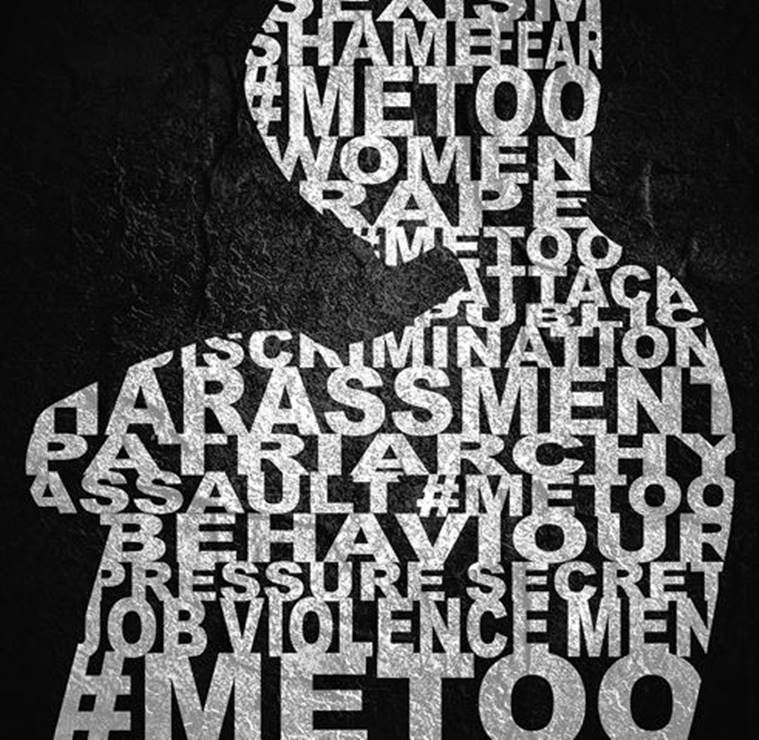 Ketaki Pandit, head of the anti-harassment committee of Screenwriters’ Association (SWA), Mumbai, is glad that “a long silence was broken”.
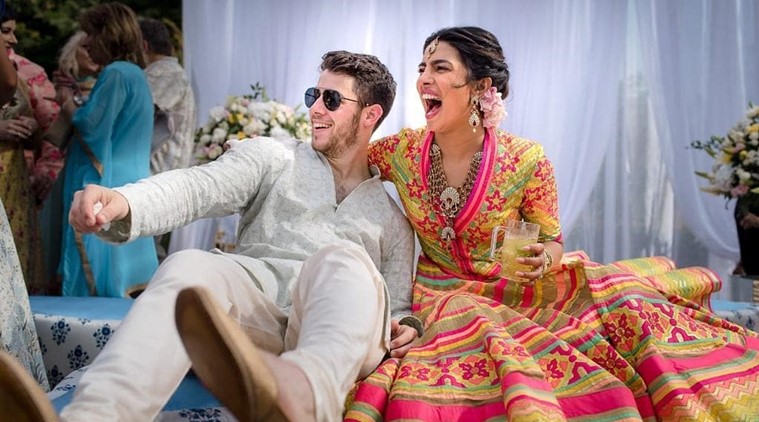 Priyanka Chopra and Nick Jonas exchanged vows in Jodhpur’s Umaid Bhawan Palace.
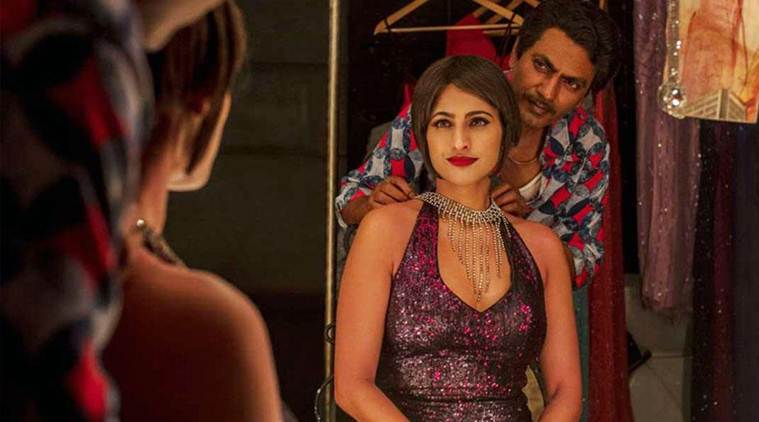 Sacred Games on Netflix led the march with an impressive cast and scale.