This is an archive article published on October 16, 2024
It’s the beginning of a beautiful partnership between mainstream and alternative cinema: Actor Rana Daggubati, distributor of Payal Kapadia’s All We Imagine As Light
As the opening film of MAMI Mumbai Film Festival 'All We Imagine As Light' is scheduled to release across India in November, director Payal Kapadia is excited that "people will be buying a ticket to watch" her film.
Written by Alaka SahaniUpdated: October 16, 2024 09:08 PM IST
4 min read
Whatsapp
twitter
Facebook
Reddit
All We Imagine As Light will release in India in November.
When writer-director Payal Kapadia’s ‘All We Imagine As Light’ opens the upcoming edition of MAMI Mumbai Film Festivalon Friday evening with its special screening at Mumbai’s Regal Cinema, it will mark a homecoming of sorts for her debut feature that’s set in the chaotic and demanding world of the megalopolis.
After winning the Grand Prix at the Cannes Film Festival earlier this year, travelling to some of the top international festivals as well as releasing in theatres of Kerala and France, it is about time that ‘All We Imagine As Light’ is screened for the audience in the same city where its three lead female characters work and navigate myriad emotions. While Kapadia calls it “a tremendous honour”, the film’s distributor, and MAMI board member, actor Rana Daggubati believes that by inaugurating the festival with this film, MAMI carries forward its mission to “champion independent voices”. In November, the film is scheduled to have a nationwide release.
According to Daggubati, his Spirit Media distributing Kapadia’s film marks “the beginning of a beautiful partnership between mainstream and alternative cinema”. He says: “Let’s move forward with it and I’m sure we will see more such partnerships.” For Kapadia, whose earlier films ‘Afternoon Clouds’ (short, 2015) and ‘A Night of Knowing Nothing’ (documentary, 2021) had only special and festival screenings in India, finding a supportive distributor means a lot. “It is great as an indie filmmaker not to worry about the movie’s distribution”, says Kapadia. Her biggest joy is that “people will be buying a ticket to watch” her film.
The coming together of Kapadia, an indie filmmaker with pronounced arthouse sensibilities, and Daggubati, a popular mainstream star of movies such as Baahubali: The Beginning (2015) and Baahubali 2: The Conclusion (2017), can be hailed as a major development in Indian cinema. Daggubati has been on the lookout “for independent voices that can tell cinematic stories” and has backed several Telugu films in the past.
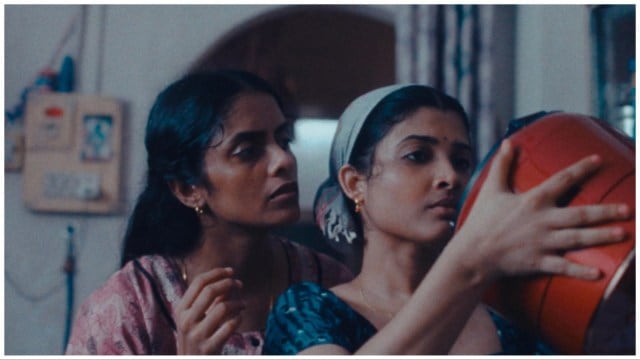
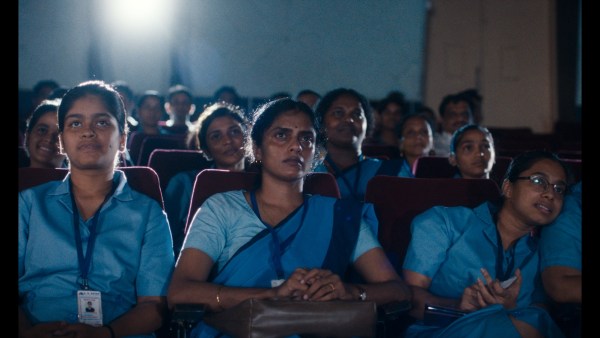
Payal Kapadia’s All We Imagine As Light.
“Earlier, Spirit Media had never ventured beyond (Telugu films) since it is not easy to put out our independent cinema in this commercial world”, says Daggubati. However, when the actor-producer watched ‘All We Imagined As Light’, he was excited about its craft and aesthetics. “It was the right film for us to put the muscle behind and take it around the country. The film is truly pan-Indian in that sense. You will connect to the Mumbai city, immigrants living there and creating a life for themselves,” he says. When they met, Kapadia liked that Daggubati had a well-thought out distribution plan for her film “so that it won’t be lost when released in theatre”.
Emphasising on blurring the language barriers while promoting Indian movies, Daggubati says: “When I used to work in Mumbai earlier, I suggested releasing the film in Telugu. The makers never got it. Ditto when I talked about releasing a Telugu film in Hindi. I made ‘The Ghazi Attack’ (2017), Hindi producers thought I am making a Telugu film and vice versa. We shot it in both languages. That’s how we released it. It was a story set in a submarine and it did not matter in the language it was in.” After the massive success of ‘Baahubali’, Daggubati believes, the filmmaker started thinking of projects with pan-Indian appeal. “In India, once we know something works, we scale it up. It is ultimately about knowing your audience and finding them,” he adds.
Alaka Sahani is a prominent film critic and journalist based in Mumbai. With a career spanning over two decades, she has established herself as one of India’s most authoritative voices in cinematic journalism, known for an analytical approach and insights that transcend the standard cycle of celebrity journalism.
Expertise & Accolades
In 2014, Alaka was honoured with the National Film Award for Best Film Critic. Her Swarna Kamal (Golden Lotus) citation specifically lauded her for "highlighting facets of cinema beyond glamour and gossip" and for her ability to delve into the contemporary relevance of iconic filmmakers. Her commitment to journalistic integrity was further recognised in 2019 with a Special Mention at the Red Ink Awards for her investigative feature, 'In Search of a Star'. Her article titled 'People Like Us', published in The Indian Express on March 27, 2022, was shortlisted for Red Ink Award, 2023.
Global Industry Leadership
Alaka’s expertise is sought after by major international and domestic film bodies:
Golden Globes: In 2025, she joined the international voting body for the 83rd Annual Golden Globes.
National Film Awards: She served on the prestigious jury for the 68th National Film Awards, helping select the finest contributions to Indian cinema.
Global Perspective: Her work consistently bridges the gap between commercial Bollywood A-listers and emerging independent talents, offering nuanced insights into both Indian regional cinema and international film trends.
Focus & Vision
Beyond the screen, Alaka is a dedicated observer of Mumbai’s vibrant theatre scene and the historical evolution of the moving image. Through her long-form articles and deep-dive interviews, she continues to challenge "tried-and-tested" templates, providing readers with a deep understanding of the artistic and systemic workings of the Indian and global film industry. ... Read More


 4 min read



 Payal Kapadia’s All We Imagine As Light.